 Whalesbook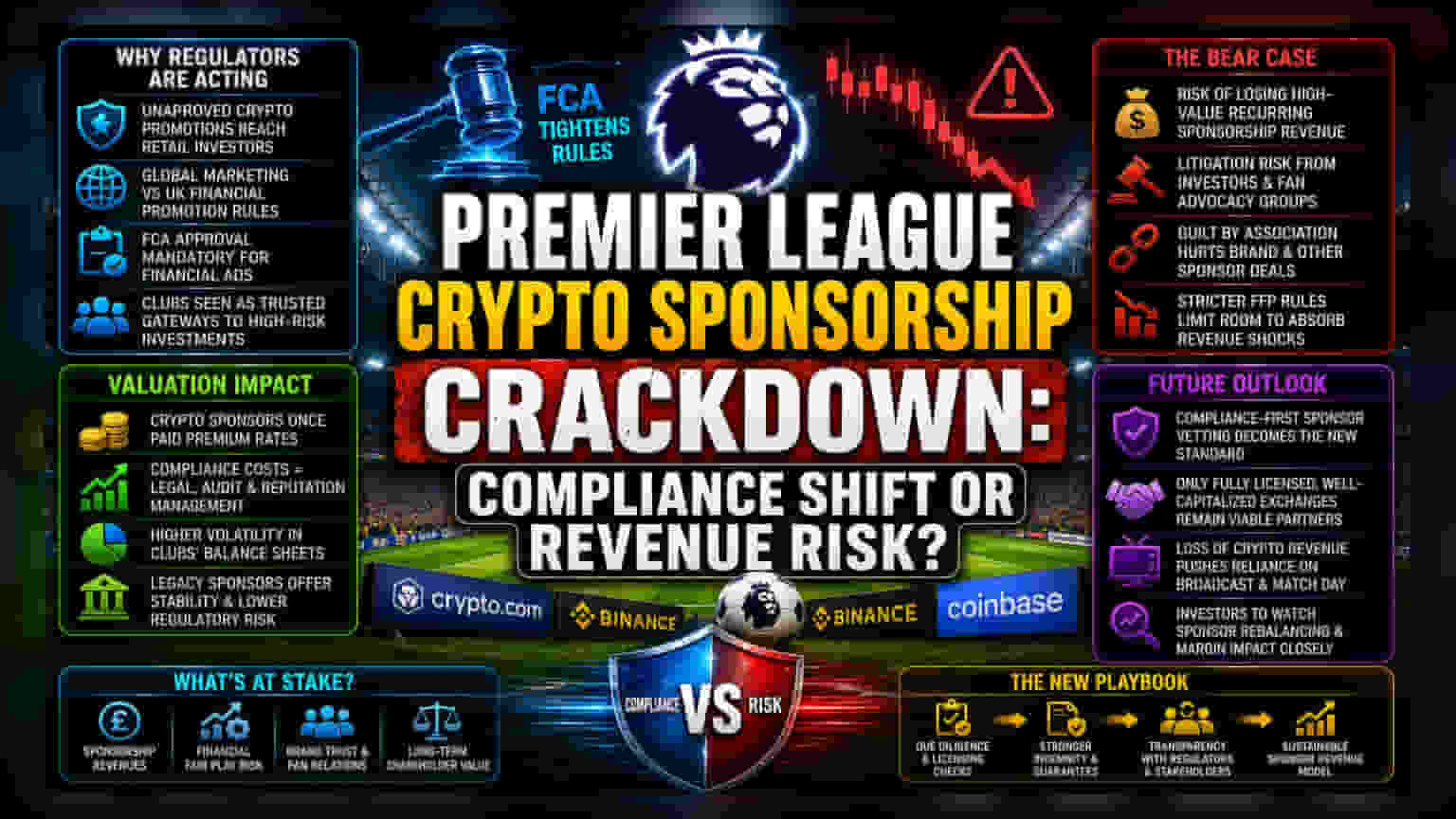


The Compliance Tightening
The regulatory scrutiny stems from a fundamental mismatch between the global nature of sports marketing and the rigid territorial boundaries of UK financial promotion law. While Premier League clubs operate as commercial entities with massive reach, the Financial Conduct Authority (FCA) views their role as a gateway for retail investors to access unregulated, high-volatility assets. The core issue is not merely the existence of these sponsorships but the facilitation of marketing materials that have not undergone the mandatory approval process required for firms operating without direct FCA registration.
The Valuation Impact on Sports Marketing
Financial analysts suggest that this intervention introduces a significant 'compliance premium' for sports organizations. Historically, crypto firms were among the highest-paying sponsors during the post-pandemic digital asset boom, offering premium rates that traditional firms could not match. As regulators tighten the noose, the cost of auditing these partnerships—including legal fees, reputation management, and the potential for forced contract terminations—may diminish the net present value of these sponsorship portfolios. Peer-level analysis indicates that football clubs currently reliant on digital asset revenue face higher volatility in their balance sheets compared to those partnered with established, legacy-sector sponsors like banking or retail giants, which rarely trigger such intense regulatory friction.
The Forensic Bear Case
The structural weakness in the current sponsorship model lies in the reliance on entities that prioritize growth over institutional compliance. If clubs are forced to sever ties with unauthorized partners, they risk losing substantial recurring revenue at a time when Financial Fair Play (FFP) regulations are increasingly strictly enforced. Furthermore, the risk of litigation is compounded by the potential for fan advocacy groups to hold clubs accountable for financial losses incurred on promoted platforms. The history of such partnerships shows that when a partner faces regulatory investigation, the sports club’s brand often suffers from 'guilt by association,' which can impair secondary sponsorship deals with blue-chip partners who maintain a low risk appetite regarding market volatility and regulatory scrutiny.
Future Outlook and Market Guidance
Moving forward, the industry anticipates a shift toward 'compliance-first' sponsorship vetting. We expect that Premier League legal departments will now require higher levels of indemnity from crypto partners, potentially leading to a bifurcation in the market where only the most well-capitalized and fully licensed exchanges remain viable partners. Investors should monitor how these clubs rebalance their sponsorship tiers in the upcoming fiscal cycles, as the loss of high-margin crypto revenue could force clubs to rely more heavily on broadcasting rights and match-day income, impacting overall profit margins.