

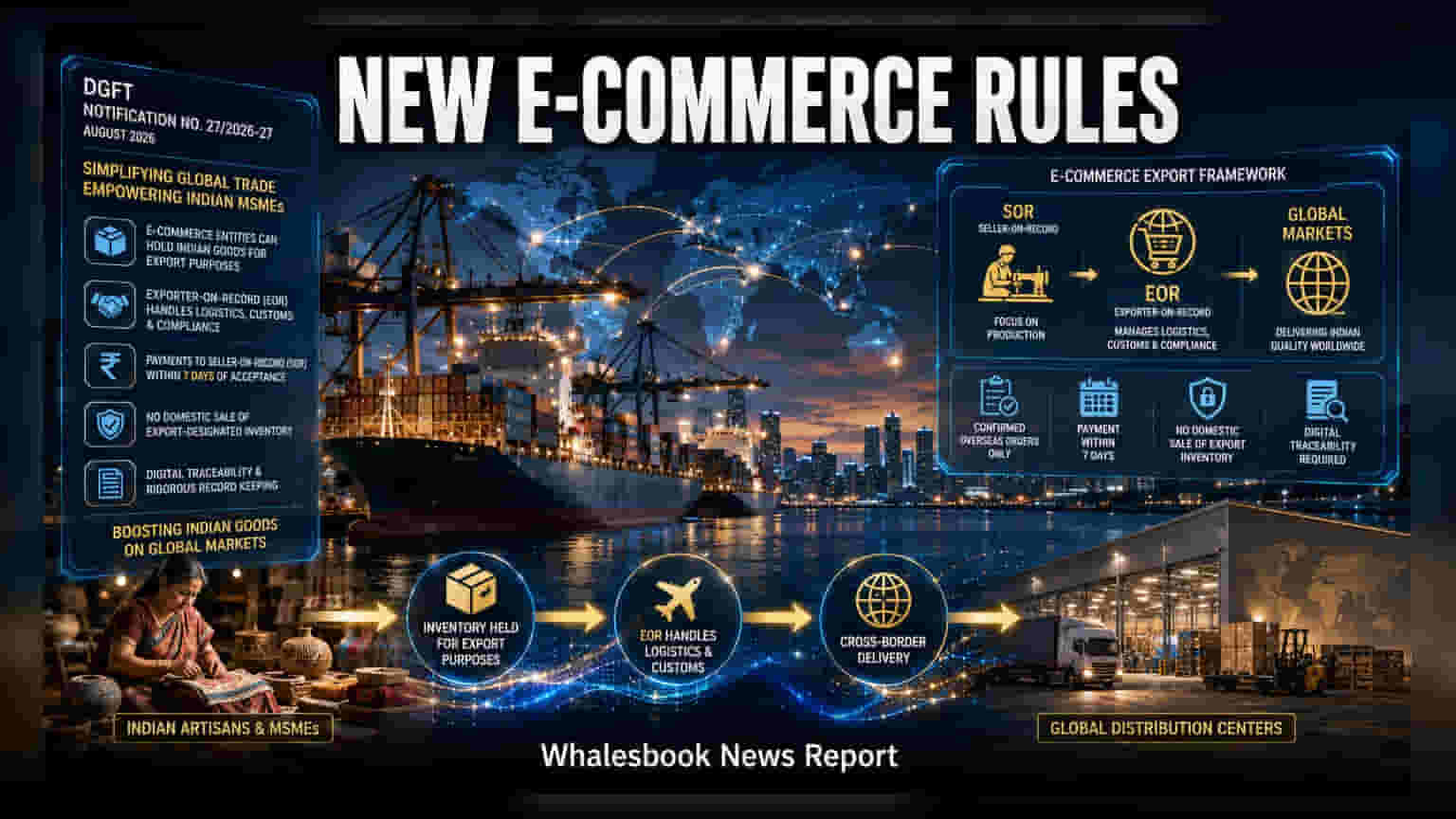
The Directorate General of Foreign Trade (DGFT) has launched an inventory-based framework allowing e-commerce platforms to hold Indian goods specifically for exports. This policy establishes the Exporter-on-Record (EOR) model, mandating 7-day payments to local sellers and strict inventory segregation. For stakeholders, this move aims to ease global market access for MSMEs while creating new operational and compliance requirements for e-commerce entities.
The Directorate General of Foreign Trade (DGFT) has officially introduced a new regulatory framework to streamline how Indian goods reach international markets through e-commerce. Under Notification No. 27/2026-27, issued in August 2026, the government now permits e-commerce entities to hold Indian-made inventory specifically for export purposes. This shift is designed to help Indian micro, small, and medium enterprises (MSMEs) participate in global trade by removing the complex logistics and compliance burdens that often act as barriers to entry.
At the heart of this policy is the distinction between the Exporter-on-Record (EOR) and the Seller-on-Record (SOR). E-commerce platforms acting as EORs will take on the responsibility of managing export logistics, customs, and compliance. This allows the original manufacturers—the SORs—to focus on production rather than international shipping. The framework also dictates that all goods procured under this model must have confirmed overseas orders, which is intended to prevent speculative stockpiling.
To ensure fair treatment for smaller manufacturers, the policy includes several specific safeguards. EORs are now required to clear payments to the SORs within seven days of accepting the goods. Furthermore, the regulation imposes a strict prohibition on the domestic sale of any export-designated inventory. This ensures that goods brought into the export-specific pool cannot be diverted to the local market, which protects domestic price stability and ensures that export incentives remain focused on genuine foreign trade.
The business and investor implication of this policy is a potential rise in the volume of goods exported by smaller Indian producers who previously found international shipping too difficult to manage. However, the model brings distinct operational risks that market participants should monitor. The strict 'no domestic sale' rule for returned or unsold export goods means that EORs—or the e-commerce platforms managing these exports—must optimize their logistics. If reverse logistics are not handled efficiently, companies could face inventory losses or high holding costs.
Additionally, the compliance burden regarding digital traceability is significant. Entities operating under this framework must maintain rigorous records linking procurement, invoices, and final export data. Disagreements regarding the sharing of export rebates or administrative fees between EORs and SORs could also emerge as a point of contention. As the industry adapts to this new framework, the key monitorables for investors and analysts will be the efficiency of these EOR operations, the stability of export demand, and how effectively platforms can manage the risks associated with cross-border trade and currency fluctuations.