

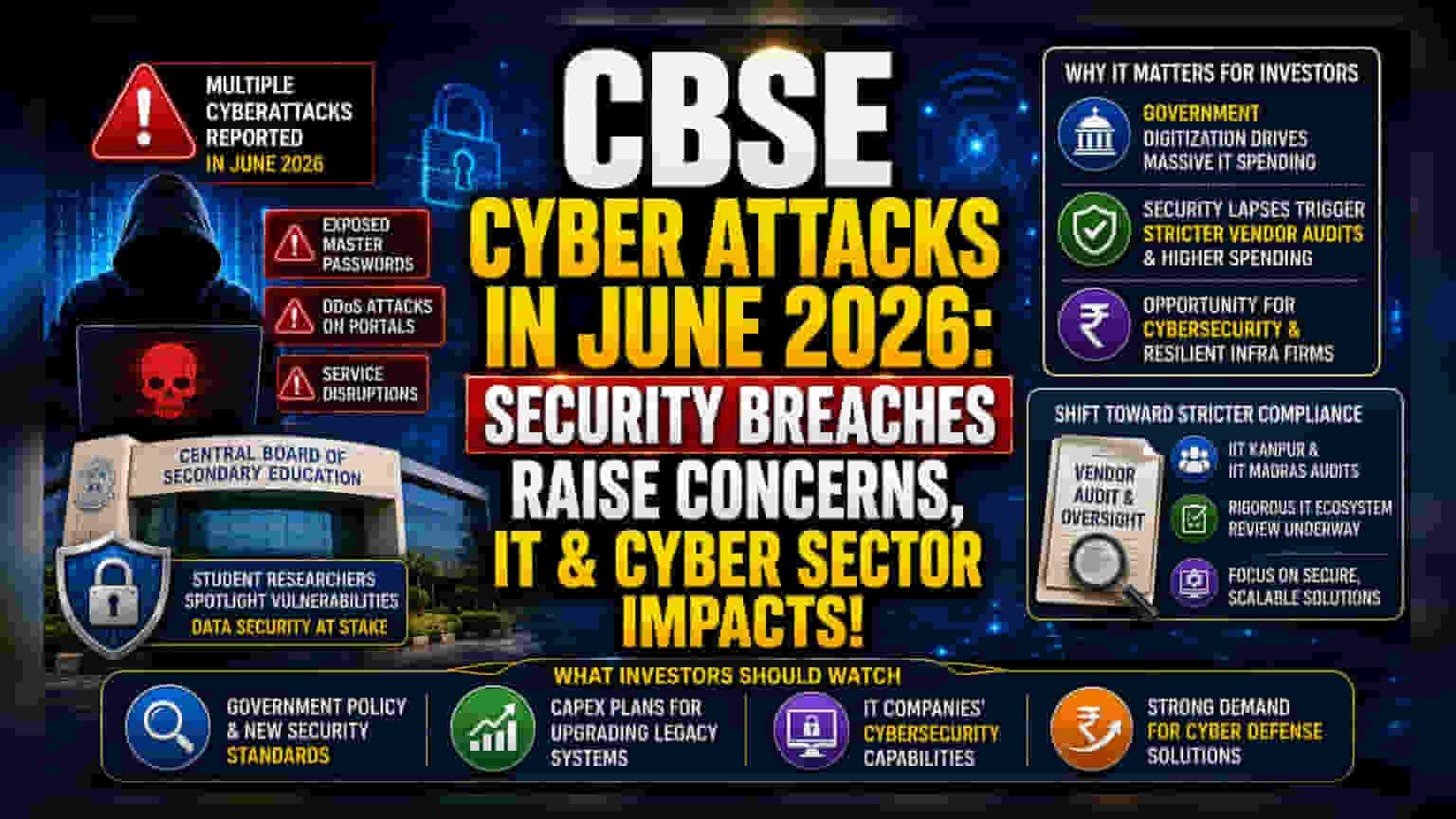
Recent cybersecurity vulnerabilities and attacks on CBSE’s digital portals have highlighted critical risks in government-managed infrastructure. For investors, this event underscores the growing demand for robust cybersecurity solutions and stricter compliance requirements for IT vendors managing public data.
What Happened
The Central Board of Secondary Education (CBSE) has faced multiple cybersecurity challenges in June 2026. Reports indicate that security researchers, including a student who identified exposed master passwords, have pointed to vulnerabilities in the board’s digital portals. Additionally, the board’s re-evaluation and verification platforms were subjected to coordinated cyberattacks, including denial-of-service (DoS) attempts, which the board and government agencies have since worked to mitigate.
Why This Matters For Investors
While the CBSE is a government board and not a listed company, these events are significant for the broader Indian IT and cybersecurity sector. Government digitization is a massive driver of revenue for many listed IT service providers, system integrators, and cloud infrastructure companies. When critical portals handling lakhs of student records face security breaches or operational instability, it puts the spotlight on the performance and accountability of the technology vendors managing these systems. Investors should note that security lapses often trigger immediate government mandates for stricter vendor auditing, higher spending on cybersecurity tools, and longer procurement cycles for digital projects.
The Shift Toward Stricter Compliance
The incidents have reignited the debate on how government agencies select and monitor technology partners. The involvement of technical experts from institutes like IIT Kanpur and IIT Madras to audit the board's IT ecosystem suggests a move toward more rigorous, independent oversight of public-facing digital assets. For companies providing IT services to the public sector, this could mean an increase in compliance costs and potentially longer lead times for project implementation. On the flip side, there is a clear, long-term opportunity for firms that specialize in resilient infrastructure, advanced threat detection, and automated security monitoring.
Impact on the IT and Cyber Sector
The increasing frequency of such incidents across various sectors is pushing cybersecurity from a "nice-to-have" feature to a core requirement for government contracts. As the government continues its push to digitalize services, the risk of data breaches remains a major concern for national security and public trust. Listed IT companies that have invested in building specialized cybersecurity units or that can offer secure, scalable cloud solutions are better positioned to win contracts in this evolving environment. Conversely, vendors that fail to meet these high standards risk losing government mandates and facing reputational damage.
What Investors Should Track
Investors in the IT and cybersecurity space may monitor several key indicators following these events. First, watch for government statements regarding new security standards or procurement guidelines for digital projects. Second, observe the capital expenditure (capex) plans of government departments for upgrading existing legacy portals. Finally, keep an eye on how IT services companies frame their cybersecurity capabilities in their quarterly results and investor presentations, as demand for these defensive solutions is expected to remain high in the coming years.