 Whalesbook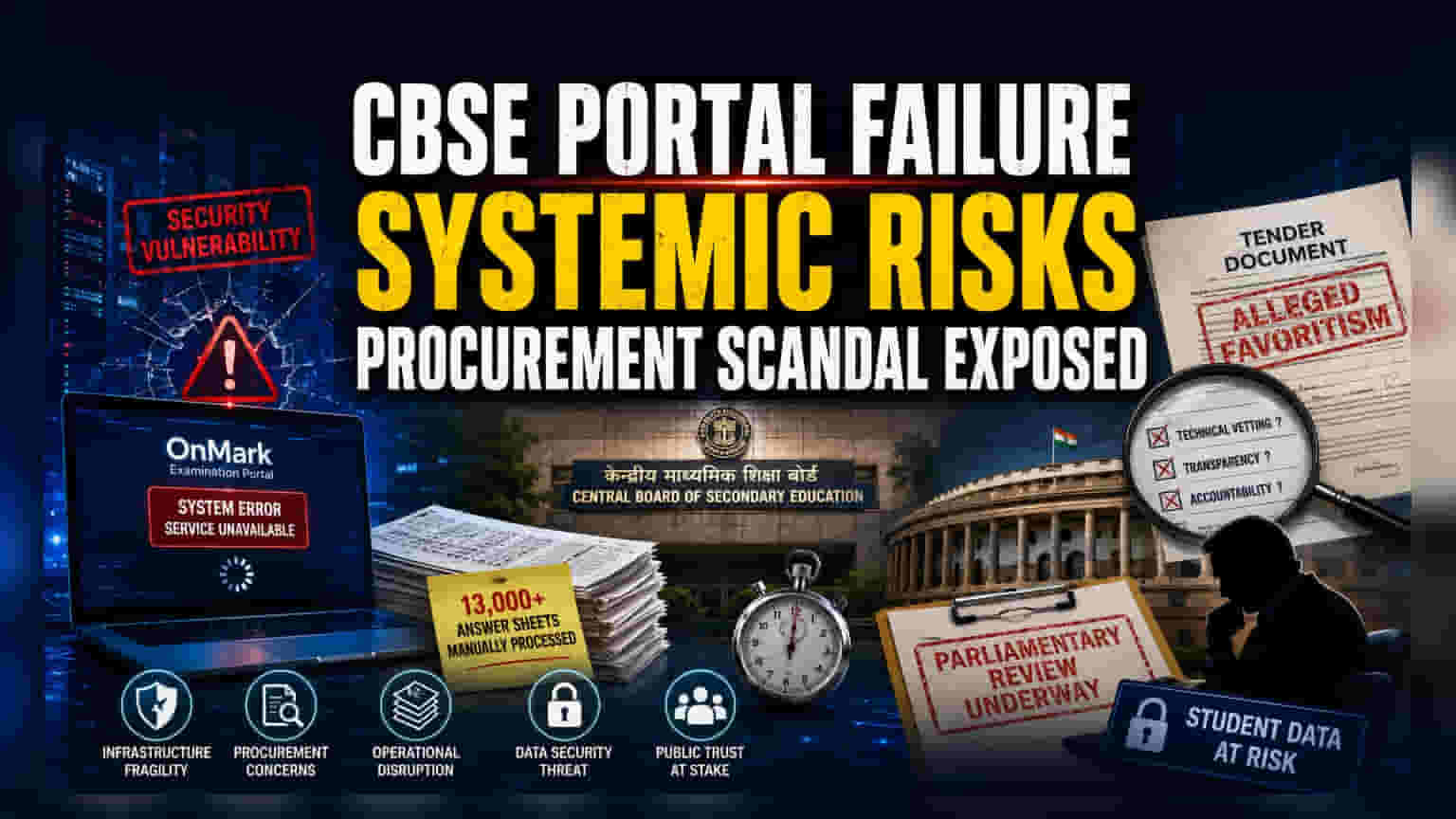


The Infrastructure Fragility
The reliance on the OnMark portal for critical educational assessments has triggered a broader debate regarding public sector digital transformation. Repeated warnings from the Indian Computer Emergency Response Team indicate that the technical architecture failed to meet basic production standards during the high-stakes Class 12 evaluation window. While infrastructure providers often shift accountability toward application-level flaws, the persistence of these vulnerabilities suggests a systemic misalignment between the software provider, COEMPT, and the oversight mechanisms employed by the board. The gap between AWS confirming remediation and the ministry asserting ongoing defects highlights a dangerous lack of synchronization in incident response protocols.
Procurement and Operational Integrity
Beyond the immediate digital risk, the emergence of allegations regarding tender clauses has introduced a layer of reputational risk that extends beyond mere technical glitching. The parliamentary standing committee, currently evaluating the procurement process, is confronted with claims that specific contractual structures may have prioritized vendor interests over rigorous technical vetting. This is particularly concerning given that the education ministry had to revert to manual processing for over 13,000 answer sheets due to scan quality failure. These failures demonstrate that technical debt is not merely a theoretical concern but a operational bottleneck that forces sudden, inefficient shifts back to legacy manual workflows.
The Risk of Institutional Exposure
The intersection of data security failures and potential procurement favoritism creates a volatile situation for the board. From a risk management perspective, the primary concern is the potential for compromised student data and the long-term impact on the credibility of assessment outcomes. When public institutions rely on third-party vendors for critical national infrastructure, the inability to verify the integrity of the code or the procurement logic often leads to cascading failures. If the current audits and the pending parliamentary review continue to find discrepancies in the evaluation process, the board may face mounting pressure to overhaul its vendor engagement model entirely. The extension of the re-evaluation deadline is a tactical move to mitigate immediate public backlash, but it does not address the underlying architectural inadequacies that rendered the portal unfit for purpose in the first place.