

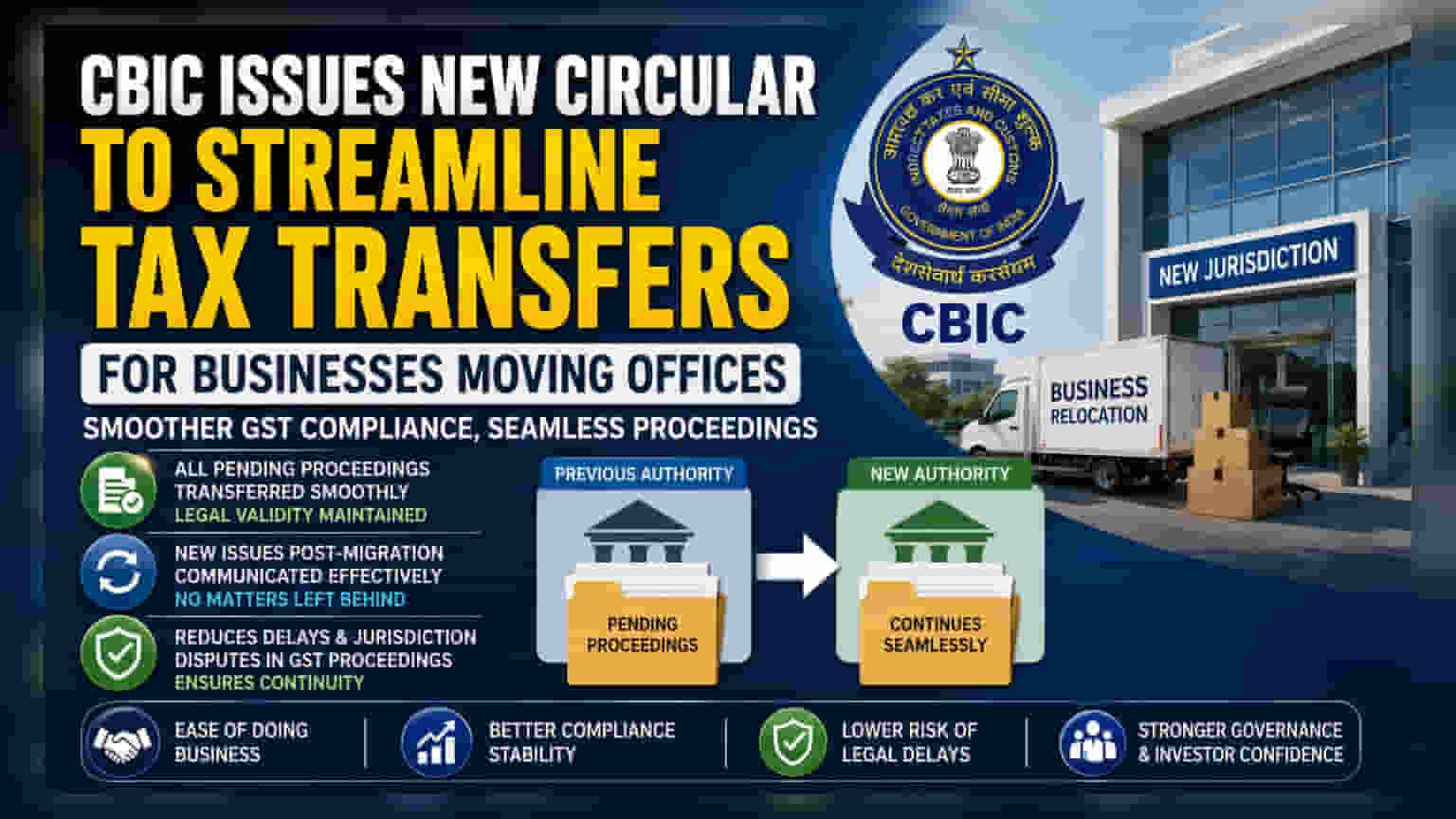
The Central Board of Indirect Taxes and Customs (CBIC) has issued a circular clarifying how pending GST cases, audits, and investigations are handled when a business shifts its principal place of business. This ensures that legal proceedings remain valid and continue without interruption. For businesses and investors, this clarity reduces administrative uncertainty and potential compliance gaps during corporate relocations.
What Happened
The Central Board of Indirect Taxes and Customs (CBIC) has released a new circular to streamline tax administration for businesses that move their principal place of business. The directive provides clear rules on how pending legal proceedings, investigations, and tax audits must be transferred from the previous tax authority to the new one. This ensures that the process of shifting office locations does not create administrative delays or legal loopholes in GST compliance.
Continuity in Tax Proceedings
Previously, businesses shifting their registered office between different tax jurisdictions sometimes faced procedural uncertainty regarding pending audits or notices. The new guidelines establish that any action initiated by the previous authority—referred to as the transferor authority—remains legally valid after the migration. The new (transferee) authority is now required to treat these earlier actions as if they had initiated them personally. This seamless transfer mechanism is designed to prevent jurisdictional disputes and ensure that the adjudication process continues without being reset or stalled.
Handling New Issues Post-Migration
If a new tax issue or compliance matter arises after a company has already migrated to a new jurisdiction, the framework provides a clear communication channel. The previous authority is now mandated to inform the new officer about the shift, ensuring that the new authority is properly equipped to take over further action. This prevents tax-related matters from slipping through the cracks due to internal administrative transfers.
Why This Matters for Corporate Compliance
For companies, this update is a positive step toward the "ease of doing business." Large businesses with operations spread across states often move their registered offices for operational efficiency. Previously, the lack of clarity on jurisdiction during such shifts could lead to delays in resolving tax disputes or completing pending audits. By removing these administrative hurdles, the circular provides more stability in the tax compliance process. Companies can now plan their internal relocations with more confidence, knowing that their ongoing tax files will remain active and consistent.
What Investors Should Note
While this is an administrative update, it directly impacts the governance and compliance stability of companies. Investors often track regulatory changes that reduce bureaucratic friction. A clearer, more consistent process for tax investigations and audits reduces the risk of legal delays or unexpected compliance penalties. The key monitorable for companies frequently relocating or restructuring their operations will be how quickly and smoothly these authorities coordinate the transfer of files under the new guidelines.