

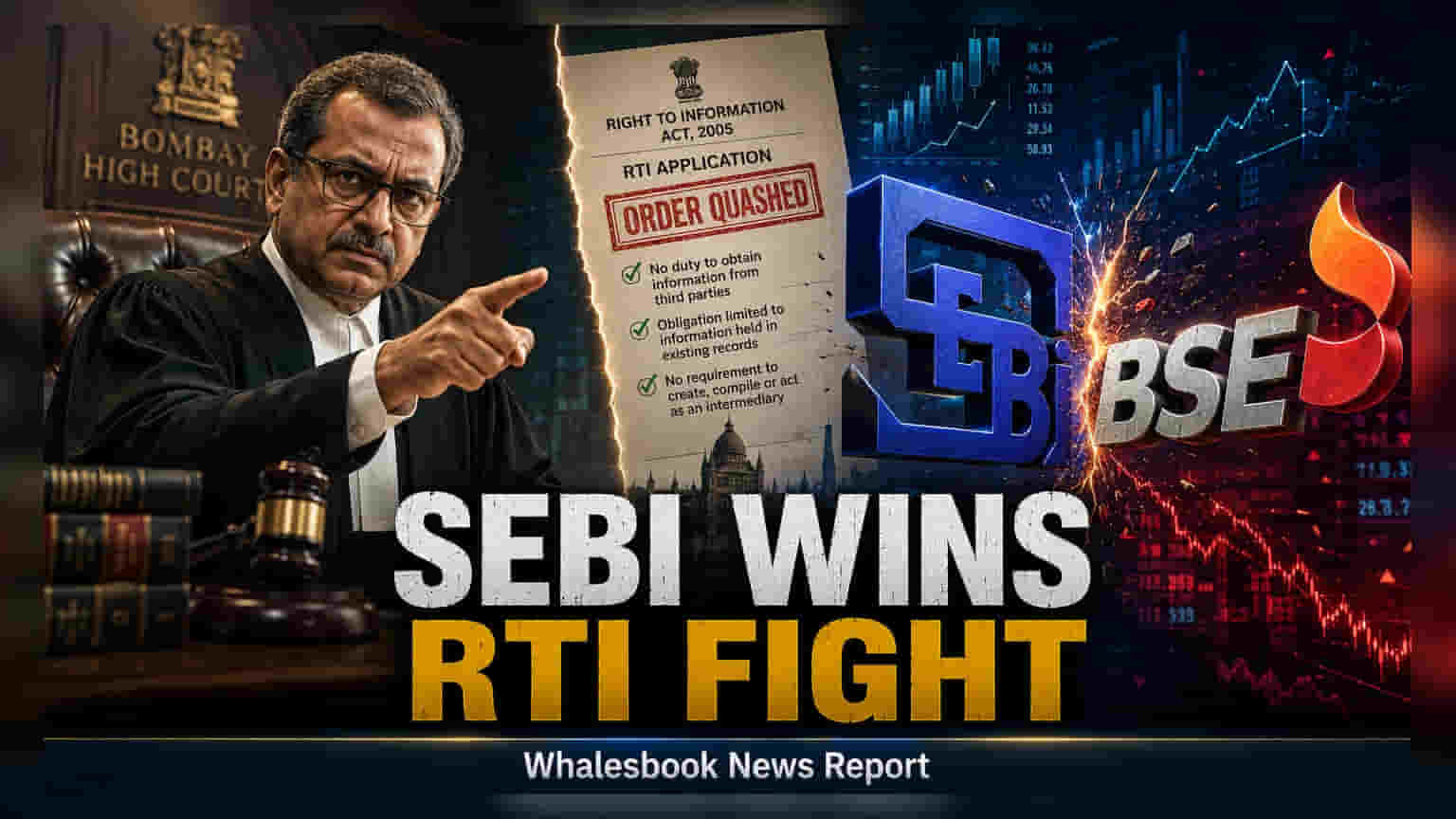
The Bombay High Court has ruled that SEBI is not required to retrieve information from third parties like the Bombay Stock Exchange (BSE) to fulfill RTI requests. This decision clarifies that regulators are only accountable for documents they already hold and cannot be forced to compile or source new data for applicants. This judgment defines the clear boundaries of RTI usage for public authorities in India.
The Bombay High Court has provided a significant clarification regarding the responsibilities of the Securities and Exchange Board of India (SEBI) under the Right to Information (RTI) Act. In a ruling delivered on August 19, 2026, the court decided that the market regulator is not legally mandated to obtain information from third-party entities, such as the Bombay Stock Exchange (BSE), to satisfy RTI applications.
This judgment comes after nine writ petitions were filed by SEBI and the BSE, challenging previous directives from the Central Information Commission (CIC). The CIC had earlier ordered SEBI to procure data from the BSE and subsequently share it with individuals who had filed RTI requests. The High Court has now quashed these CIC orders, providing much-needed clarity on the scope of a public authority's duties.
A division bench, consisting of Justices Manish Pitale and Shreeram V. Shirsat, emphasized the fundamental principles of the RTI Act. The court clarified that the obligation of a public authority is limited to providing information that it already holds in its records at the time of an application. The court explained that the RTI Act does not require a public authority to create, compile, or act as an intermediary to gather information from private bodies just to fulfill a request.
This ruling aligns with established legal precedents, including Supreme Court observations, which have consistently held that the RTI Act is designed to grant access to existing records rather than force public authorities to generate new information or conduct investigations for an applicant. While the definition of information under the Act can include data relating to private bodies if the public authority has a legal right to access it, the court ruled that this does not impose a blanket requirement on the regulator to source such data for every inquiry.
For investors and market participants, this decision is significant as it sets a definitive boundary on what can be expected through the RTI process regarding the regulator's data-gathering duties. By streamlining the regulator's obligation, the ruling ensures that SEBI’s administrative focus remains on its primary functions rather than acting as a clearinghouse for information that it does not currently possess. The key takeaway for those filing RTI requests is that their access remains limited to the information that the regulator maintains on its own systems and records.