

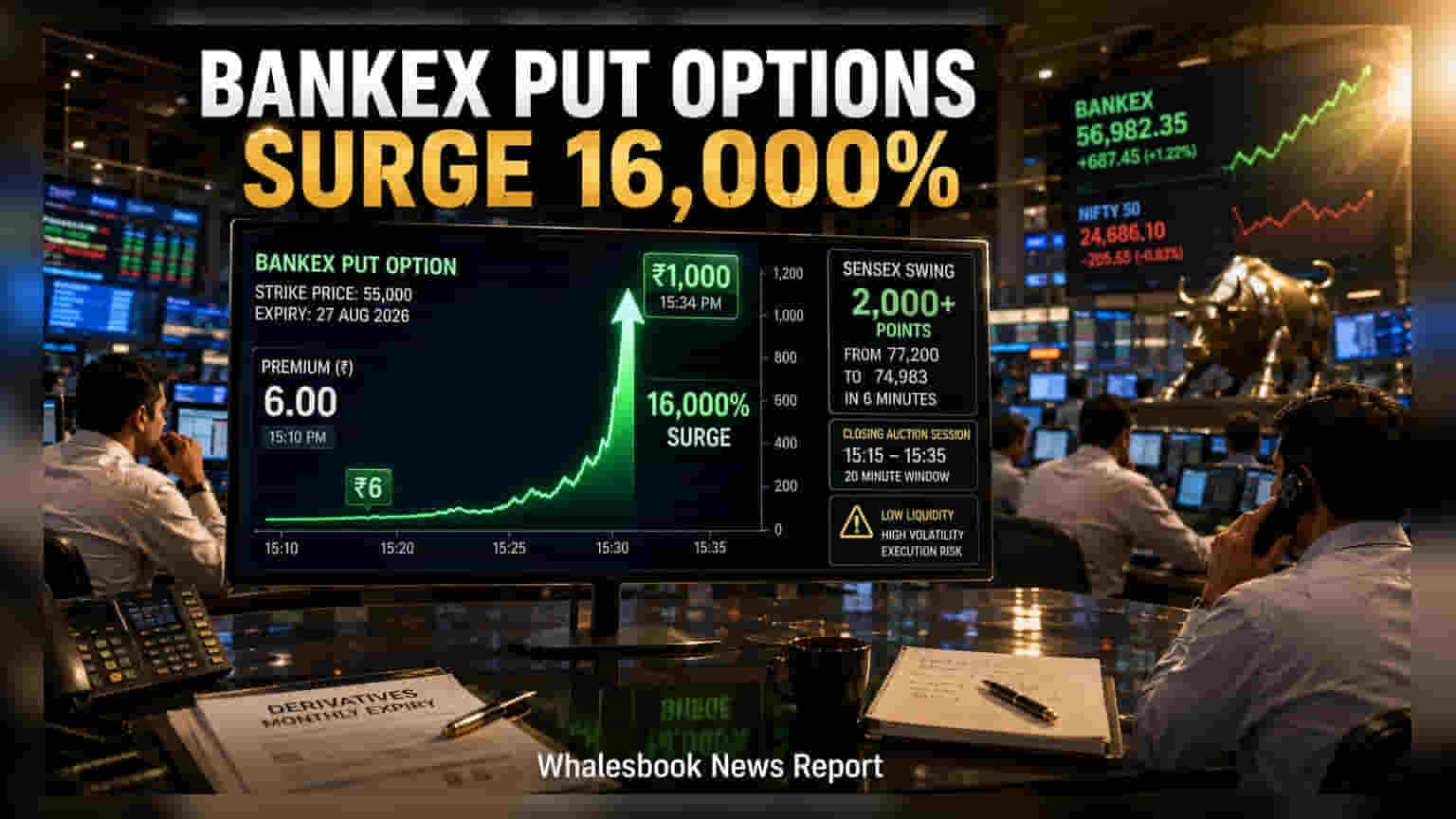
A new closing auction session on the BSE led to extreme market volatility on August 27, 2026. The Sensex swung 2,000 points, while some Bankex put options saw irrational price jumps. Investors are highlighting significant liquidity risks during this 20-minute closing window.
The implementation of the new Closing Auction Session on the BSE has led to unexpected market instability. On August 27, 2026, which marked a monthly derivatives expiry, traders witnessed sharp and erratic price swings during the final minutes of the trading day. The volatility was so severe that it caused a Bankex put option contract, which was trading at Rs 6, to spike to Rs 1,000 within a few minutes.
The Mechanics of the Volatility
The Closing Auction Session was introduced on August 3, 2026, to replace the previous method of calculating closing prices based on the Volume-Weighted Average Price. This session operates in a 20-minute window, starting from 3:15 pm. Its purpose is to allow for a more structured price discovery process before the market officially shuts for the day. However, recent observations suggest that this window is struggling with low liquidity.
Because the order book remains thin during these 20 minutes, even relatively moderate orders can lead to significant price distortions. This gap between the volume of buy and sell orders created the anomaly where derivatives premiums swung violently, catching many market participants off guard.
Impact on Market Stability
The instability was not limited to individual options. The BSE Sensex witnessed a swing of over 2,000 points, moving from approximately 77,200 to 74,983 in a span of roughly six minutes. For traders who rely on automated strategies or stop-loss mechanisms, such rapid and unnatural price movements pose a severe execution risk. When the market moves that quickly in the final auction window, it can trigger orders at unintended prices, leading to significant financial losses for those caught on the wrong side of the spread.
Risks for Investors
For investors and active traders, the primary concern is the lack of depth in the order book during this 3:15 pm to 3:35 pm window. While the exchange has begun providing indicative pricing for benchmark indices to help participants understand the potential close, the system is still in a transitional phase.
The event highlights a structural challenge: when the market shifts from a method that averaged prices over 30 minutes to an auction-based model, liquidity providers may hesitate to place large orders until they understand the new protocol. Until market depth improves, participants may face continued risks of sudden spikes or drops during the closing session. The next critical update for investors will be whether the exchange introduces further adjustments to improve liquidity or tightens rules around order sizes during the auction window to prevent these extreme price anomalies.