

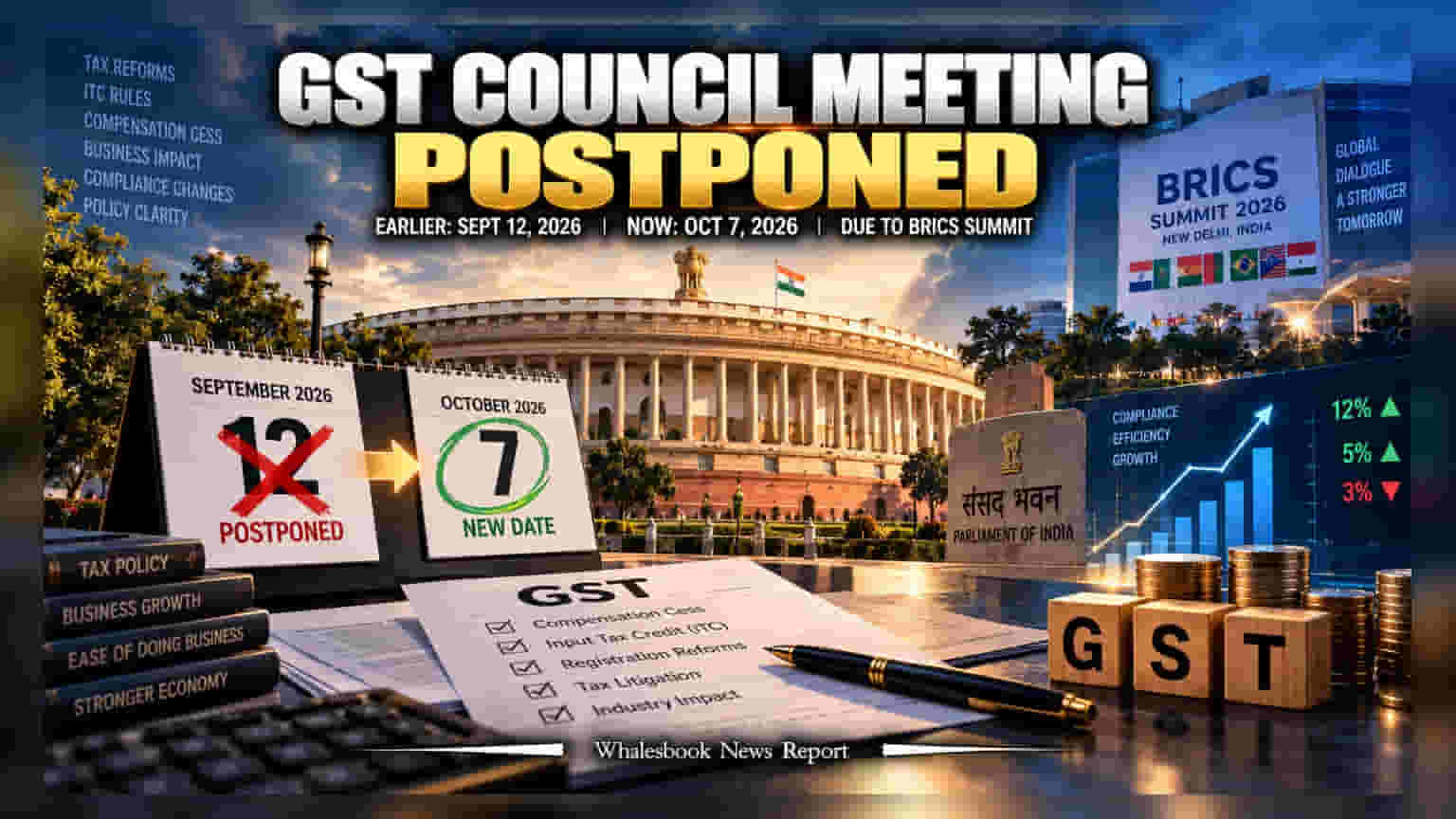
The 57th GST Council meeting has been postponed from September 12 to October 7, 2026, due to the BRICS Summit in New Delhi. This delay pushes back expected discussions on input tax credit (ITC) reforms and ongoing tax litigation. Investors should watch for updates on these issues, as they directly impact corporate cash flow and compliance requirements for various industries.
The 57th Goods and Services Tax (GST) Council meeting, which was originally scheduled for September 12, 2026, has been officially postponed to October 7, 2026. The delay is due to the scheduling of the 18th BRICS Summit, which is taking place at Bharat Mandapam in New Delhi around the same time. The administration has also declared a public holiday for government offices and schools in the city to manage the logistical requirements of the international event.
While the postponement is largely logistical, it represents the longest gap between Council meetings in recent times, causing a delay in decisions that companies and investors were tracking. The Council's agenda remains focused on key operational changes that could affect the bottom line of many businesses.
Impact on Working Capital and Tax Litigation
A primary area of concern for investors involves the status of accumulated compensation cess. The Federation of Automobile Dealers Associations (FADA) has a case currently before the Supreme Court regarding the transition and refund of these credits. Industry estimates suggest that approximately ₹2,500 crore in credits are currently trapped in electronic ledgers. For auto retailers, clarity on this issue is crucial, as it affects the cash they have available for daily operations. Until the Council and the Supreme Court provide a clear path forward, this uncertainty remains a point of friction for the sector.
Additionally, the Council is expected to address issues surrounding Input Tax Credit (ITC). Businesses are closely watching for changes that would protect buyers from supplier defaults. Currently, if a supplier fails to deposit taxes, the buyer may lose the ability to claim the tax credit, which increases their cost of business. Reforms in this area are aimed at improving cash flow and reducing the administrative burden on companies.
Compliance and Future Reforms
The Council is also looking to simplify registration processes for the remaining 35% of businesses that were not covered by the simplified rules introduced last November. Current proposals include setting standard documentation requirements for companies that transfer tax credits exceeding ₹2.5 lakh per month. The goal is to speed up registration approvals and clarify rules for when registrations might be cancelled. Investors generally monitor these compliance changes, as more efficient processes can reduce the time and money companies spend on administrative tasks.
The next meeting on October 7 will be critical for businesses looking for relief on tax credit restrictions for expenses such as outdoor catering, health services, and club memberships. Whether the Council decides to relax these constraints will determine the tax treatment of these expenses moving forward.