 Whalesbook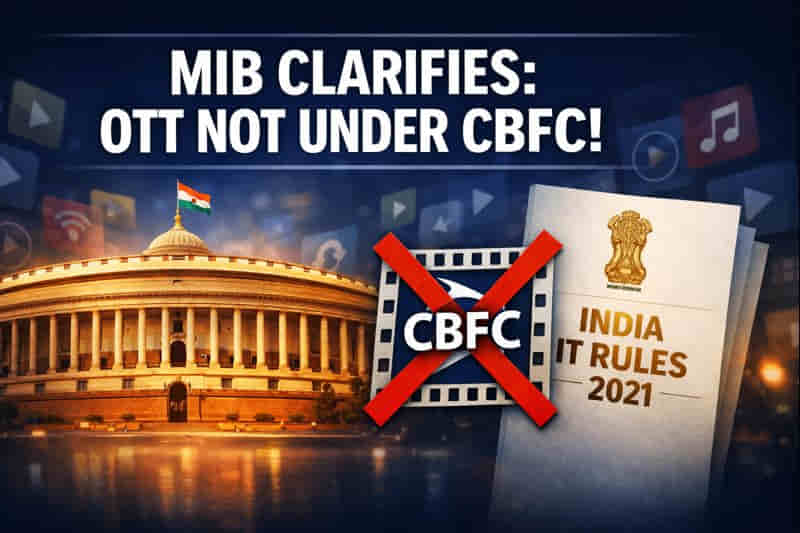
Ministry of Information and Broadcasting (MIB) has issued a significant clarification regarding the oversight of content on Over-The-Top (OTT) platforms in India. Addressing the Lok Sabha on Wednesday, December 17, 2025, the ministry affirmed that streaming content does not fall under the jurisdiction of the Central Board of Film Certification (CBFC). This clarification delineates a clear regulatory boundary for digital media content, separating it from traditional cinema exhibition.
Instead, the MIB confirmed that OTT platforms are governed by the Information Technology (Intermediary Guidelines and Digital Media Ethics Code) Rules, 2021. This established framework sets the standards for digital content publishers, ensuring a structured approach to content regulation and audience protection across the rapidly expanding digital media landscape in India.
The Regulatory Divide
The Central Board of Film Certification operates as a statutory body, established under the Cinematograph Act, 1952. Its primary mandate involves the examination and certification of cinematographic films intended for public exhibition. This role traditionally pertains to theatrical releases and physical media.
OTT platforms, however, operate in a distinct digital sphere. They are specifically regulated under Part III of the IT Rules, 2021, which introduces a comprehensive Code of Ethics designed for digital content publishers. This ensures that online content creators and distributors adhere to specific guidelines tailored to the internet environment.
IT Rules in Action
Under the Code of Ethics outlined in the IT Rules, 2021, OTT platforms are obligated to refrain from publishing content that is prohibited by law. Furthermore, they must meticulously follow age-based classification norms. These guidelines are crucial for safeguarding audiences, particularly younger viewers, by ensuring content is appropriate for different age groups.
The IT Rules also implement a robust three-tier institutional mechanism. This system is designed to ensure consistent compliance with content-related norms and to provide effective channels for addressing public grievances related to digital content. It offers a structured pathway for accountability and viewer feedback.
Grievance Redressal Explained
The three-tier mechanism begins at Level I with self-regulation by the publishers themselves. Complaints lodged by the public are initially forwarded to the concerned OTT platform for resolution. This empowers platforms to take prompt action on user feedback and content concerns.
Should issues remain unresolved at the publisher level, Level II comes into play. This stage involves self-regulation by self-regulating bodies formed by the publishers. These bodies oversee compliance across multiple platforms and handle more complex or persistent issues.
Finally, at Level III, an oversight mechanism by the Central Government is established. This ensures that all platforms and self-regulatory bodies adhere strictly to the IT Rules. The government can intervene and take necessary action to enforce compliance, maintaining the integrity of the regulatory framework.
Impact and Implications
This explicit clarification by the MIB provides much-needed certainty for the digital media and OTT sector in India. Content creators and platforms can now operate with a clearer understanding of their regulatory obligations. Investors in this space will benefit from a more defined operational environment, potentially encouraging further growth and investment.
The established grievance redressal system aims to enhance accountability and user trust. While the emphasis remains on self-regulation, the government's oversight ensures that standards are maintained. This regulatory clarity is crucial as the OTT market continues its rapid expansion, shaping the future of digital content consumption in India.
Impact Rating: 6/10
Difficult Terms Explained
- OTT Platforms: These are online services that deliver content like movies, TV shows, and web series over the internet. Examples include Netflix, Amazon Prime Video, and Disney+ Hotstar.
- Ministry of Information and Broadcasting (MIB): This is a central government ministry responsible for policies related to information, broadcasting, the press, and films in India.
- Central Board of Film Certification (CBFC): A statutory body that certifies films for public exhibition in India, determining their suitability for different age groups and general release under the Cinematograph Act.
- Information Technology (Intermediary Guidelines and Digital Media Ethics Code) Rules, 2021: These rules govern online content, digital media publishers, and intermediaries in India, setting ethical standards and compliance requirements.
- Cinematograph Act, 1952: An Indian law that provides for the certification of cinematograph films for exhibition and regulates the exhibition of films.
- Code of Ethics: A set of principles and guidelines that digital content publishers must follow to ensure responsible and lawful content dissemination.
- Grievance Redressal Mechanism: A structured process established to receive, investigate, and resolve complaints or issues raised by the public concerning digital content.