

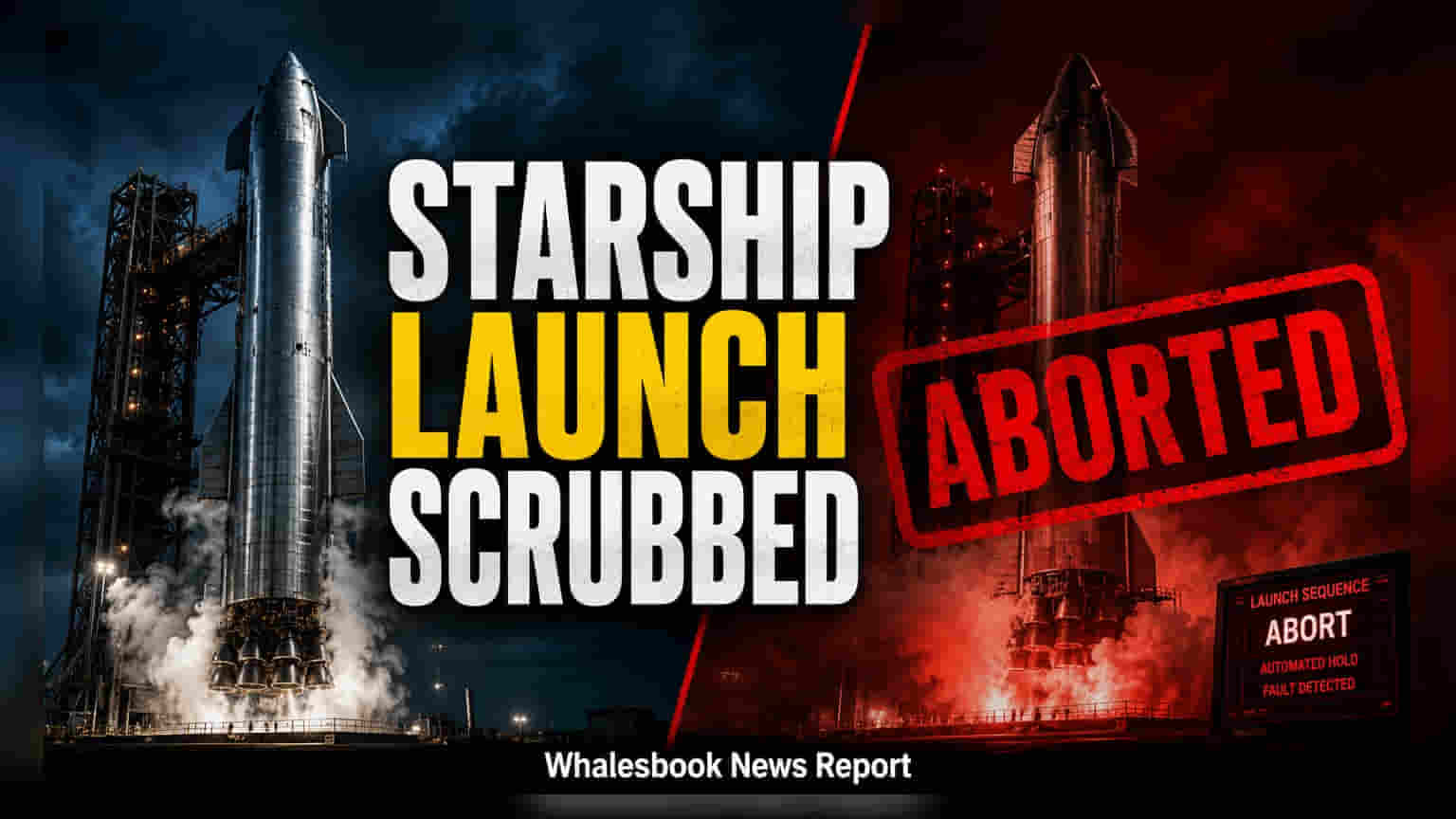
SpaceX's Starship rocket aborted its 13th test flight seconds before launch on Thursday following an engine ignition failure. This delay impacts the planned deployment of 20 Starlink satellites and creates potential scheduling risks for NASA’s upcoming Artemis moon missions.
SpaceX faced a significant operational hurdle on Thursday as its massive Starship rocket aborted its 13th test flight just seconds before the planned liftoff. During the automated pre-launch sequence, multiple engines failed to maintain ignition, forcing the launch team to trigger an immediate abort and initiate standard fuel-drain procedures. While such technical pauses are common in the early development stages of complex aerospace vehicles, this specific failure highlights the ongoing challenges in refining the rocket's propulsion system.
The mission had two primary objectives: launching 20 new Starlink internet satellites into orbit and gathering flight data to test the spacecraft's heat shield integrity. Because these Starlink satellites were scheduled to deploy as part of the test, the abort prevents the expansion of the current orbital network for this launch. SpaceX founder Elon Musk noted on social media that the team expects to investigate the cause of the ignition failure and potentially reschedule the flight attempt within a few days.
Implications for NASA and Artemis Moon Missions
Beyond immediate satellite deployment, the Starship program holds deep importance for NASA’s long-term lunar exploration goals. SpaceX is currently under contract to provide a specialized version of the Starship to serve as a human landing system for the Artemis program. This program is central to the agency's goal of returning astronauts to the lunar surface.
NASA has also engaged Blue Origin to develop the 'Blue Moon' lander to provide redundancy and competition for these missions. Both companies are currently working toward the Artemis III mission, which is scheduled for next year and will involve critical docking procedures. Any recurring technical setbacks or launch delays for Starship can put pressure on these ambitious timelines, as the vehicle must complete a series of successful uncrewed and crewed tests to meet safety requirements for astronaut landings.
Investors and space industry observers should note that Starship’s development is a high-risk, high-reward project. The core monitorables for the coming weeks include the results of the engine failure investigation, the speed at which SpaceX can return to the launchpad, and the continued progress of NASA’s Artemis milestone reviews. As the company continues to rely on iterative testing—where rockets are often expended rather than recovered in these early phases—the financial and operational costs of these launch attempts remain a key factor in the overall viability of the Starship program.