

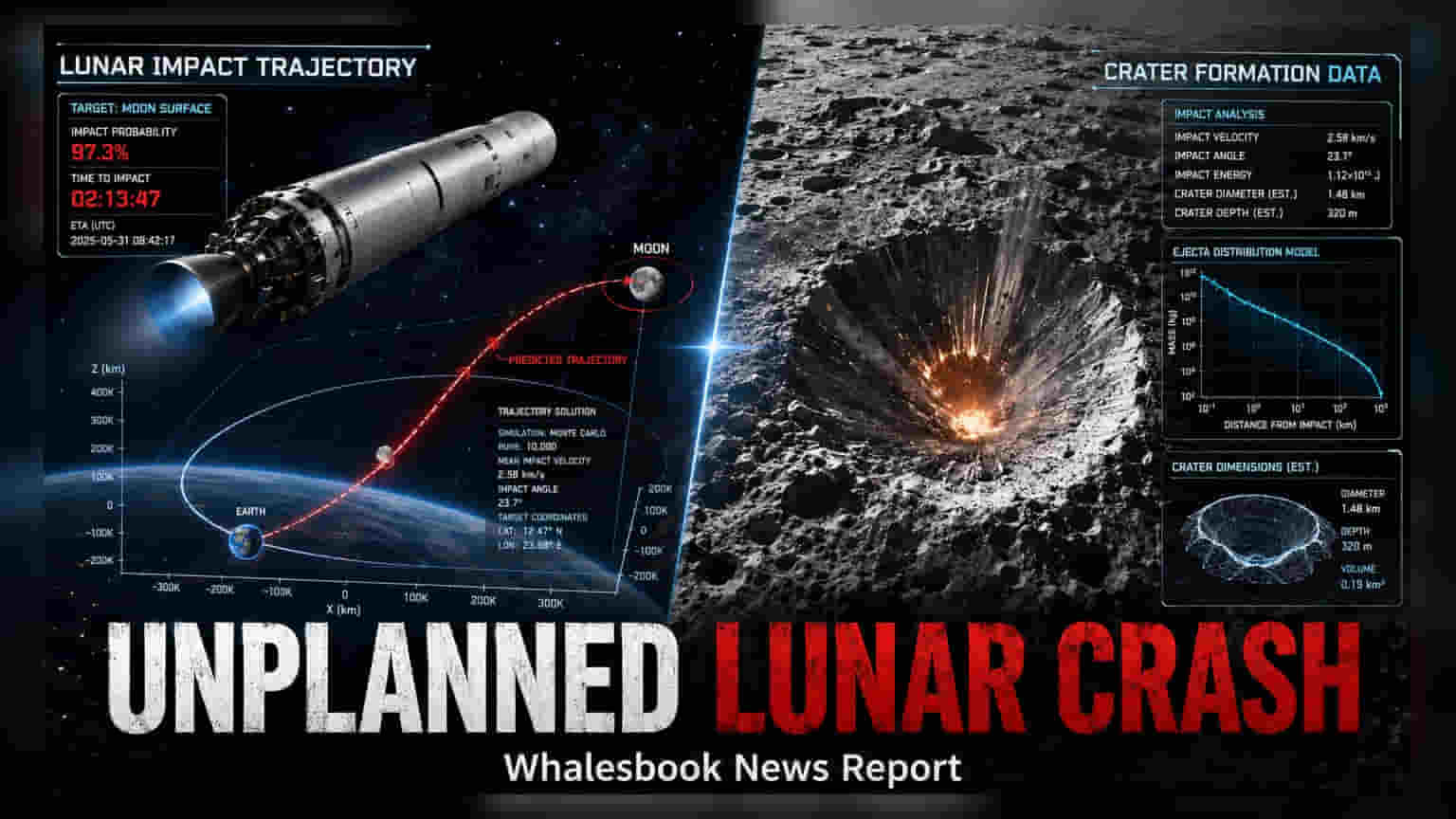
A spent SpaceX rocket stage is set to collide with the Moon today, August 5, 2026, marking a rare human-made lunar impact. While the event provides scientific data, it arrives as the recently listed SpaceX faces financial scrutiny. The company posted a $541 million net loss in its latest quarterly results, with investors closely watching its high spending on AI and satellite infrastructure.
A four-tonne SpaceX Falcon 9 rocket stage is expected to impact the lunar surface today, August 5, 2026, near the Einstein and Bell craters. The collision is estimated to occur at approximately 06:35 UTC. This event, confirmed by NASA, is drawing attention from researchers who hope to gather data on how material is ejected during such lunar impacts. While the event poses no threat to Earth, it is a reminder of the increasing volume of human-made objects in space.
For investors, this incident highlights the operational complexities of space exploration. As SpaceX, now a publicly traded company on the NASDAQ under the ticker SPCX, grows its operations, the management of its space hardware and debris has become a point of discussion. The event has reignited conversations among market observers about space debris mitigation and the responsibilities of private space operators.
The timing of the impact coincides with SpaceX navigating its early phase as a public company. In its recent quarterly financial results, the company reported revenue of $7.81 billion. However, it also recorded a net loss of $541 million. This loss reflects the significant capital the company is spending on AI infrastructure and new technology projects. Investors are currently weighing this high level of spending against the company’s long-term growth strategy.
Since its initial public offering in June 2026, the company’s stock has seen significant volatility. It is currently trading below its post-IPO peak, as the market reacts to both broader sector challenges and concerns over immediate profitability. The focus of the market is shifting toward how quickly the company can turn its technological investments into sustainable cash flow.
Beyond current financial results, there are operational risks that shareholders should track. The development of the Starship launch system remains critical to the company's business model. If the company faces technical delays or cost increases in this project, it could put further pressure on profit margins. Additionally, with upcoming expirations of insider lock-up periods, the stock may face increased selling pressure, which is a factor investors often monitor in newly listed companies.
Moving forward, investors will be watching the company's ability to control its infrastructure spending and demonstrate improved margins in upcoming quarters. While the lunar impact event is a scientific milestone, the company’s ability to manage its operational, financial, and regulatory challenges will likely remain the main driver for its stock performance in the months ahead.