 Whalesbook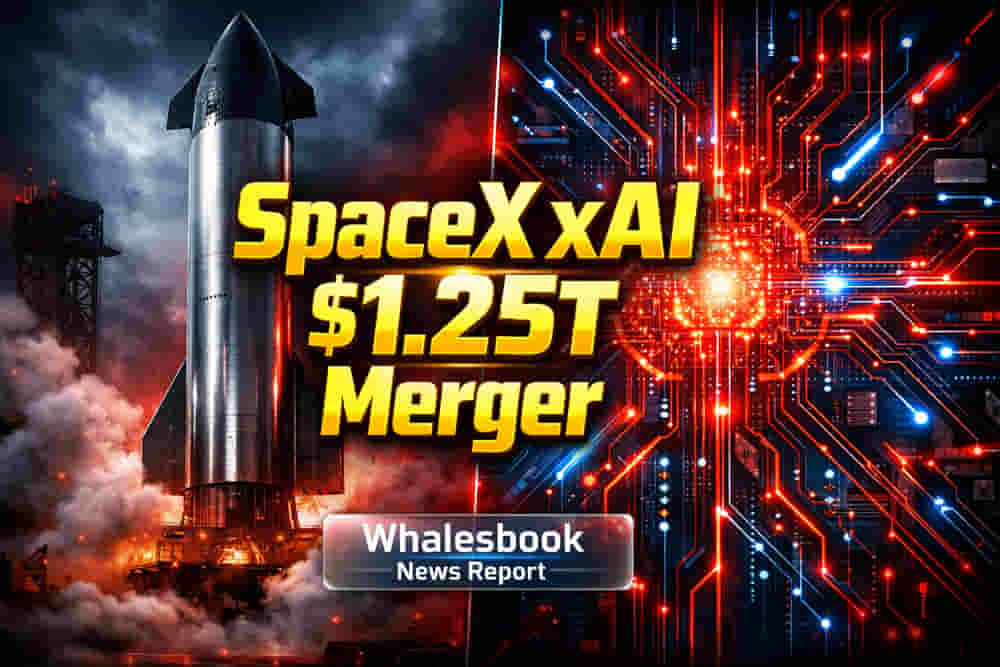


### Strategic Synergies and Market Impact
The fusion of SpaceX and xAI signifies a profound shift in how complex technological endeavors will be managed. This integration formalizes a deep synergy, merging SpaceX's established dominance in rocket development, satellite networks, and space systems with xAI’s cutting-edge artificial intelligence research. The stated objective is to forge a singularly powerful, vertically integrated innovation engine capable of ambitious operations spanning both terrestrial and extraterrestrial environments. This move is underpinned by a reported $1.25 trillion valuation, with SpaceX accounting for an estimated $1 trillion and xAI approximately $250 billion, positioning the combined entity among history's most significant private technology mergers. The immediate impact is the consolidation of AI assets, including the Grok chatbot, under the SpaceX umbrella, enhancing capabilities from deep engineering analysis to real-time mission control functions.
### Analytical Deep Dive: Sector Dynamics and Competition
This merger arrives at a critical juncture for the commercial space industry, which is increasingly reliant on sophisticated data analysis and autonomous systems. AI's role is rapidly expanding, transforming the sector by enabling advanced analytics for Earth observation, optimizing satellite constellation management, advancing autonomous robotics for exploration, and enhancing predictive maintenance for spacecraft. By bringing xAI in-house, SpaceX bypasses the need for external AI partnerships, ensuring proprietary development and immediate application across its diverse operations. This strategy mirrors Musk's prior approach at Tesla, where vertical integration of critical components like battery production and software development accelerated innovation. In the competitive landscape, this consolidation creates significant pressure on rivals such as Blue Origin and Rocket Lab in private spaceflight, as well as against dedicated AI developers like OpenAI and Google DeepMind in the AI domain.
### Future Outlook and IPO Expectations
Looking ahead, the primary focus remains the planned initial public offering in mid-2026. This event is anticipated to be one of the largest IPOs on record for a private company, potentially reshaping public market valuations for technology firms. The integrated entity expects to leverage its combined strengths to accelerate advancements in autonomous space exploration, sophisticated earth monitoring, and novel AI-driven communication infrastructures. SpaceX has indicated further details regarding the integration's implementation will be shared, suggesting a phased approach to fully realize its synergistic potential. The long-term vision aligns with Musk's broader objectives of advancing human progress and technological scalability, both on and off Earth.