

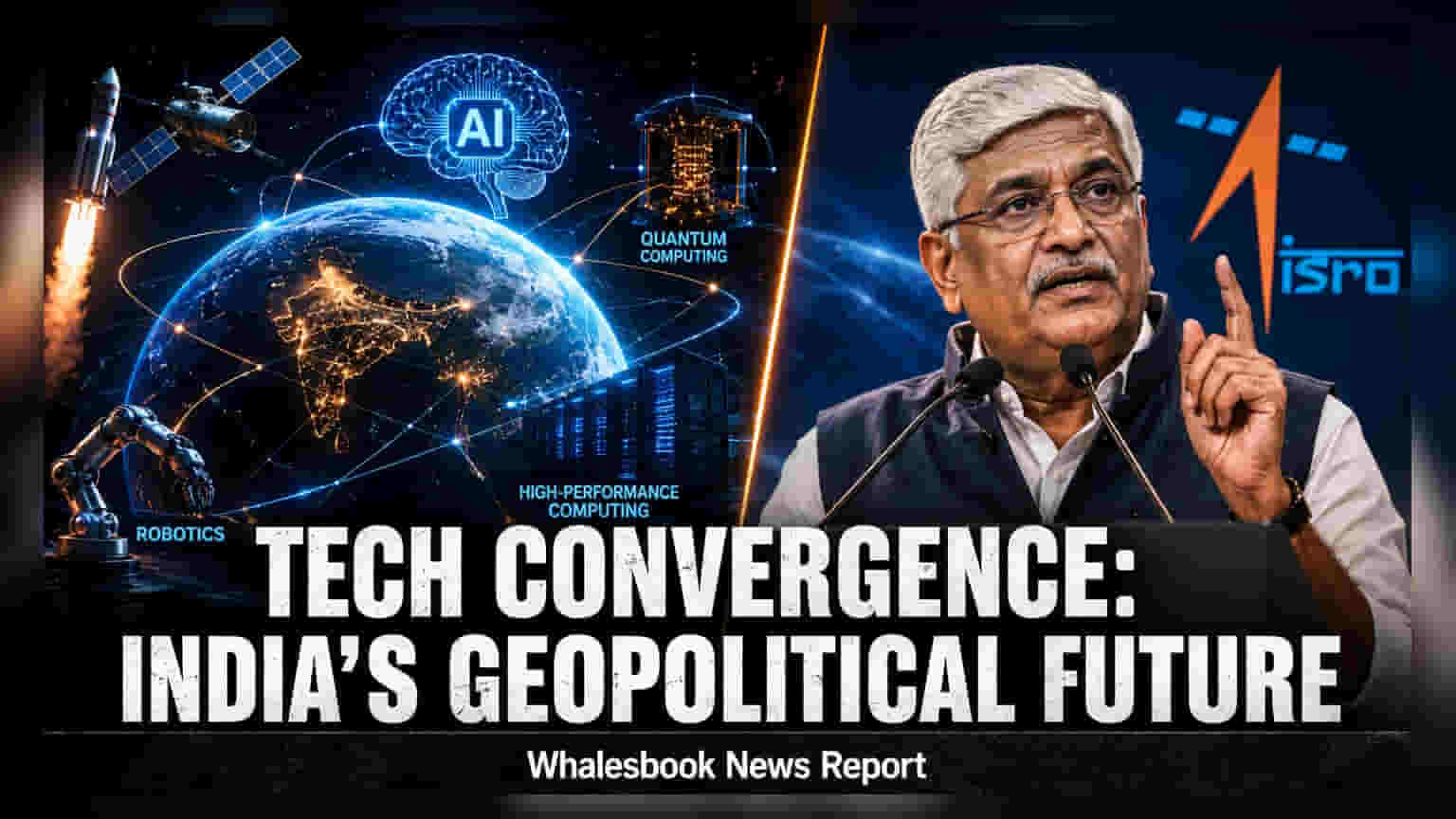
Union Minister Gajendra Singh Shekhawat stated that integrating space technology with AI, quantum computing, and semiconductors is essential for India's future economic and geopolitical power. The shift toward an ecosystem-centric model, involving private startups via IN-SPACe, aims to amplify ISRO’s capacity. Investors should watch how this technological convergence impacts sectors like defense, aerospace, and data services.
Union Minister Gajendra Singh Shekhawat emphasized on Sunday, August 23, 2026, that the future of India's geopolitical and economic strength lies in the integration of multiple advanced technologies. Speaking at the 3rd National Space Day event, the minister highlighted that sectors such as space technology, artificial intelligence, quantum computing, robotics, and high-performance computing are no longer independent paths. Instead, their convergence will serve as the primary driver for technological and economic leadership in the 21st century.
The Shift to an Ecosystem-Centric Model
For investors, the most significant takeaway from the minister’s remarks is the transition from an organization-centric space model to an ecosystem-centric one. While ISRO remains the primary leader, the government’s focus is on scaling up private participation through the Indian National Space Promotion and Authorisation Centre (IN-SPACe).
This policy approach is designed to encourage collaboration between established industry players, private startups, and academic institutions. By creating this framework, the government aims to multiply India’s space capabilities. The growth of space-focused startups in India—rising to approximately 440 since policy reforms began in 2020—indicates that this ecosystem is expanding, providing a broader base for private sector involvement in the space value chain.
Impact on Future Growth Sectors
The minister noted that the integration of AI and semiconductor technology with space missions will be critical for future infrastructure and warfare. This convergence creates potential long-term opportunities for companies across various supply chains. For example, the development of the Indian Space Station by 2035 and upcoming missions like Gaganyaan, Chandrayaan-4, and planned missions to Mars and Venus require robust hardware, software, and data management solutions. Investors may track how companies in the defense, IT, and specialized electronics sectors align their roadmaps with these high-tech space objectives.
Challenges and Risks to Monitor
While the government is pushing for rapid expansion, the minister also highlighted material challenges that could affect the industry. Specifically, he pointed to the risks posed by space debris, cybersecurity threats, and data protection concerns in an increasingly digital and automated environment.
For businesses operating in this space, these challenges are not just operational hurdles; they are also areas where demand for specialized solutions will rise. Cybersecurity firms, data management providers, and aerospace companies developing debris-mitigation technologies are likely to see increased regulatory and market attention as these concerns become central to space policy. Investors may watch how the government balances the need for speed and innovation with these security and sustainability risks, as any regulatory tightening or major operational failure in these areas could impact companies involved in the sector.