

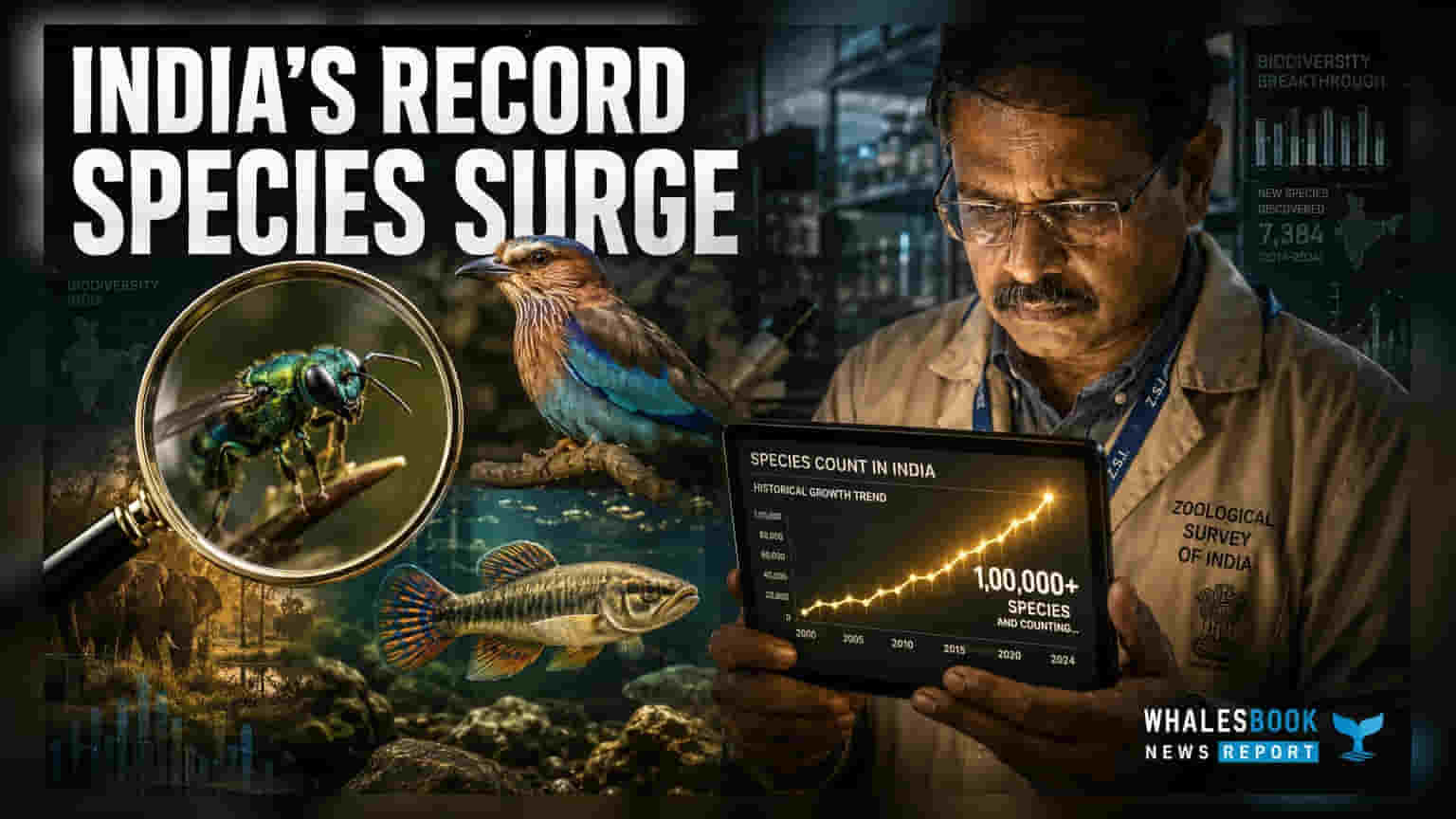
India identified a record 709 new animal species in 2025, largely driven by insect discoveries in Kerala and West Bengal. The Zoological Survey of India also launched an updated digital biodiversity database to support conservation planning and research.
What Happened
India reached a new milestone in biodiversity research, documenting 709 animal species in 2025, the highest annual total on record. According to official data, this figure includes 483 species completely new to science and 226 species documented in India for the first time. The findings highlight the country's ongoing role as a major biodiversity hub, with insects accounting for nearly 59% of the total discoveries. The effort was spearheaded by the Zoological Survey of India (ZSI), which continues to expand its catalog of the nation's diverse fauna.
Insects and Regional Hotspots
The contribution of invertebrates was significant, with 417 insect species identified. Within the discoveries new to science, the Hymenoptera order—which includes bees, wasps, and ants—was the most prominent. Among the Indian states, Kerala maintained its position as a biodiversity leader by reporting 98 new species, followed by West Bengal, Karnataka, and Arunachal Pradesh. These regions, particularly the Western Ghats and the eastern Himalayas, remain focal points for ongoing ecological research.
Digital Tools and Database Updates
In conjunction with the latest findings, the ZSI introduced Version 3.0 of the Indian Biodiversity Information System. This digital repository now tracks 105,953 species and subspecies, providing a centralized data source for researchers and policymakers. Additionally, the government launched the PaleoIndia Portal, which maps the distribution of fossil fauna. These initiatives are intended to improve the accuracy of conservation planning by providing better spatial data on both modern and prehistoric species.
Conservation and Wildlife Management
Environment Minister Bhupender Yadav noted the link between these biodiversity findings and broader wildlife management goals. Using the Sariska Tiger Reserve as a model for successful population recovery, the ministry is evaluating the potential for tiger reintroduction in other regions, such as the Buxa forest in West Bengal. These efforts aim to integrate scientific research on species distribution with targeted conservation actions to protect threatened ecosystems.
What Investors and Researchers Should Track
For those monitoring the sector, the focus remains on the integration of these digital databases into government policy and environmental impact assessments. Future monitorables include the operational success of the new PaleoIndia Portal, updates to the Indian Biodiversity Information System, and the progress of wildlife reintroduction projects in states like West Bengal. These data points are essential for understanding how India manages its natural assets amid rising ecological pressures and land-use demands.