

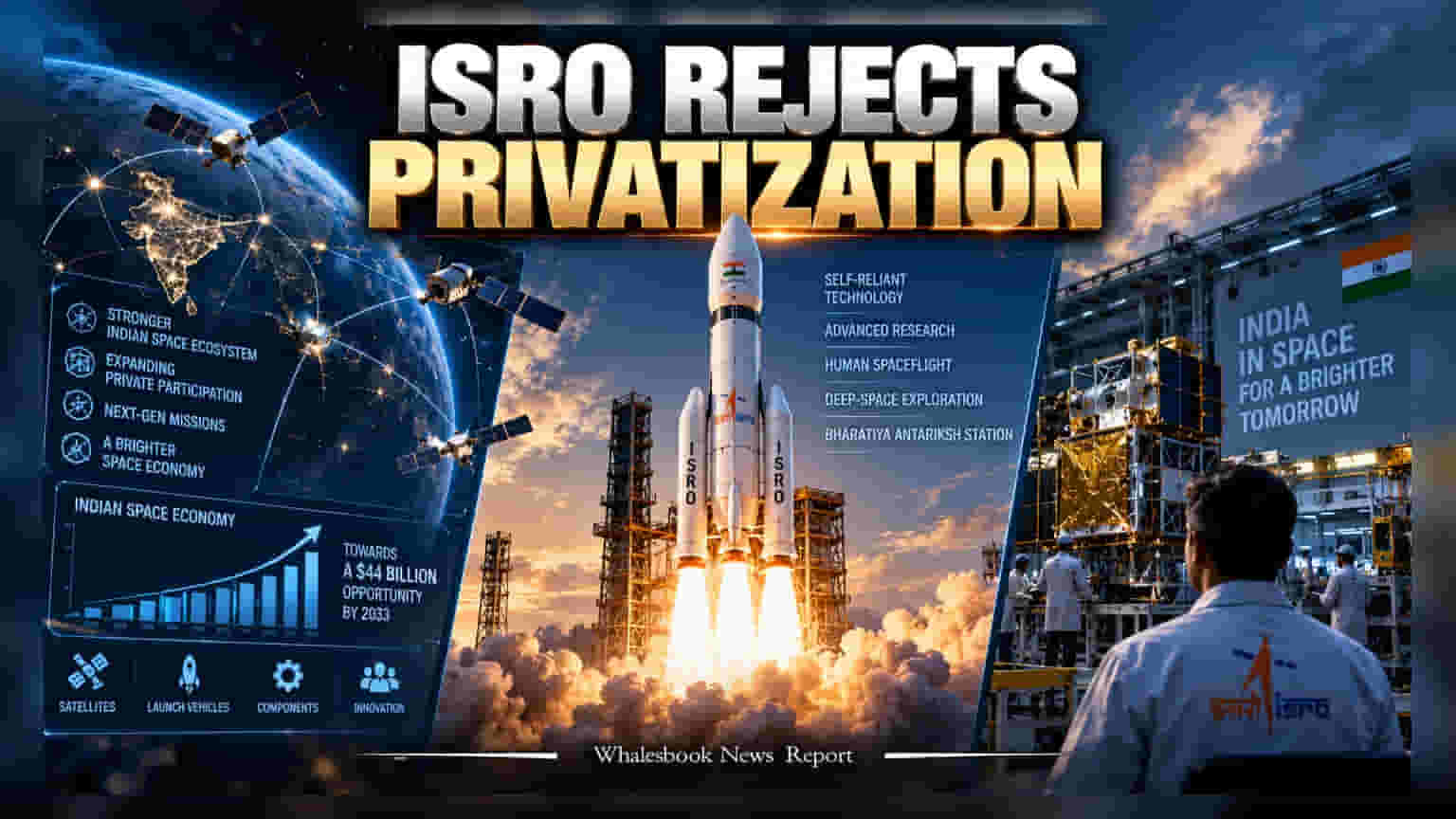
The Indian Space Research Organisation has officially rejected claims of privatization following concerns from employee associations. The agency clarified that ongoing reforms aim to expand the national space ecosystem by involving the private sector in routine manufacturing, allowing ISRO to focus on advanced scientific research and complex deep-space missions.
The Indian Space Research Organisation (ISRO) has formally addressed and dismissed speculation regarding the privatization of the national space agency. The clarification, issued on September 6, 2026, followed concerns raised by nine employee associations regarding the future structure and governance of the organization. ISRO leadership emphasized that the agency is not being privatized and that its status as the country’s primary hub for advanced space research remains unchanged.
Clarifying the New Ecosystem Architecture
The confusion appears to have stemmed from the ongoing integration of private startups and public sector entities into India's space value chain. Under the framework established since 2020, and further solidified by the Indian Space Policy 2023, the government has adopted a clear division of labor. The Department of Space remains responsible for policy, while the Indian National Space Promotion and Authorization Centre acts as a facilitator for private entities. NewSpace India Limited continues to handle commercialization tasks.
This structural evolution is designed to delegate routine manufacturing, such as standardized satellite production and launch vehicle assembly, to private companies. By offloading these operational tasks, ISRO aims to redirect its elite scientific workforce toward high-stakes, next-generation projects. These include the Bharatiya Antariksh Station and various deep-space exploration missions that require advanced research capabilities beyond current commercial standards.
Investor and Sector Implications
For investors and market participants tracking the Indian aerospace and defense sectors, this clarification provides a stable roadmap for the industry's growth. The government’s intent is not to dismantle the state space agency but to scale the entire national space economy. With over 450 space startups currently operating in India, the collaborative model is intended to capture a larger share of the global space market, which the government aims to grow significantly by 2033.
Publicly listed companies that act as suppliers, component manufacturers, or technology partners to ISRO should view this policy consistency as a positive signal. The clarification confirms that the long-term trend of private sector participation in the space supply chain is government-backed and aligned with national security priorities. However, the transition brings inherent operational challenges. While the private sector scales up production, ISRO must maintain rigorous quality assurance and oversight to ensure the success of complex national missions.
Investors may monitor the execution of upcoming space missions and the continued implementation of the Indian Space Policy 2023. The ability of private firms to successfully deliver on routine manufacturing contracts—without compromising on technical standards—will remain a key factor in the long-term growth of the private space ecosystem.