

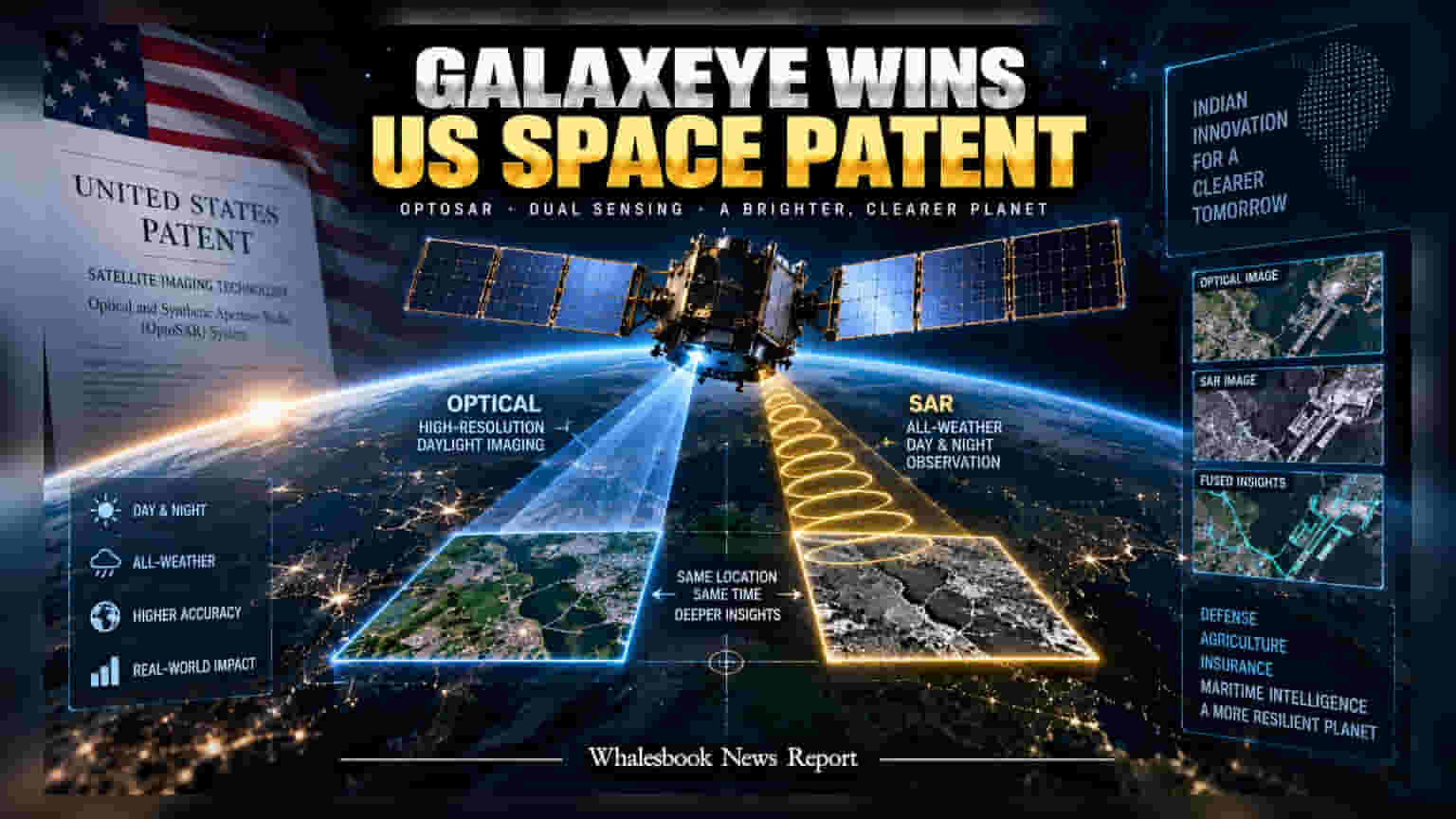
Indian space-tech startup GalaxEye has received a US patent for its OptoSAR imaging architecture, which merges optical and radar sensors into one platform. As a private company, this milestone strengthens its intellectual property as it prepares to scale its satellite constellation. Investors in the space-tech sector should track how the firm scales its commercial operations and converts its technology into recurring service contracts.
GalaxEye, an Indian space-tech startup, has been granted a US patent for the core architecture of its OptoSAR imaging technology. This achievement marks a significant step for the company, as it is the first time an Indian startup has received a US patent specifically for satellite imaging technology. The patent protects the system that aligns and synchronizes optical and microwave sensors, allowing them to capture data simultaneously.
The core of the technology, known as OptoSAR, addresses a common limitation in Earth observation. Typically, optical satellites and radar-based satellites operate separately, meaning images of the same location might be captured at different times or angles, causing gaps in data. By integrating both capabilities into a single sensing platform, GalaxEye enables high-quality, all-weather, day-and-night observation. The company has already demonstrated this technology in space with its 'Mission Drishti' satellite, which was launched in May 2026.
It is important for market followers to note that GalaxEye is a private, unlisted company. It does not trade on the National Stock Exchange (NSE) or the Bombay Stock Exchange (BSE). Consequently, there is no public share price or retail trading activity for the company. Investment in GalaxEye is currently restricted to private equity, venture capital, and institutional funding rounds.
Securing this US patent provides the company with a stronger legal position as it enters international markets. The company’s long-term plan is to build and deploy a constellation of 30 satellites over the next five years. These satellites are intended to serve various sectors, including defense, agriculture, insurance, and maritime intelligence.
While the patent is a major milestone, the company faces the typical challenges of a capital-intensive space-tech business. Success will depend on the firm's ability to execute its ambitious launch schedule without significant delays, manage the high costs associated with building and maintaining space infrastructure, and secure long-term commercial contracts. As a venture-backed entity, the company remains reliant on its ability to raise future rounds of funding to finance its expansion. The key for industry observers will be to monitor the company’s success in moving from experimental missions to consistent, revenue-generating commercial operations.