

Agnikul Cosmos has launched two new facilities in Chennai to test rocket stages and manufacture high-pressure composite vessels. While the company remains a private, unlisted startup, this expansion highlights a move toward vertical integration in India's private space sector. Investors can monitor the company's progress on Mission-02 and its ability to achieve stage recovery and reuse.
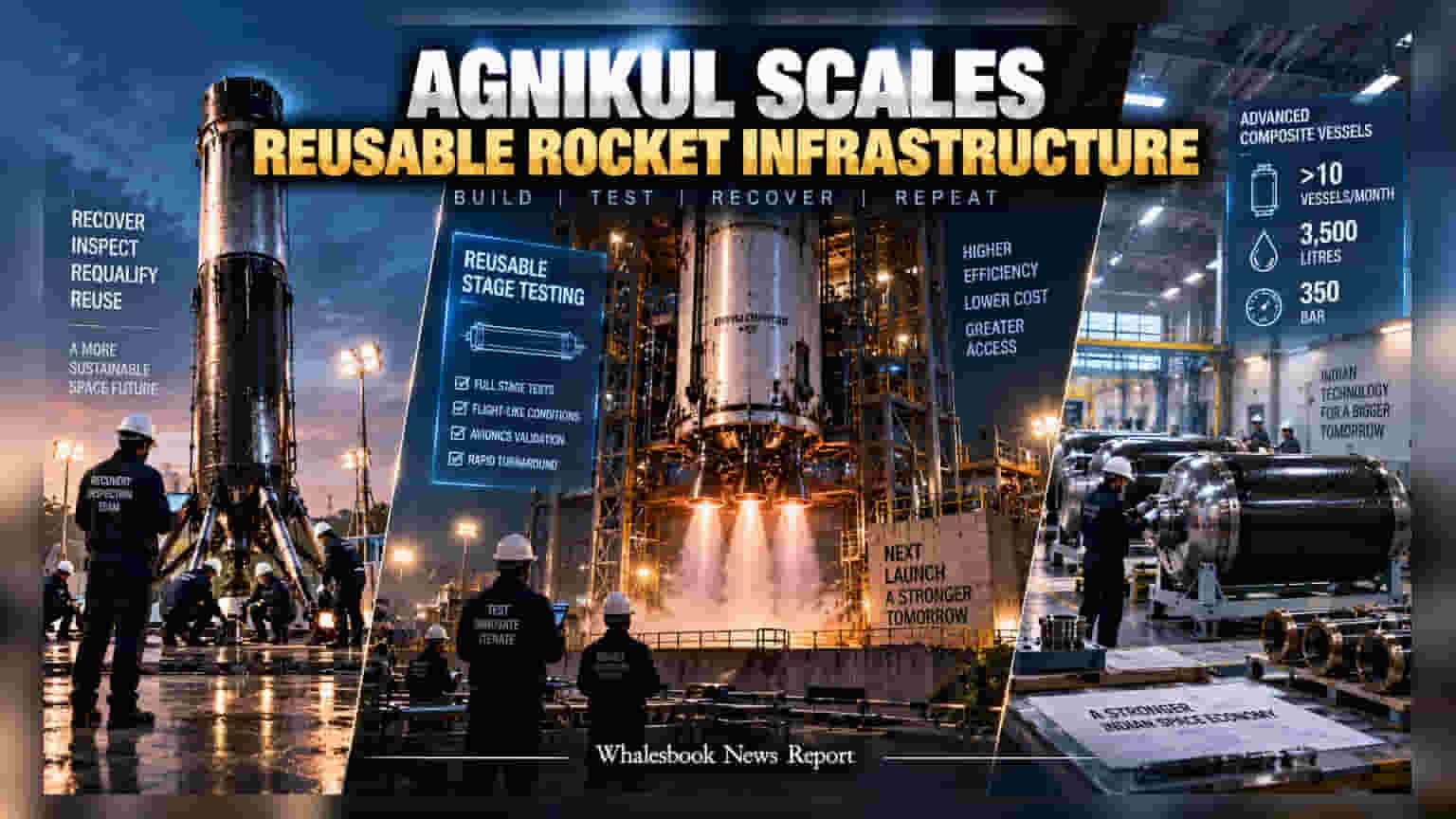
Agnikul Cosmos has inaugurated two specialized facilities in Chennai, marking a significant step in its efforts to develop reusable launch vehicle technology. The company has set up the Stage Testing and Inspection Facility (STIF) and the Pressurant Tank Realization, Over-wrapping and Outfitting Facility (PROOF). These units are designed to help the startup build, test, and potentially recover rocket components in-house.
The STIF facility allows the team to test complete rocket stages under flight-like conditions. This infrastructure is essential for the inspection and requalification of rocket parts after they have been used in flight. By developing this capability, Agnikul aims to establish a cycle of launching, recovering, and re-using hardware, a key goal for reducing mission costs in the aerospace industry.
The second facility, PROOF, focuses on manufacturing high-pressure composite vessels. By producing these critical components internally, the company aims to reduce its reliance on external suppliers. This allows for tighter control over design, quality, and production timelines. This move is part of a broader strategy of vertical integration, where the startup continues to bring key manufacturing processes—such as its 3D-printed engine production—within its own facilities.
Strategic Focus on Mission-02
This infrastructure expansion is directly linked to preparations for the company's upcoming Mission-02. Following its first successful launch in May 2024, which proved the viability of its 3D-printed engine and flight architecture, the company is now addressing the more complex challenge of rocket stage recovery. The new facilities are intended to handle the rigorous assessment and certification required to ensure these parts can be safely flown again.
The Investor Perspective
Agnikul Cosmos is a private, unlisted company, meaning it does not have a ticker on public stock exchanges, and its financial results are not available for public analysis. For investors monitoring the Indian space ecosystem, the broader takeaway is the increasing trend toward self-reliance and vertical integration among private space startups. This shift is critical as companies move from initial technology demonstrations toward more frequent, commercial-grade launches.
However, it is important for stakeholders to note the inherent risks in this sector. Space technology development requires significant capital, leading to high cash burn rates, and relies heavily on venture capital funding. The path from initial flight testing to reliable, commercial-scale reusable launches involves significant engineering challenges and long gestation periods. Success will depend on the company's ability to maintain its growth trajectory, manage technical risks, and demonstrate that these facilities can support higher launch frequencies without compromising reliability. The most important updates to monitor will be the timeline for Mission-02 and any technical reports regarding the success of stage recovery operations.