 Whalesbook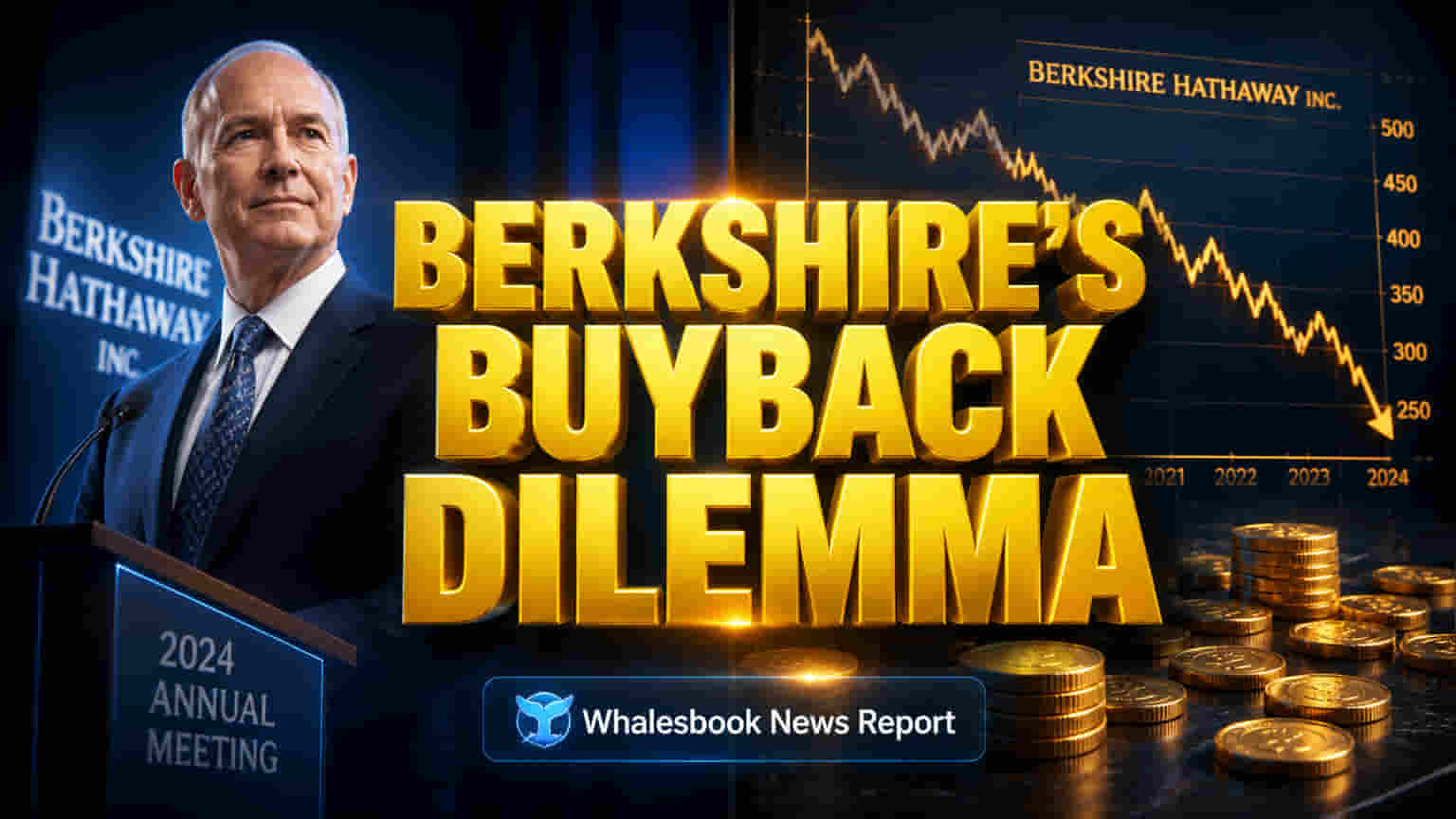


Abel's Leadership Praised, But Capital Returns Questioned
Berkshire Hathaway's annual meeting showcased strong leadership under CEO Greg Abel, earning analyst praise. However, investor enthusiasm was tempered by a cautious approach to share buybacks, raising questions about the company's strategy for using its cash.
Leadership Acumen Meets Capital Allocation Caution
Analysts were largely impressed with Greg Abel's command of Berkshire Hathaway's diverse businesses during his first annual meeting as CEO. His understanding and confident answers to shareholder questions were seen positively, indicating a smooth transition. However, this praise was tempered by concern over the company's notably slow pace of share buybacks. Despite Berkshire holding a record cash pile of about $397.4 billion, investors had expected more aggressive moves for capital deployment and shareholder returns. This gap between leadership confidence and capital return expectations created mixed sentiment. The stock trades around $469.00 and has seen modest price declines recently. The market is watching to see if Abel's tenure will prioritize operational excellence and long-term value over immediate capital returns to shareholders.
Berkshire's Valuation and Buyback Strategy Under Scrutiny
Berkshire's current Price-to-Earnings (P/E) ratio is between 13.8 and 15.24, a premium compared to the average P/E of 9.32 for the property and casualty insurance industry. Competitors like Arch Capital Group trade at a P/E of 9.20, showing Berkshire's higher valuation. Historically, Berkshire resumed share buybacks in March 2026 after a long pause, having last made repurchases in October 2024 for the first time since 2012. The $235 million spent on buybacks in March 2026 is modest compared to its vast cash reserves. This cautious approach contrasts with broader market trends, where many companies, especially in tech and banking, have pursued large buyback programs. The insurance sector is currently facing softening conditions due to increased capital, which could affect pricing power and profit margins on policies. Analyst sentiment for BRK.B has shifted from a 'Moderate Buy' to a 'Hold' overall rating, signaling adjusted expectations from market watchers.
Investor Concern Over Slow Buybacks and Valuation
Berkshire's most significant challenge appears to be its conservative approach to share buybacks, especially with nearly $400 billion in cash. While CEO Greg Abel repeats Warren Buffett's philosophy of disciplined, value-driven capital use, the market sees this restraint as a potential missed chance for immediate shareholder gains or a sign of few attractive investment opportunities at current prices. Berkshire's P/E ratio, higher than many P&C insurers, suggests investors already price in a premium for its diversified model. This premium could become a problem if growth slows or if capital isn't used effectively. The shift to 'Hold' ratings from analysts reflects this caution. Additionally, the insurance sector faces challenges from increased competition, potentially pressuring profit margins. Unlike peers who might return capital more aggressively, Berkshire's patient stance, while possibly prudent long-term, leaves some investors wanting quicker returns. The company's stock has also lagged the S&P 500 since Buffett signaled his succession plans, highlighting the challenge Abel faces in matching past shareholder returns.
Abel's Focus: Operations and Long-Term Value
Greg Abel has firmly established his operational leadership, emphasizing Berkshire's core principles of discipline, humility, and long-term value. He has ruled out breaking up the diversified company, signaling continuity in its structure and strategy for integrating businesses. While analyst sentiment has shifted to a 'Hold' rating, price targets suggest potential upside, with average targets for BRK.B ranging from $517.94 to $578.00. Berkshire's strong balance sheet and capital from its insurance operations are expected to remain key strengths. Abel's strategy appears to focus on operational efficiency and finding value opportunities that meet strict criteria. This path may take time to fully convince a market used to Buffett's deal-making skill.