

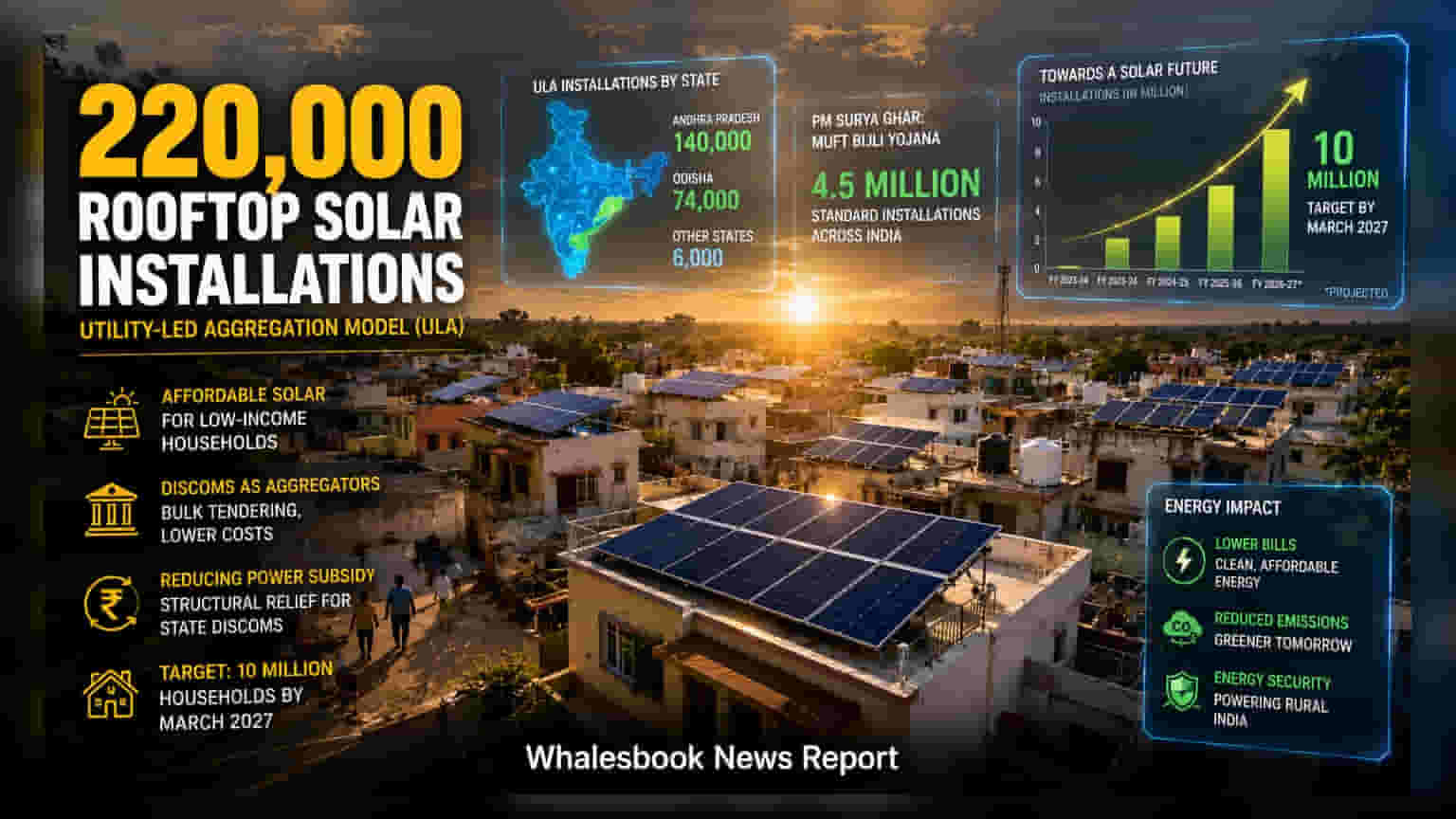
The Utility-Led Aggregation (ULA) solar model has successfully reached 220,000 installations, removing upfront costs for low-income families. As a key part of the PM Surya Ghar initiative, the model centralizes procurement through electricity distribution companies (discoms). For the sector, this shifts maintenance and cost management to utilities, potentially impacting their long-term subsidy obligations and operational efficiency.
The Utility-Led Aggregation (ULA) model has reached a milestone of 220,000 rooftop solar installations, marking a significant step in the government's efforts to expand renewable energy access to low-income households. Andhra Pradesh leads the implementation with 140,000 installations, followed by Odisha with 74,000. This initiative is a core component of the broader PM Surya Ghar: Muft Bijli Yojana, which has seen 4.5 million standard installations across India.
How the ULA Model Works
Unlike the traditional rooftop solar process, where individual households must manage the upfront capital cost—often ranging from ₹1 lakh to ₹2 lakh—the ULA model shifts this responsibility. Under this framework, state-run electricity distribution companies, or discoms, act as the primary aggregators. By pooling demand from thousands of households, discoms use bulk competitive tendering to lower equipment costs. This structure effectively bypasses the initial financial hurdle that previously kept solar energy out of reach for lower-income families.
Strategic Shift for Discoms
This model is more than just an energy expansion strategy; it is a fiscal tool for the state. By installing solar capacity for low-consumption households, discoms aim to achieve a structural reduction in their long-term recurring power subsidy obligations. With approvals already granted to 12 states and Union Territories for 1.65 million installations, the government has set an ambitious target of 10 million households by March 2027.
Risks and Operational Considerations
While the ULA model helps with rapid scaling, it introduces specific risks that are important to track. A primary concern is the financial health of discoms. Many of these utilities already face significant debt and thin margins; taking on the responsibility for procurement, installation, and, crucially, long-term maintenance could increase their operational load. Investors in the power and infrastructure sectors may monitor whether the cost savings from the subsidy reduction are enough to offset the potential O&M (operation and maintenance) costs over the life of these systems.
Additionally, the reliance on state-managed bulk procurement may shift the competitive landscape for private solar vendors and installers. The speed of execution across different states will also be a key factor to watch, as achieving the 10 million household target by 2027 requires significant logistical coordination. Future updates from state discoms on operational costs and the pace of new tenders will be essential to understanding the long-term sustainability of this utility-led approach.