 Whalesbook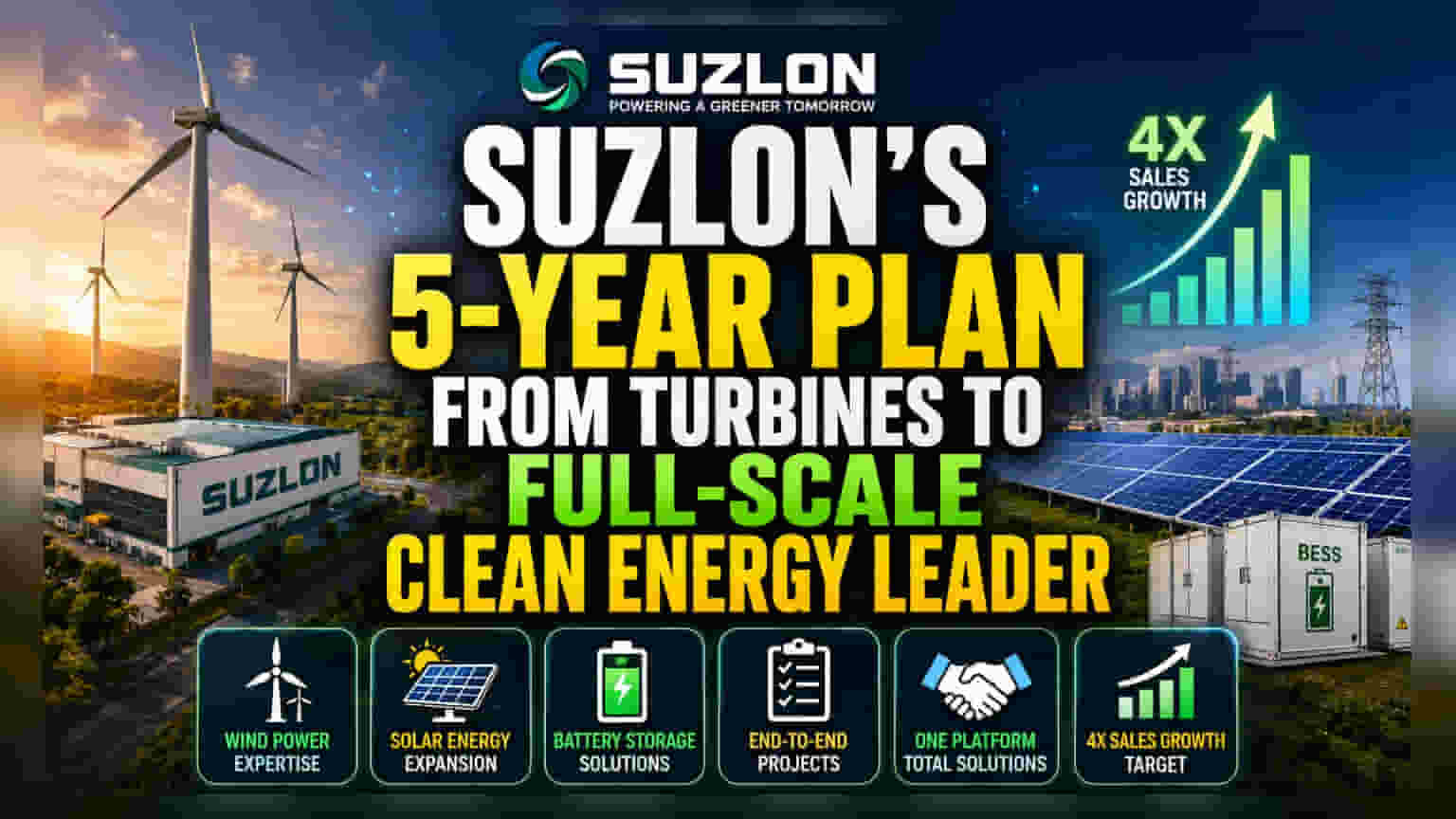


What Happened
Suzlon Energy has announced a new five-year roadmap aimed at transforming the company from a wind turbine manufacturer into a comprehensive renewable energy solutions provider. The strategy involves integrating wind power, solar energy, and battery energy storage systems (BESS) under a single platform. The company aims to achieve a fourfold increase in annual sales through this expansion. To support this, Suzlon is creating a dedicated unit to manage land acquisition, grid connections, and regulatory approvals, which are often the most time-consuming parts of setting up large renewable energy projects.
Why This Shift Matters
Historically, Suzlon has been primarily known for designing and manufacturing wind turbines. While this provided a niche, the wind power sector faces specific challenges, such as dependency on consistent wind speeds and long timelines for grid connectivity. By moving into solar and battery storage, the company is attempting to make its business more predictable. Solar power can be deployed more widely across India, and battery storage helps solve the issue of energy supply when the sun is not shining or wind is low. This "full-stack" approach allows the company to offer a complete energy package to customers rather than just supplying hardware.
Execution and Competitive Risks
Investors may note that while this strategy diversifies revenue, it also introduces new risks. The renewable energy sector in India is highly competitive. Large players like Adani Green Energy, Tata Power, and JSW Energy already have significant experience in building and operating integrated renewable energy projects. These competitors often have deep pockets and established relationships with utilities and grid operators.
Moving into solar and battery storage requires a different set of skills compared to manufacturing turbines. The company will need to prove it can handle the logistics of large-scale project development, which involves significant capital spending and managing multiple vendors. A major hurdle for all renewable players remains the uncertainty around land acquisition and the speed at which the national grid can connect new projects.
Financial Context
Suzlon has spent the past few years focusing on reducing its debt levels to strengthen its balance sheet. This pivot to a project-development model is capital-intensive, meaning it may require ongoing spending to build assets. Investors often look for a balance between growth and maintaining financial health. If the company takes on new debt to fund this rapid expansion, it could put pressure on its profit margins and cash flow. Keeping a close watch on how the company funds this five-year plan will be important for understanding the long-term impact on shareholder value.
What Investors Should Track
Going forward, the key monitorable will be the company’s ability to win and execute projects in the solar and battery storage segments. Investors may want to track the order book for these new verticals to see if demand is actually materializing. Additionally, updates on how the company plans to fund this expansion—whether through internal cash flow or new borrowing—will be a critical indicator of financial stability. Finally, watching for any changes in profit margins as the business shifts from product sales to project management will provide insight into whether this strategy is creating sustainable value.