

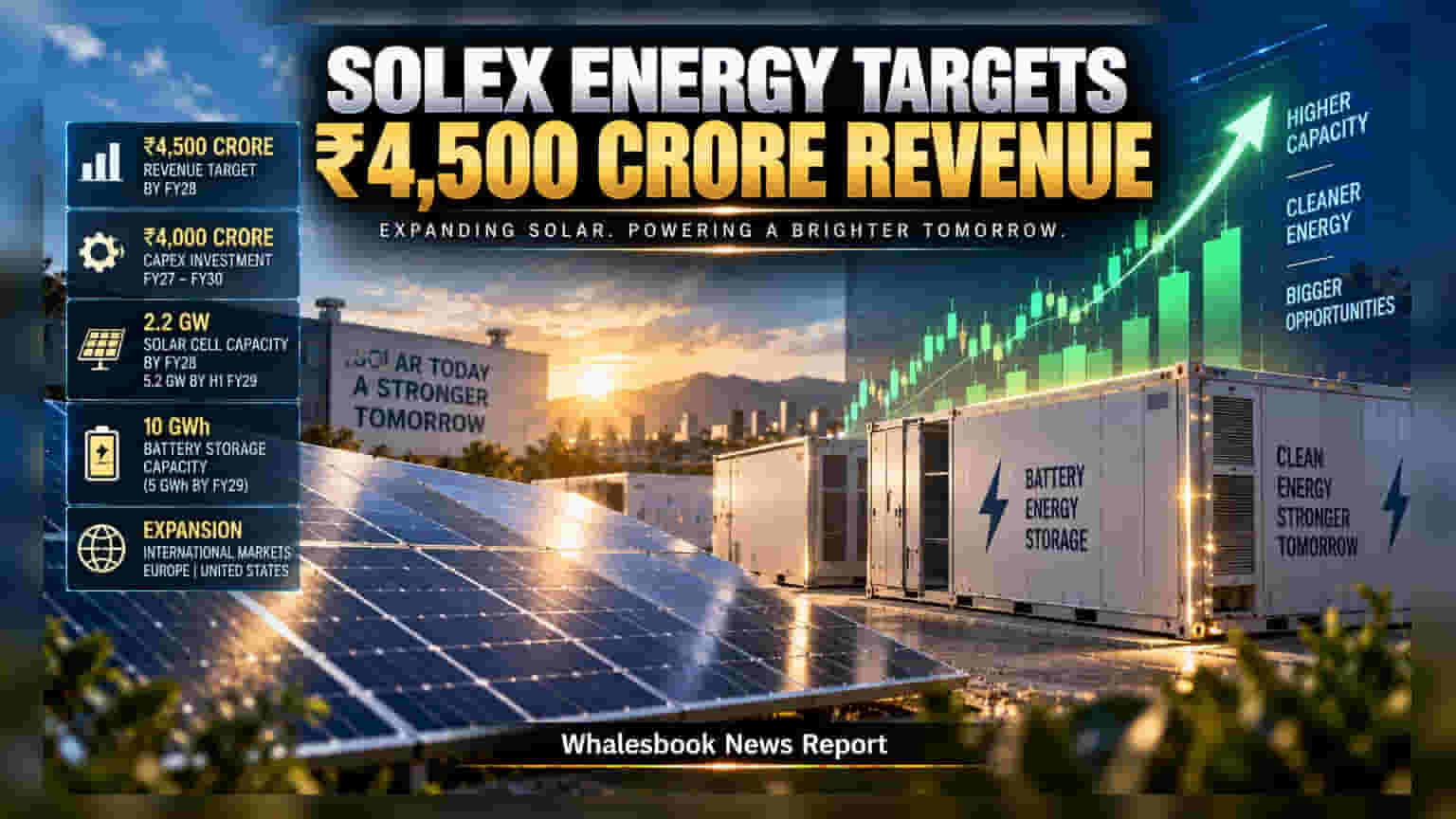
Solex Energy plans to invest ₹4,000 crore between FY27 and FY30 to expand solar cell and battery storage manufacturing. The company aims for ₹4,500 crore in revenue by FY28. This ambitious expansion carries significant execution and funding requirements that investors should monitor.
Solex Energy has unveiled a significant growth plan, targeting ₹4,500 crore in revenue by FY28. To achieve this, the company intends to invest ₹4,000 crore in capital spending between FY27 and FY30. This expansion focuses on setting up manufacturing facilities for solar cells and Battery Energy Storage Systems (BESS), marking a strategic shift toward becoming an integrated renewable energy player. For Indian investors, this move highlights the company’s intent to scale its operations, though the scale of investment relative to its current size will be a key area to watch.
The scale of this spending is notable when compared to the company’s recent financial profile. In FY26, Solex Energy reported a revenue of ₹1,620 crore, with an EBITDA of ₹186.7 crore and a net profit of ₹98.3 crore. Committing ₹4,000 crore to projects represents a massive jump in capital spending, which naturally brings attention to how the company plans to fund this growth and maintain its balance sheet health. Market observers often look at how aggressive CAPEX plans, especially for smaller or mid-sized firms, impact debt levels and cash flows over time.
The company’s manufacturing roadmap is comprehensive. It plans to establish 2.2 GW of solar cell capacity by FY28, scaling that to 5.2 GW by the first half of FY29. Additionally, it aims to develop 10 GWh of battery storage capacity, with an initial 5 GWh phase expected in FY29. By moving into these segments, Solex is trying to gain control over its internal supply chain, which could help in managing costs and quality as it scales. Integration is a common strategy in the renewable sector, but it requires efficient execution to be successful.
For investors, the primary consideration with large-scale projects is execution risk. While vertical integration offers potential benefits, it requires consistent project delivery and stable demand. The solar and storage sector is currently highly competitive, with many larger domestic players also expanding capacity rapidly to capture growth from government schemes and increasing energy needs. Success will depend on the company's ability to complete its projects on time and navigate the cost of funding.
Management has also noted plans for international expansion into Europe and the United States. Exploring these markets could open new revenue channels, though it also introduces risks related to logistics, currency fluctuations, and international regulatory requirements. Investors should track updates on the funding sources for the ₹4,000 crore expenditure, project commissioning milestones, and how the company manages its debt or equity dilution risks during this growth phase.