

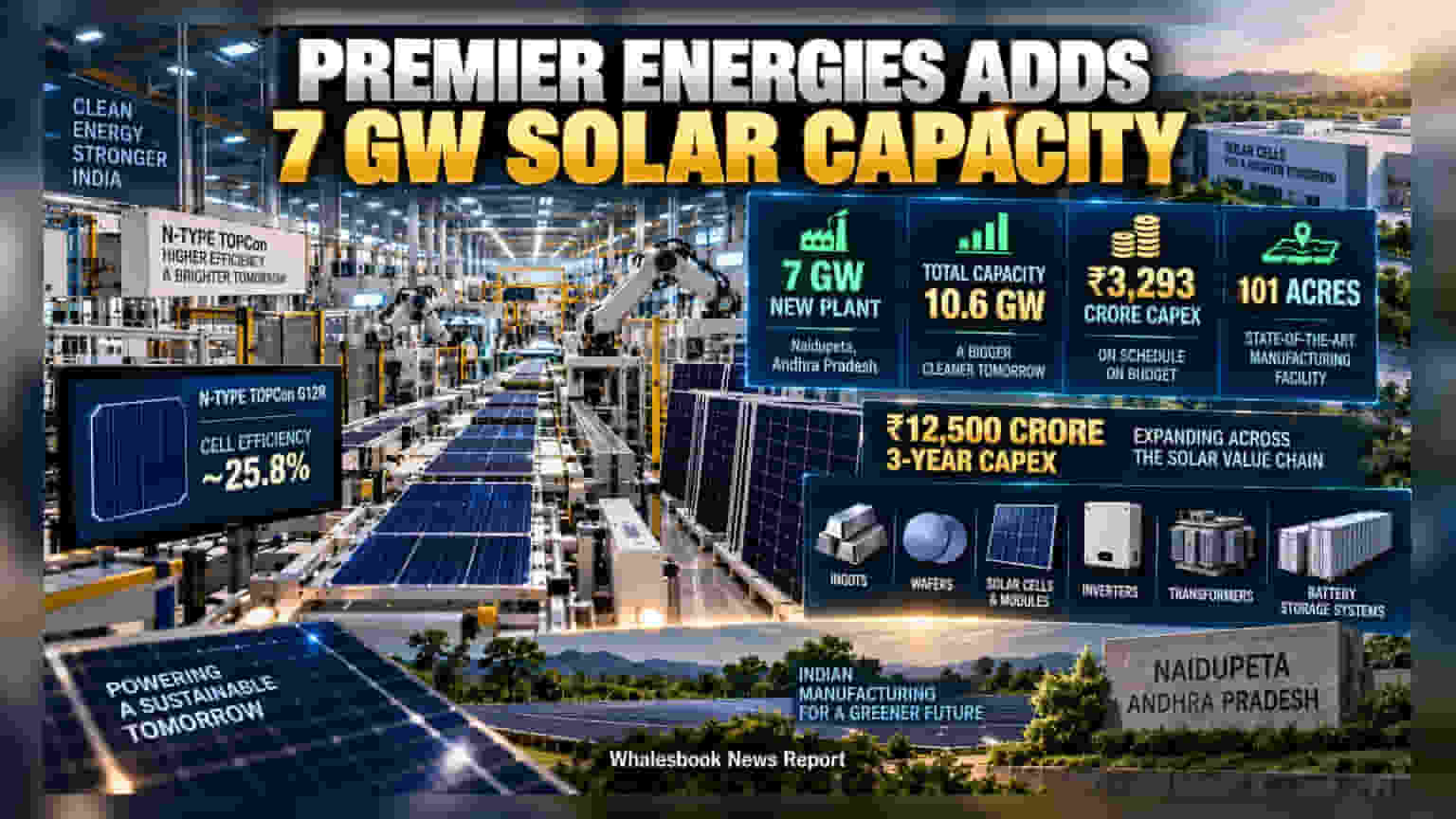
Premier Energies has commissioned a 7 GW solar cell plant in Naidupeta, Andhra Pradesh, at a cost of ₹3,293 crore. This addition boosts the company's total cell manufacturing capacity to 10.6 GW. The project is part of a larger ₹12,500 crore three-year expansion plan aimed at backward integration and entering the battery storage and inverter segments.
Premier Energies has officially begun trial operations at its new 7 GW solar cell manufacturing facility in Naidupeta, Andhra Pradesh. This commissioning significantly scales the company's total solar cell manufacturing capacity to 10.6 GW, marking a major milestone in its growth strategy. The project was completed with a capital expenditure of ₹3,293 crore, meeting the company’s internal schedule and budget requirements.
Focus on Efficiency and Technology
The new facility utilizes N-type TOPCon technology, a design that is currently popular for manufacturing high-efficiency solar modules. By adopting this technology, the company aims to achieve average cell efficiency levels of around 25.8% once operations stabilize. The facility features extensive automation, including mechanized material handling and AI-driven process control to improve quality consistency. Furthermore, the infrastructure is designed to allow for future upgrades to advanced TOPCon variations, which helps protect the investment against rapid technological obsolescence.
Strategic Expansion and Backward Integration
This commissioning is part of a broader ₹12,500 crore capital spending plan intended to span three years. The company's strategy involves more than just increasing module capacity; it is focusing on backward integration into ingots and wafers. By producing these key upstream components in-house, Premier Energies aims to reduce its reliance on external suppliers, potentially stabilizing costs and securing its supply chain. Additionally, the company is diversifying its footprint into new segments, including inverters, transformers, and battery energy storage systems, as it seeks to capture a larger share of the renewable energy value chain.
Investor Monitorables
For investors, the most important next step is to track the pace at which this new 7 GW capacity reaches full utilization. While manufacturing capacity is expanding rapidly across the Indian solar sector, sustained profitability will depend on demand and pricing dynamics. As the company continues its larger ₹12,500 crore investment program, monitoring the execution timeline, the funding mix for these projects, and any resulting impact on debt levels will be essential. The solar manufacturing sector remains highly competitive, and the success of this large-scale expansion will rely on the company's ability to maintain margins while managing the capital intensity of these investments.