 Whalesbook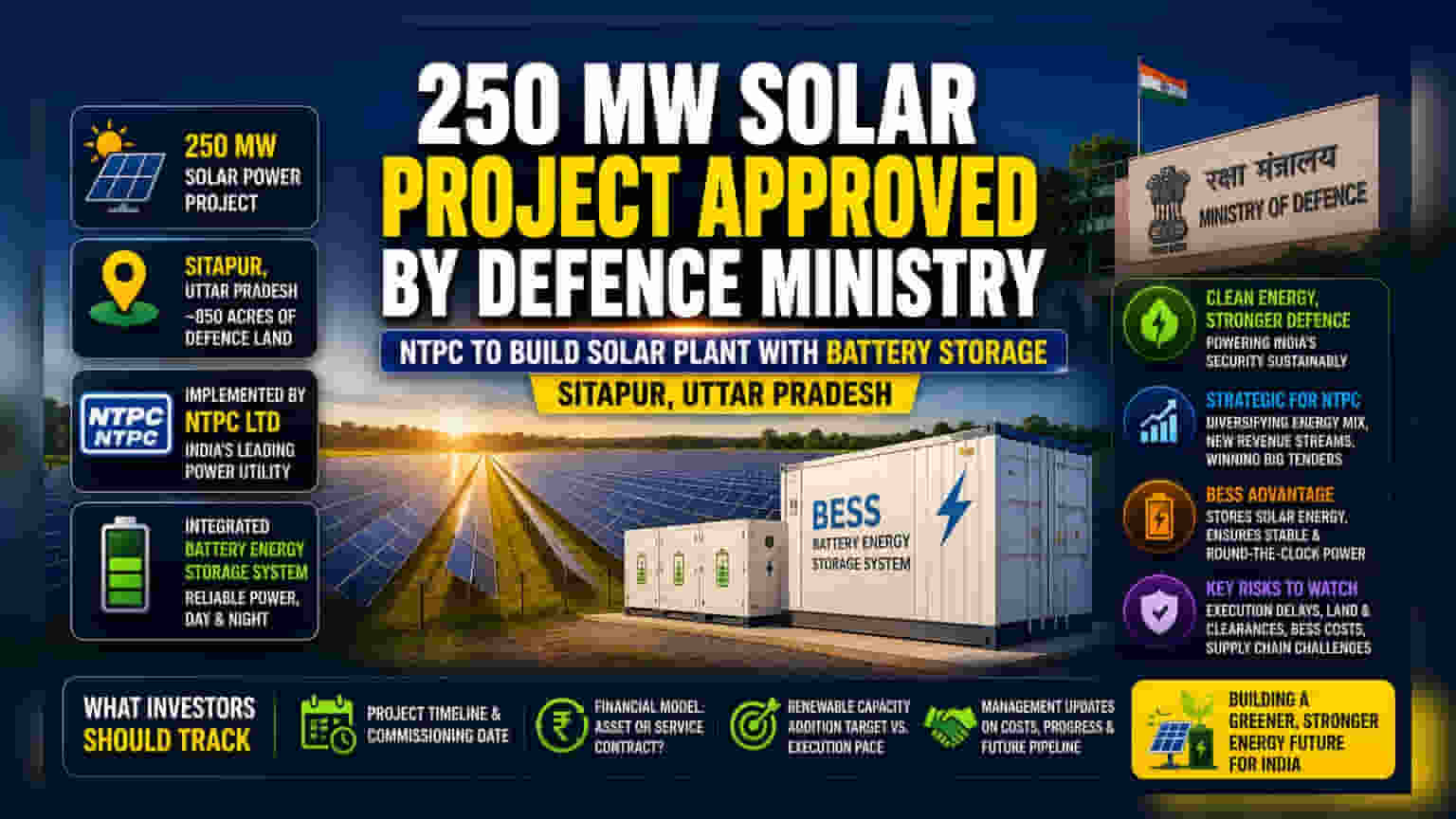


What Happened
The Ministry of Defence (MoD) has approved the development of a 250-megawatt (MW) solar power project located in Sitapur, Uttar Pradesh. The facility will be constructed on approximately 850 acres of land currently owned by the defence ministry. NTPC Ltd, the state-run power utility, will be the implementing agency for this project. A key feature of this installation is the integration of a Battery Energy Storage System (BESS), which allows for the storage of generated electricity for use when solar production is low, such as during the night or cloudy weather.
Why This Matters For Investors
For NTPC, this project aligns with its ongoing strategy to diversify its energy mix away from traditional coal-based power generation. While the company has long been India's largest thermal power producer, it is aggressively building its green energy portfolio to meet long-term sustainability goals and regulatory mandates. This project serves as a clear indicator of the company’s ability to secure large-scale renewable energy contracts on unique, strategic land parcels. It also opens a new avenue for NTPC to act as a project management and energy solutions provider for government entities, creating a steady revenue stream beyond standard electricity generation.
The Significance of Battery Storage
Integrating a Battery Energy Storage System is a significant technical upgrade compared to standalone solar plants. Solar energy is naturally intermittent, meaning it cannot be generated around the clock. By adding battery storage, the project can provide a more stable and reliable power supply to defense establishments. This technology is becoming a focal point for the power sector in India as grid operators seek to balance the variable nature of renewable energy. For investors, the ability to successfully execute projects with BESS integration demonstrates technical competence and puts the company in a better position to win similar high-value tenders in the future.
Risks and Execution Challenges
While the project is a positive development for renewable capacity, investors should remain aware of potential execution challenges. Projects involving large-scale land development can face complexities related to land usage rights and environmental clearances, even when the land is government-owned. Furthermore, the cost of battery storage technology remains a significant portion of project expenses. If the cost of the BESS components rises or if there are delays in supply chain procurement, it could impact the overall project margins. As with all infrastructure projects, the timeline for the actual commissioning of the plant is critical. Delays in project completion can push back the revenue recognition phase, which is a common risk in the capital-intensive power sector.
What Investors Should Track
Going forward, the primary monitorables for this project will be the finalization of the project timeline and the commissioning date. Shareholders will also look for management commentary on the financial model of this project, specifically whether it will be treated as an asset on NTPC’s books or as a service contract for the Ministry of Defence. Furthermore, tracking NTPC’s overall renewable energy capacity addition target versus the actual execution pace remains essential to understanding how these individual projects contribute to the company's long-term valuation.