

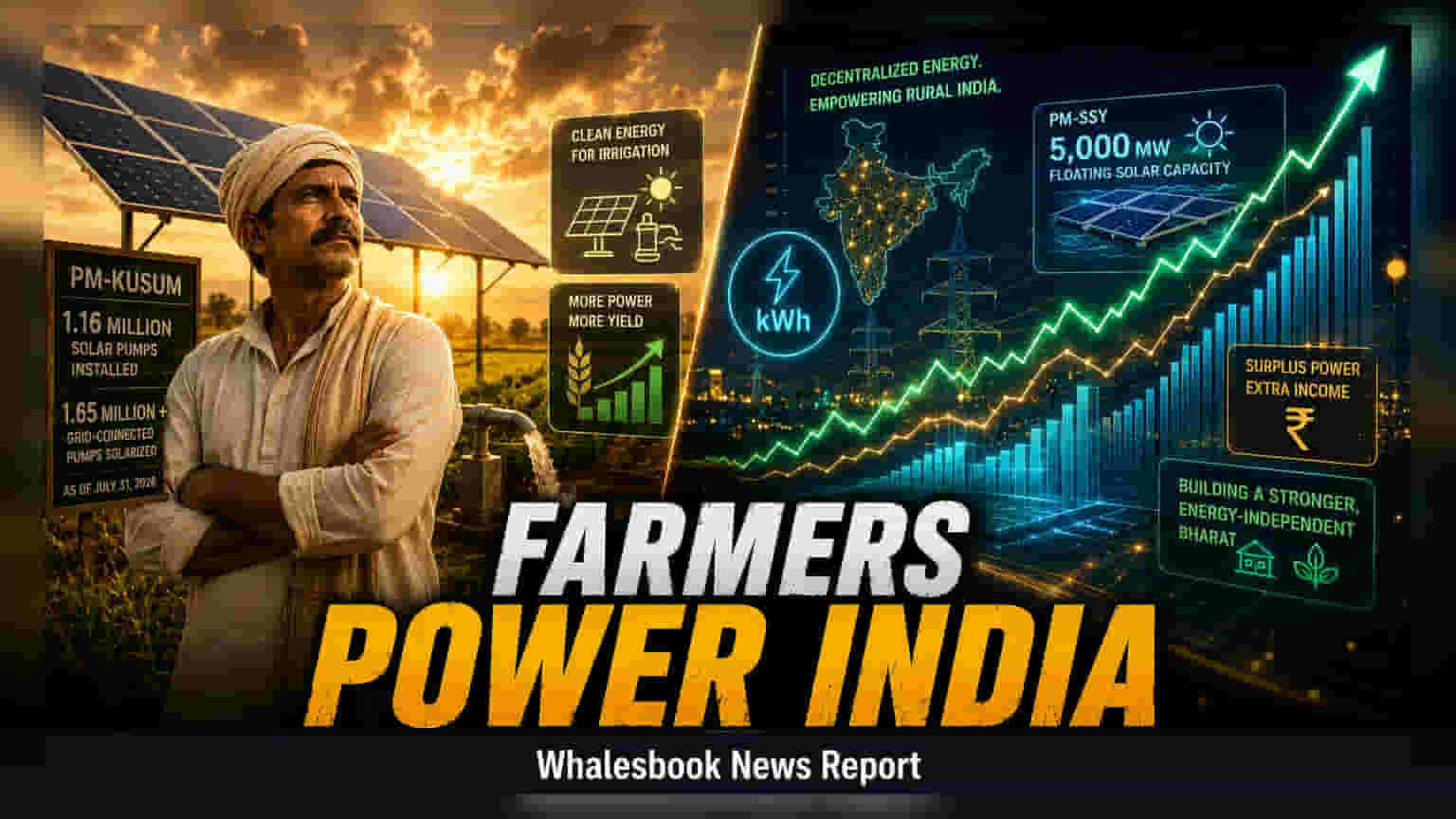
India’s PM-KUSUM scheme has successfully solarized over 2.8 million agricultural pumps, transitioning farmers from food growers to power producers. As Phase 1 concluded in March 2026, the government is now planning PM-KUSUM 2.0 while launching the new PM-SSY project. This shift creates new income streams for rural households, though investors should track implementation speed and state-level power utility stability.
Indian farmers, traditionally known as 'Annadata' or food providers, are increasingly stepping into a new role as 'Urjadata' or energy producers. The Pradhan Mantri Kisan Urja Suraksha Evam Utthan Mahabhiyan (PM-KUSUM) scheme has been a central pillar of this transformation, successfully decentralizing energy production across the rural landscape. Following the conclusion of Phase 1 in March 2026, the sector is now preparing for the next stage of growth, with the government actively shaping PM-KUSUM 2.0.
Latest official data highlights the progress achieved so far. As of July 31, 2026, approximately 1.16 million standalone solar pumps have been installed, helping replace traditional diesel-powered systems. Furthermore, more than 1.65 million grid-connected pumps have been solarized under the Feeder-Level Solarization (Component C) model. This transition allows farmers to utilize solar power for irrigation and, in many cases, sell surplus electricity back to the grid.
The energy roadmap is also expanding beyond traditional solar pumps. On July 31, 2026, the government approved the Pradhan Mantri Surya Sarovar Yojana (PM-SSY). This new initiative aims to develop 5,000 MW of floating solar capacity. By co-locating solar panels with water bodies, this project seeks to further stabilize rural power supply and enhance land-use efficiency, signaling a broader, sustained push for decentralized renewable energy infrastructure.
For the broader economy, this shift implies a move toward energy self-sufficiency at the farm level. It also impacts industries involved in the renewable energy value chain, including solar pump manufacturers, EPC (engineering, procurement, and construction) firms, and electrical infrastructure providers. The success of this model relies on the ability of farmers to integrate energy production with their core agricultural activities.
However, the path forward is not without challenges. While the scale of adoption is growing, significant implementation disparities exist between states. A primary risk factor for the ecosystem is the financial health of state distribution companies (DISCOMs). If these entities face persistent payment delays or struggle with grid connectivity, it can impact the entire value chain, including the income farmers expect from selling surplus power. Additionally, logistical hurdles like site-specific technical requirements and bureaucratic processes continue to influence the speed of adoption.
Moving forward, the effectiveness of the next phase will depend on policy clarity and the resolution of these infrastructure bottlenecks. Investors and rural stakeholders should monitor the specific guidelines of PM-KUSUM 2.0, updates on state-level implementation, and payment security mechanisms for power sales to ensure the sustainability of this farmer-energy model.