 Whalesbook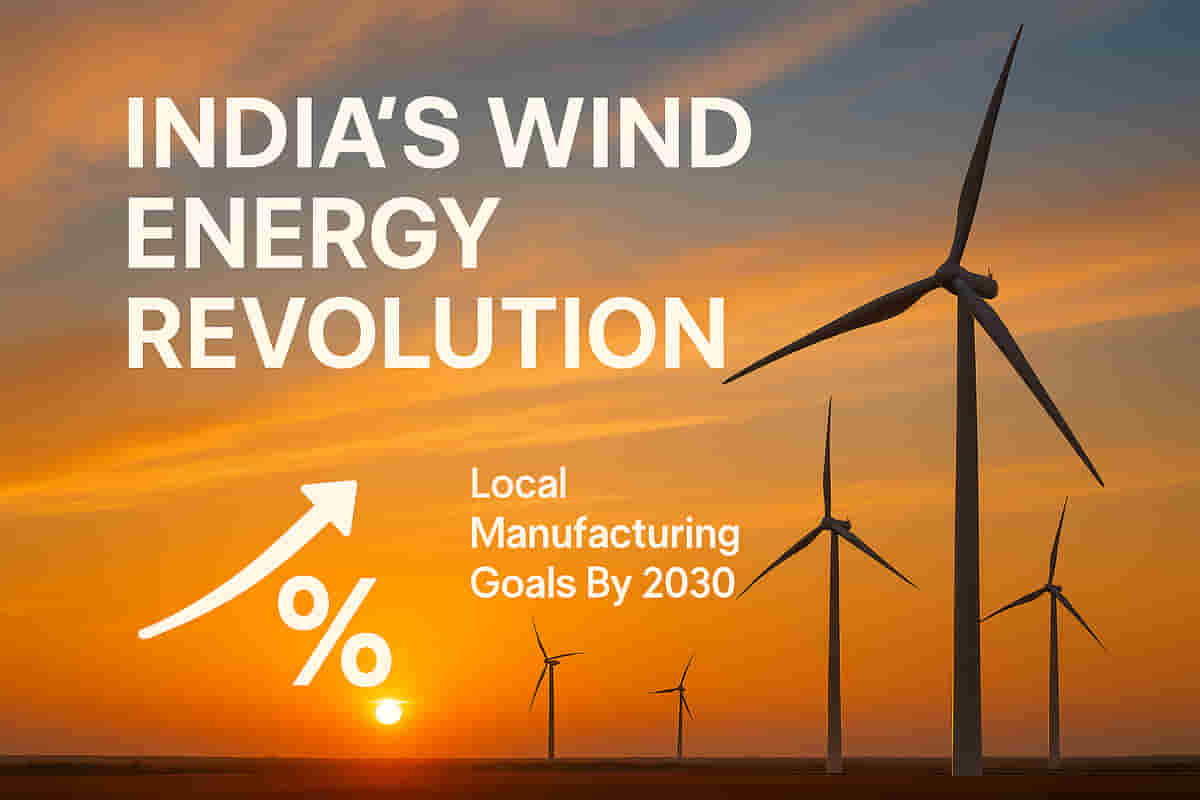


Union Minister for New and Renewable Energy, Pralhad Joshi, has called on India's wind energy sector to significantly boost its domestic content from the current 64 per cent to 85 per cent by the year 2030. This directive is in line with the government's broader vision of achieving self-reliance and fostering a resilient clean energy supply chain. During the Windergy India 2025 event, Minister Joshi emphasized India's potential to become a leading global manufacturing hub for wind turbines and associated components by enhancing local value addition and strengthening domestic capabilities.
To support this objective, the Ministry of New and Renewable Energy has released a Standard Operating Procedure (SOP) for the Approved List of Models and Manufacturers (ALMM) for Wind, set to be implemented from October 29, 2025, ensuring standardized quality. Furthermore, adjustments are being made to the government's Viability Gap Funding (VGF) scheme for offshore wind projects, with an initial target of 1 GW, following previous tender cancellations due to economic viability concerns.
The sector is showing strong momentum, with projections for a record 6 GW of new wind capacity additions in the current financial year. Government policies, such as a reduction in Goods and Services Tax (GST) on wind equipment from 12% to 5%, are improving project economics, expected to reduce turbine costs significantly.
Impact
This news holds considerable importance for the Indian stock market, signaling strong government commitment and policy direction for the renewable energy sector. The push for increased domestic manufacturing and financial incentives directly benefits companies involved in the wind energy value chain, potentially driving investment, production expansion, and improved profitability. It supports the 'Make in India' initiative and can lead to import substitution, enhancing the overall competitiveness of the sector. Rating: 7/10
Difficult Terms:
Standard Operating Procedure (SOP): A set of detailed, written instructions compiled by an organization to help workers carry out complex routine operations.
Approved List of Models and Manufacturers (ALMM): A government-maintained registry of wind turbine models and their manufacturers that meet specific technical and quality standards, often required for project approvals or benefits.
Gigawatt (GW): A unit of electrical power equal to one billion watts; used for measuring large-scale energy generation capacity.
Megawatt (MW): A unit of electrical power equal to one million watts; used for measuring electricity generation capacity.
Viability Gap Funding (VGF): A grant provided by the government to make infrastructure projects financially viable, bridging the gap between project costs and anticipated revenues.
MSMEs: Micro, Small, and Medium Enterprises; smaller businesses that are vital to economic growth and employment.
Capacity Utilisation Factor (CUF): A measure of how much electricity a power plant actually produces compared to its maximum potential output over a given period.
Curtailment: The deliberate reduction in the output of electricity generation, typically done to balance supply and demand or manage grid stability.