

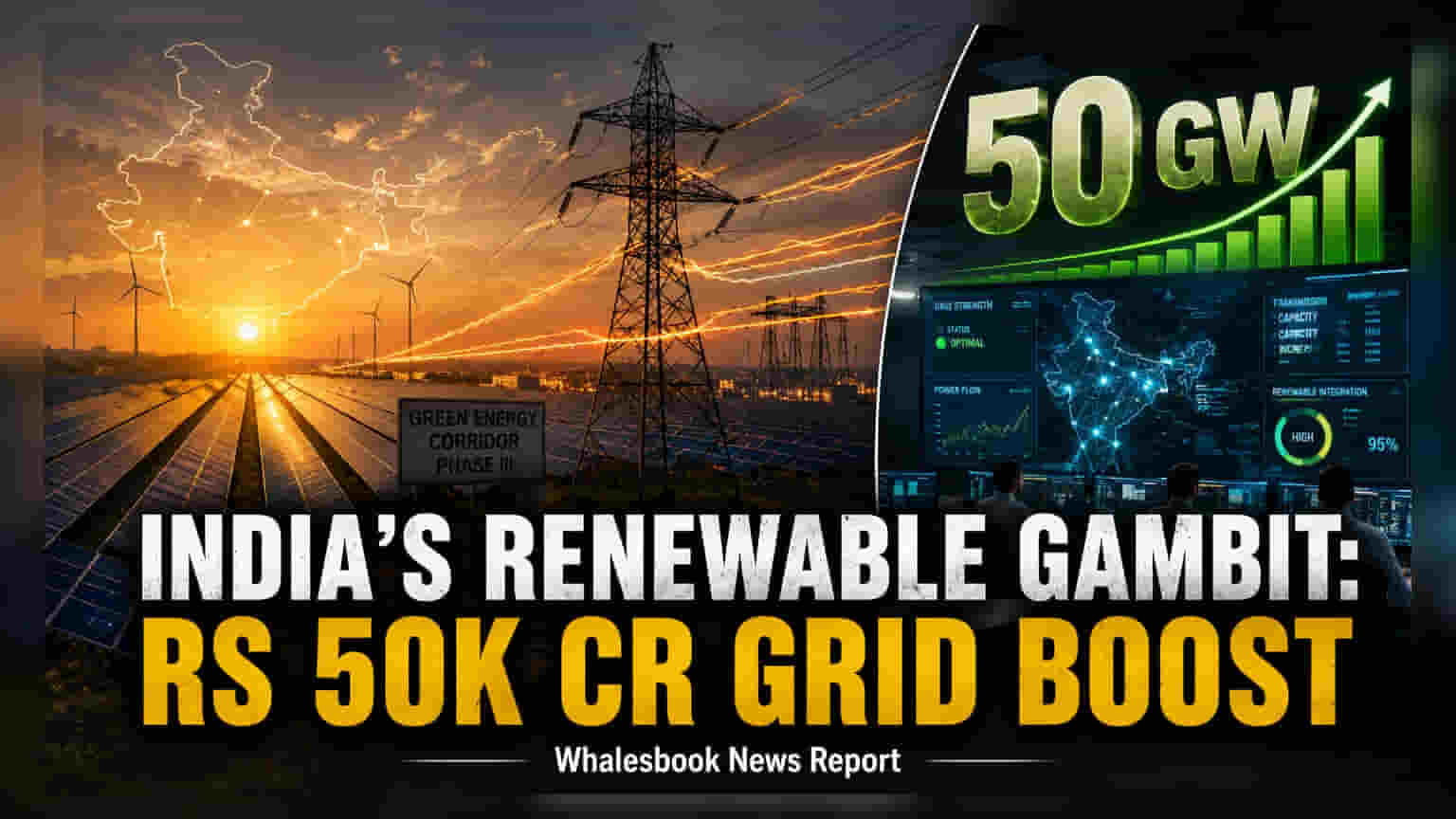
India is launching the third phase of its Green Energy Corridor to unlock 50 GW of stranded renewable energy projects. The Rs 50,000 crore initiative aims to fix critical transmission bottlenecks, a major challenge for developers currently facing power curtailment issues.
The Indian government is preparing to launch the third phase of the Green Energy Corridor, an ambitious infrastructure plan with an outlay of Rs 50,000 crore. This initiative aims to address a critical hurdle in the power sector: approximately 50 GW of renewable energy capacity that is currently stranded or unable to supply power because of a lack of transmission lines.
Fixing Grid Bottlenecks
In recent years, India’s renewable energy capacity has grown rapidly, driven by strong government support and falling costs for solar and wind power. However, the transmission infrastructure has not kept pace. This mismatch has created a situation known as curtailment, where renewable energy plants are forced to stop generating power or waste it because the grid cannot carry the electricity to where it is needed.
This new phase of the Green Energy Corridor will focus on strengthening intra-state transmission networks in renewable-heavy states, particularly in regions like Gujarat and Rajasthan. By upgrading lines and substations, the project intends to connect these power-rich areas to the national grid, allowing for more reliable and efficient energy distribution.
A New Model for Investment
Unlike previous phases, the government plans to structure the third phase under a public-private partnership model. This approach will use tariff-based competitive bidding to attract private players to build and manage these transmission assets. The goal is to improve efficiency and reduce the overall cost of moving power across the country.
This infrastructure expansion is necessary to support India's rising power demand, which is climbing due to the growth of energy-intensive sectors like artificial intelligence data centers and electric vehicles. A stable and flexible grid is essential to handle the intermittent nature of solar and wind energy.
Challenges and Developer Concerns
While the plan aims to solve long-term issues, it also highlights the risks inherent in large infrastructure projects. Building transmission lines often takes much longer than building renewable generation plants, leading to a constant risk of delays. Projects frequently face hurdles such as land acquisition, obtaining environmental clearances, and securing the right-of-way for power lines.
Furthermore, the current grid problems have already impacted the bottom lines of renewable energy companies. Industry developers have sought a financial relief package of up to Rs 3,000 crore from the government to compensate for revenue losses caused by past curtailment. Investors will likely watch how the government addresses these immediate financial concerns while simultaneously working on long-term infrastructure solutions. The pace of execution and the ability to resolve land and regulatory disputes will remain the most important updates to monitor in the coming months.