 Whalesbook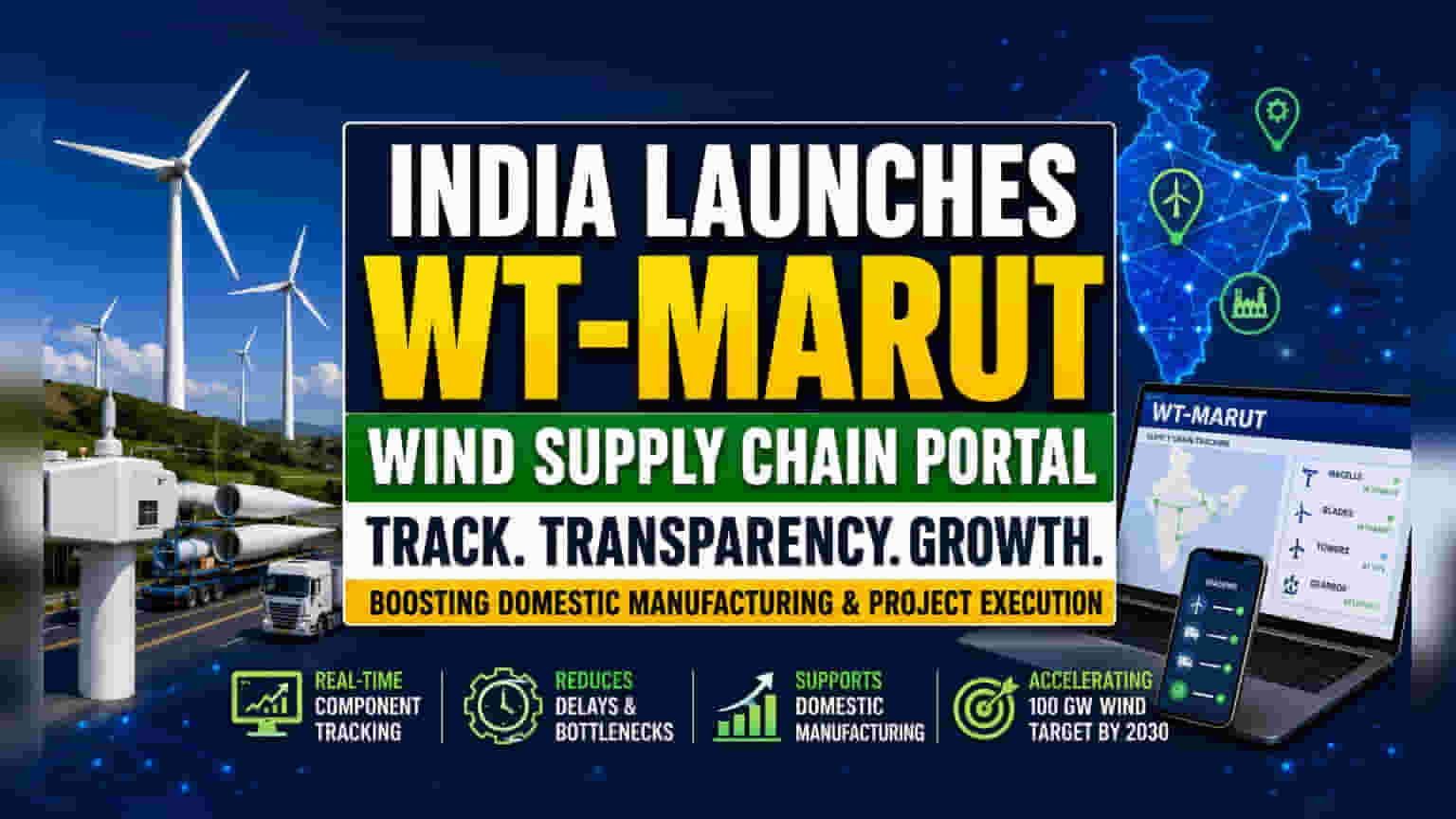


The government has introduced WT-MARUT, a new digital platform designed to track wind energy components from factories to project sites. This initiative aims to streamline the domestic supply chain, reduce project delays, and support India's goal of reaching 100 GW of wind capacity by 2030. Investors may watch how this impacts operational efficiency for major turbine manufacturers.
What Happened
Minister for New and Renewable Energy Pralhad Joshi has officially launched WT-MARUT, India’s first dedicated digital platform for the wind energy supply chain. The portal is designed to provide comprehensive, end-to-end tracking of wind energy components—such as nacelles, blades, towers, and gearboxes—from the point of manufacture to the final project site. The primary goal of this initiative is to strengthen domestic manufacturing capabilities and improve efficiency across the wind energy sector by ensuring better visibility and accountability in the supply chain.
Why This Matters For Investors
For investors, supply chain efficiency is a critical factor in the renewable energy sector. One of the biggest challenges for wind power companies has been the delay in project execution, often caused by logistics bottlenecks or missing components at the site. By creating a unified digital system, the government aims to reduce these delays. If companies can track components in real-time, they can better manage their project timelines and revenue recognition. This is a positive step for domestic wind turbine manufacturers, such as Suzlon Energy and Inox Wind, which are increasingly focusing on scaling up production to meet India's clean energy targets.
The Growth Opportunity
India has set an ambitious target to reach 100 GW of installed wind capacity by 2030 and 155 GW by 2035. As of now, the country has an installed wind capacity of approximately 56.1 GW, with 6.1 GW of new capacity added in the fiscal year 2025-26. This significant gap between current capacity and future targets indicates substantial growth potential for the industry. The government’s focus on the supply chain suggests a concerted effort to support manufacturers in ramping up production to meet this demand, rather than relying heavily on imports.
Business And Execution Context
While the platform is a positive tool for transparency, investors should understand that it is just one part of the solution. The wind energy sector in India has historically faced hurdles that go beyond supply chain tracking. These include the availability of land for project sites, the complexity of securing grid connectivity, and fluctuating raw material costs. While WT-MARUT helps with tracking, the ability of companies to actually execute projects will still depend on their project management capabilities, order book execution speed, and financial health. The platform may help reduce logistical errors, but it does not remove the broader operational risks inherent in the sector.
What Investors Should Track
Moving forward, shareholders may want to monitor how quickly this digital platform is adopted by industry players. The key monitorable will be whether this leads to faster commissioning of wind projects and better margin management for manufacturers. Investors should also watch for management commentary in future earnings calls regarding whether this new system is helping to reduce project execution times or lowering operational costs. Additionally, keeping an eye on sector-wide order execution trends and any further government policies regarding wind energy manufacturing incentives will be useful for understanding the long-term impact of this initiative.