

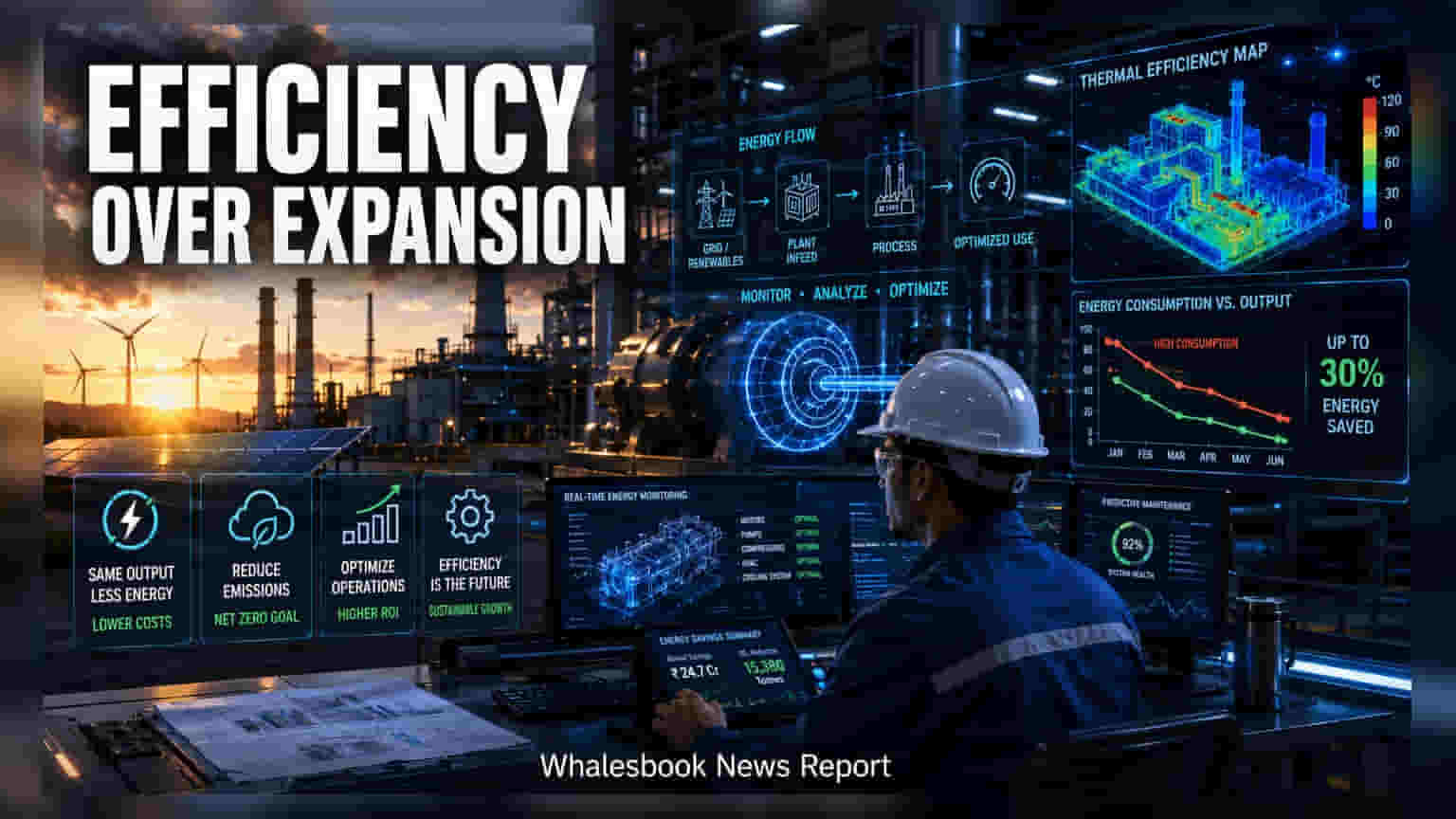
India is recalibrating its decarbonization plan to prioritize industrial energy efficiency alongside renewable power. With grid bottlenecks causing 8,133 GWh of solar energy to go unused between April and June 2026, the focus is shifting toward upgrading existing infrastructure. This change could lower business costs by moving from heavy upfront investment to efficiency-based operating models, though supply chain and execution hurdles remain for the sector.
India's approach to achieving its net-zero emissions targets is undergoing a notable strategic evolution. While the country has built massive solar and wind capacity, recent trends suggest that the future of decarbonization may lie as much in energy efficiency as it does in adding new power plants. This shift aims to tackle the inefficiency of existing industrial facilities, which currently consume large amounts of energy and contribute significantly to the country's carbon footprint.
The need for this recalibration is driven by practical challenges within the energy sector. Simply adding more renewable power has led to grid saturation and waste. Between April and June 2026 alone, the Indian power system faced 8,133 GWh of solar curtailment, meaning that electricity generated by solar plants could not be fully absorbed or transmitted by the grid. This wasted energy highlights the urgent need to balance capacity additions with better grid integration and smarter, more efficient energy usage.
For businesses and investors, this represents a changing economic model. Traditionally, industrial firms had to spend heavily on upfront capital investment—often called capex—to upgrade power-hungry machinery and improve energy usage. A new, emerging model is shifting this financial burden. Companies are increasingly looking at energy-efficiency platforms that offer upgrades through an operating expense or opex model. In this setup, service providers often install efficient equipment or industrial cooling systems as a service, allowing the client to pay based on usage rather than buying the hardware outright. This can reduce the financial pressure on manufacturing firms while still driving down overall energy consumption.
However, this transition is not without risks. The sector faces significant supply chain dependencies, particularly regarding the import of high-tech components and battery minerals essential for energy-efficient hardware. Any disruption in global trade or sudden price volatility in these components could impact project costs. Furthermore, retrofitting decades-old industrial plants is complex and often meets with implementation friction, as factory operations cannot be easily paused or modified without risking productivity.
Investors should monitor how manufacturing firms adapt to these changing energy strategies. The focus will likely shift toward companies that can successfully lower their energy intensity, as well as service providers that can offer efficiency-as-a-service models. The key monitorable will be whether this efficiency-first approach can effectively reduce grid pressure and operational costs without being slowed down by the logistical hurdles of modernizing aging industrial infrastructure.