 Whalesbook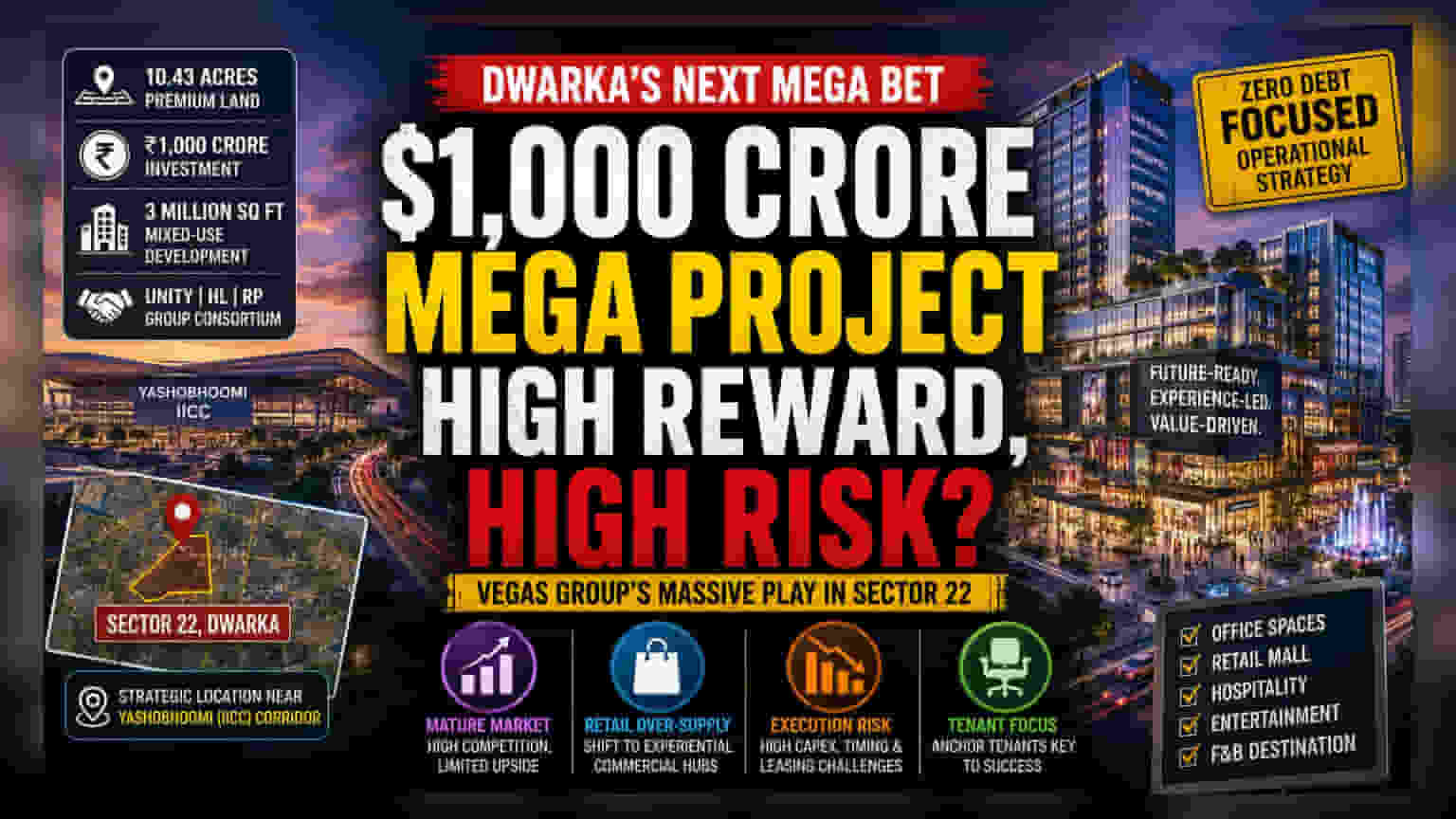


The Valuation Gap
The acquisition of a 10.43-acre land parcel in Sector 22, Dwarka, marks a calculated push by the Vegas Group consortium—Unity, HL, and RP Group—to solidify its foothold near the Yashobhoomi (IICC) corridor. The project, which targets a ₹1,000 crore investment for a 3-million-sq-ft mixed-use footprint, is clearly angling for a share of the high-velocity MICE (Meetings, Incentives, Conferences, and Exhibitions) traffic generated by the nearby convention center. However, the move comes as the Delhi NCR real estate market in 2026 exhibits signs of maturation, with investors increasingly skeptical of large-scale supply pipelines that rely heavily on speculative footfall.
The Analytical Deep Dive
Unlike emerging corridors where infrastructure-led speculation drives pricing, Dwarka is a well-established, mature market. The success of this 1-million-sq-ft retail mall and office complex is contingent on its ability to compete with existing, highly integrated ecosystems such as the Omaxe State in Sector 19B, which has already established a complex five-revenue-stream model including sports, food, and leisure districts. While the Unity Group brings a portfolio of over 10 million sq ft and a reputation for timely execution, the sheer volume of upcoming commercial supply in Dwarka poses a significant challenge. Investors should note that market saturation in the retail sector is forcing a shift from simple mall development to experiential hubs. The project's success will depend on whether it can replicate the high-occupancy models seen in modern office parks or if it will be cannibalized by the rapid commercial expansion along the Dwarka Expressway.
The Forensic Bear Case
The primary risk here is execution timing. As of mid-2026, the retail leasing landscape in Delhi NCR is becoming increasingly selective. Although office leasing has shown resilience, the retail segment is sensitive to interest rates and consumer discretionary spending fluctuations. Furthermore, the Vegas Group is entering a high-capital intensity phase just as infrastructure costs have stabilized at elevated levels. Unlike competitors that secured land at lower historical valuations, this new licensing arrangement under the Delhi Development Authority (DDA) carries the burden of current market pricing, compressing potential yield spreads. There is also the risk of 'over-supply'—Dwarka is currently seeing a surge in inventory, and any slowdown in the utilization of the Yashobhoomi facility would directly impact the anchor-store lease premiums the consortium needs to make this project viable.
The Future Outlook
The project hinges on the consortium's ability to maintain its 'Zero Debt' operational strategy while managing the massive scale of this construction. Market analysts suggest that the differentiator will not be the physical infrastructure but the ability to attract high-tier institutional tenants. If the group can leverage its existing operational footprint to secure early anchor tenants for the office and hospitality segments, it may mitigate the risks associated with the cooling retail environment. For now, market sentiment remains cautious, awaiting the disclosure of the project's phased launch and financing structure.