

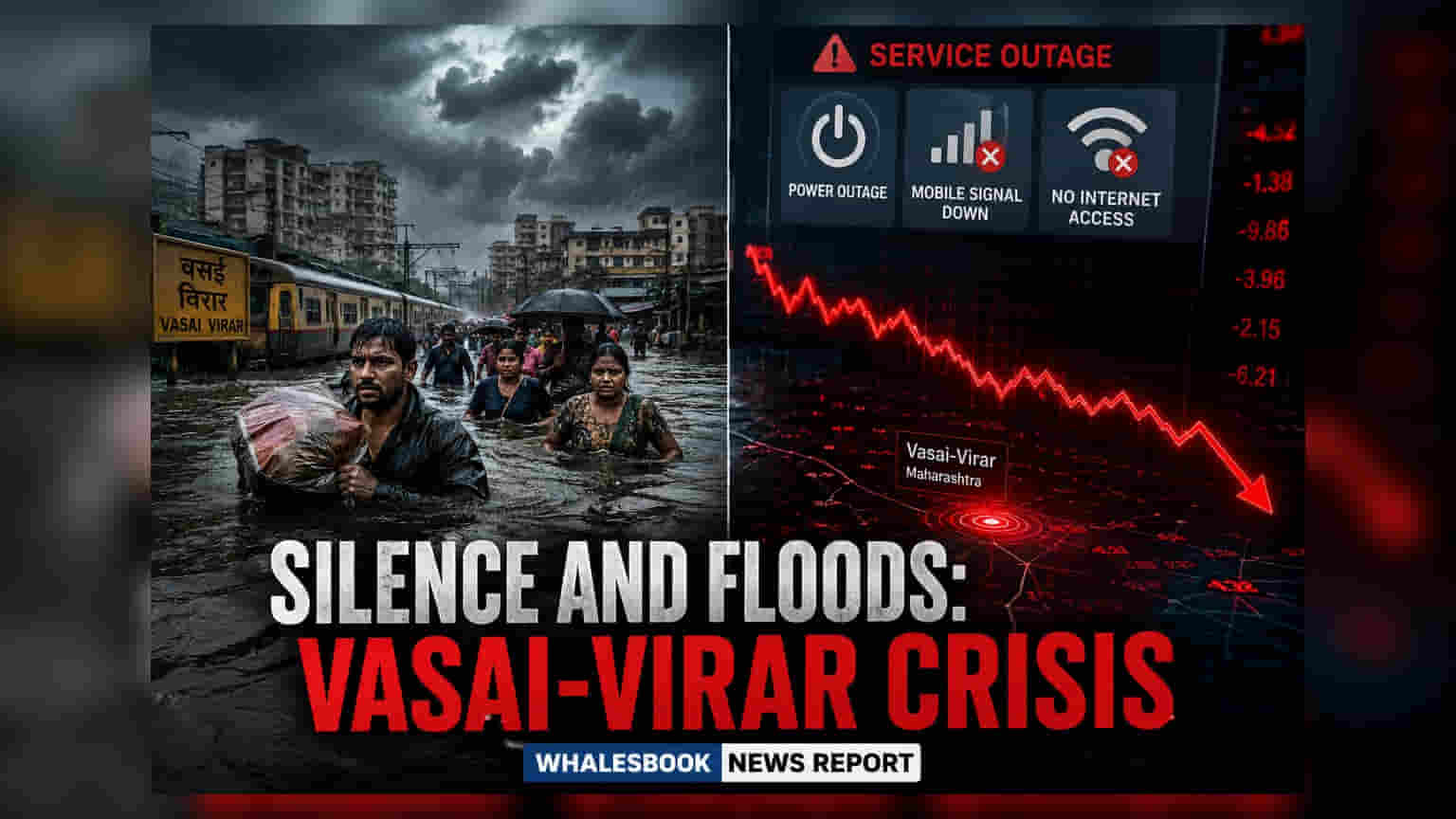
Severe monsoon flooding in Vasai, Virar, and Nalasopara has caused widespread power outages and transport disruption. For real estate investors, the recurring infrastructure failure highlights long-standing concerns regarding urban planning and the impact of rapid development on property accessibility in the Mumbai Metropolitan Region.
Relentless monsoon rainfall has led to severe flooding in the Vasai-Virar and Nalasopara region, causing significant disruption to essential services and local connectivity. Many residential areas remain submerged, with residents reporting prolonged electricity outages and a collapse of mobile network services that have persisted for several days. The situation has severely restricted movement, making it difficult for commuters to reach local railway stations and affecting the daily operations of thousands who rely on the region's transport links.
Infrastructure and Urban Development Risks
The ongoing crisis has intensified scrutiny of the region's civic infrastructure, which has struggled to keep pace with rapid residential growth. Investors and residents alike are questioning the effectiveness of local urban planning, as the current situation mirrors historical flood-related challenges seen across the Mumbai Metropolitan Region. The recurrence of these issues, even after various infrastructure announcements, suggests that drainage systems and power grids in many housing societies may be under-equipped to handle intense monsoon spells. For the local real estate market, such infrastructure bottlenecks often translate into long-term concerns regarding property maintenance, habitability, and the overall appeal of high-density developments in low-lying areas.
Impact on Regional Connectivity
Beyond power and residential access, the flooding has crippled local rail operations and road connectivity. The submergence of key roads and tracks has created a significant hurdle for the workforce and logistics in the area. Since property value in the Vasai-Virar corridor is heavily dependent on connectivity to Mumbai, prolonged disruption to these lifelines creates immediate pressure on the ease of living and business continuity. When transport links are frequently severed during monsoons, it can adversely affect the long-term rental and resale prospects for housing projects in these zones.
Administrative Response and Future Monitoring
Rescue operations are currently underway, involving the National Disaster Response Force (NDRF) and the Vasai-Virar City Municipal Corporation to clear waterlogged areas and restore critical power supplies. Continued rainfall, however, remains a key factor hampering these recovery efforts. Moving forward, the most important monitorable for stakeholders will be the pace of infrastructure restoration and any potential policy shifts regarding future urban development approvals in flood-prone zones. Investors may also want to track whether local authorities implement long-term structural upgrades to drainage and power networks to mitigate similar risks in subsequent years.