

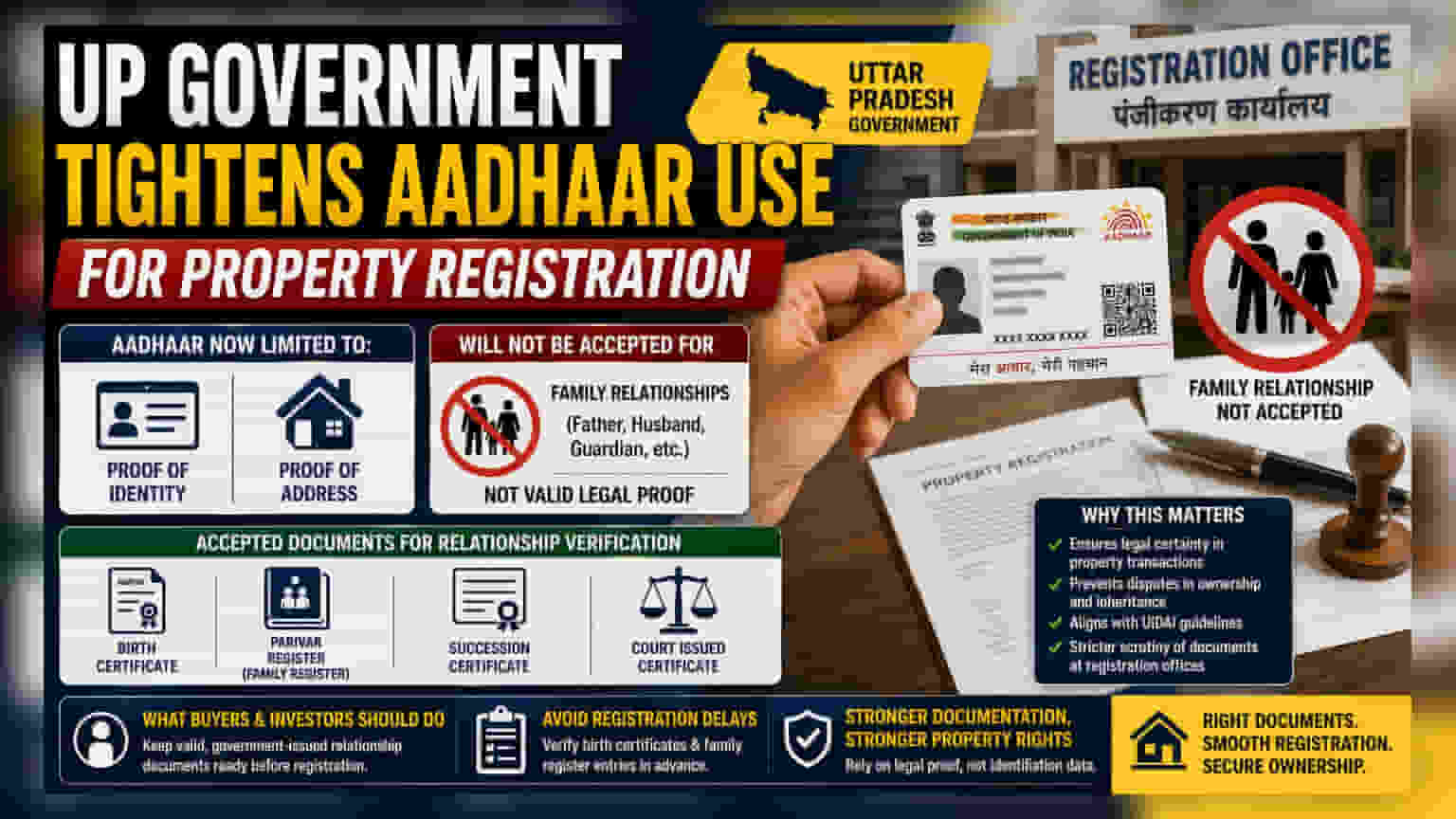
The Uttar Pradesh government has mandated that Aadhaar cards will now serve only as proof of identity and address for property registrations. Family details on the card, such as parental or spousal names, will no longer be considered conclusive legal proof of relationships. Homebuyers and investors must now prepare alternative documents for property verification.
What Happened
The Uttar Pradesh government has issued a fresh directive to all property registration offices in the state, strictly limiting the utility of the Aadhaar card. According to the notification issued by the Inspector General of Registration, Neha Sharma, Aadhaar cards are now classified strictly as proof of identity and proof of address. The authorities have explicitly stated that the information printed on the card regarding family relationships—such as the names of a father, husband, or guardian—will no longer be accepted as definitive legal proof of familial connections.
Why This Matters for Property Buyers
For anyone involved in property transactions, this change is significant because property registration often requires the validation of legal heirs or relationship status between parties. Previously, users might have relied on the details printed on their Aadhaar card to establish these relationships during documentation. Under the new rules, this will no longer suffice. For buyers, sellers, and developers involved in title verification or inheritance-related property transfers, this shift necessitates a stricter approach to documentation to ensure that property titles remain legally undisputed.
Accepted Documents for Relationship Verification
To bridge the gap left by the exclusion of Aadhaar for relationship verification, the administration has clarified which documents will be accepted. Property registrants must now rely on legally recognized records to establish family ties. These include birth certificates, copies of the Parivar Register (family register), succession certificates, or formal certificates issued by a competent court of law. Relying on any other form of verification for legal relationships could result in delays or rejection of the registration application.
The Compliance Shift
This administrative update aligns the state’s property registration process with national guidelines established by the Unique Identification Authority of India (UIDAI). The move aims to clearly distinguish identification documents from records that establish legal status or kinship. While this adds a layer of documentation, it is intended to bring greater legal certainty to property dealings by ensuring that ownership and inheritance claims are backed by primary legal evidence rather than identification-based datasets.
What Investors and Buyers Should Track
Homebuyers and companies managing real estate transactions should ensure they have updated, government-issued relationship proof ready before initiating property registration. As this rule is implemented, registration offices may increase the scrutiny of supporting documents. Parties involved in property deals should verify the validity of their birth certificates and family register entries to avoid any last-minute procedural hurdles during the registration process.