

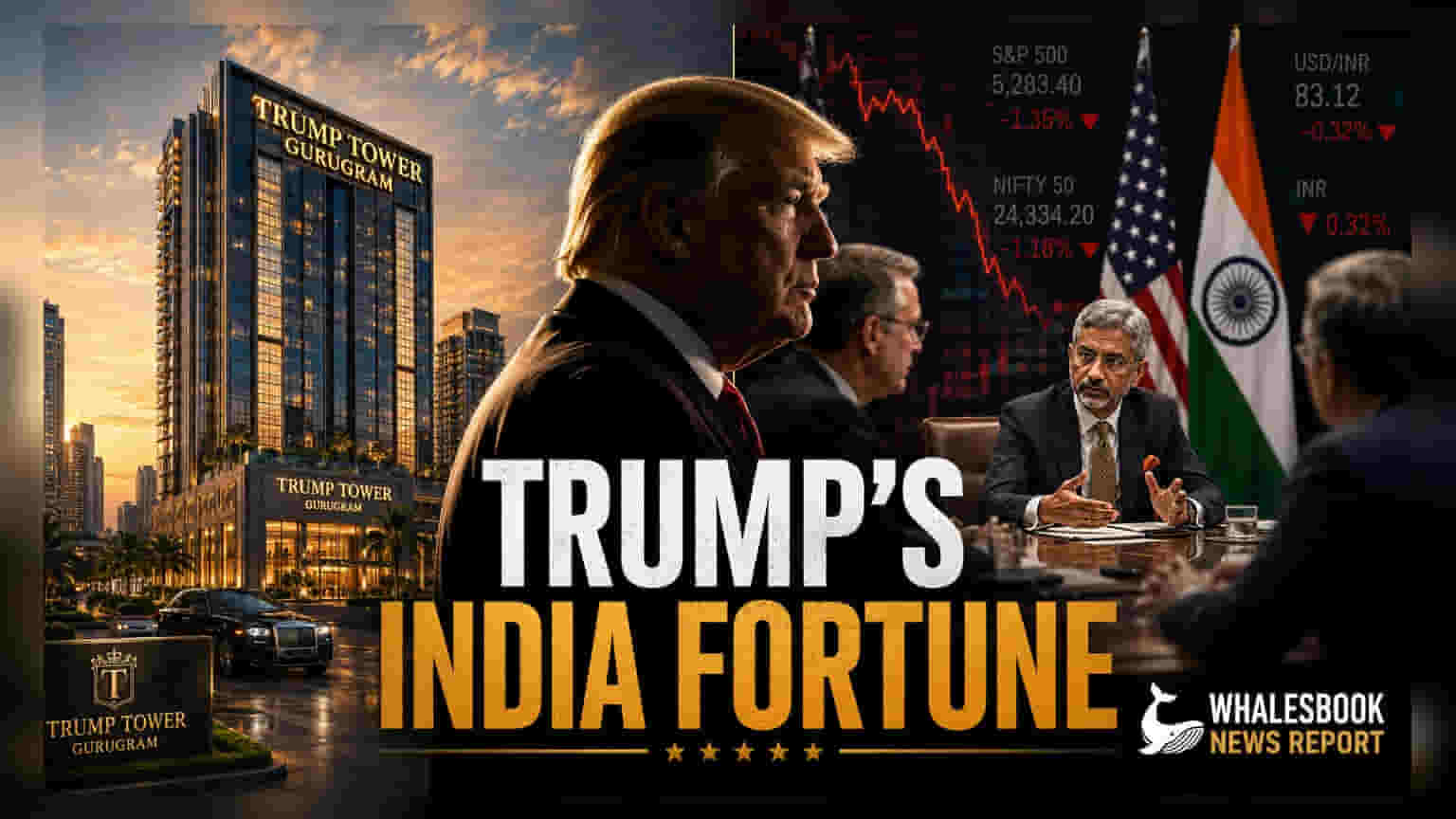
Donald Trump's licensing entities generated $8.5 million in revenue from Indian luxury real estate projects in 2025. The income, primarily driven by developments in Gurugram and Noida, underscores the demand for branded residences in India. This model allows real estate developers to command premium pricing, though the business model relies heavily on the execution capabilities of the Indian project partners.
What Happened
Donald Trump’s business portfolio reported earnings of approximately $8.5 million from real estate licensing agreements in India during 2025. These licensing fees represent a consistent revenue stream for the Trump Organization, which leverages its global brand to partner with Indian real estate developers. The bulk of this income originated from high-end residential projects in the National Capital Region (NCR), specifically Gurugram and Noida, along with contributions from luxury developments in Pune and Mumbai.
The Licensing Business Model
For investors, it is important to understand that the Trump Organization does not act as a construction or development company in India. Instead, it operates as a licensor. Under this model, Indian developers pay a fee to use the 'Trump' name and brand standards for their luxury residential and commercial projects.
This is an asset-light business model for the Trump entity. Because they are not responsible for buying land, securing permits, or funding the actual construction, they do not face the operational risks or debt pressure that construction firms typically carry. The revenue generated is essentially a high-margin royalty fee for brand association.
Why Developers Pay For The Brand
Indian real estate developers like M3M Group, Tribeca Developers, Lodha (Macrotech Developers), and Kundan Spaces utilize the Trump brand as a marketing tool to differentiate their properties. In the competitive luxury housing segment, branded residences often command a price premium compared to non-branded luxury properties.
Developers are willing to pay these licensing fees because the brand association can potentially help them sell units faster and at higher prices per square foot. This 'premiumization' strategy is a key driver for the luxury housing segment in major Indian metros, where buyers are often willing to pay more for global branding and perceived quality standards.
Risks And Market Context
While the licensing fees continue to flow, the business is sensitive to the success and execution pace of the partner developers. Any delay in project completion, regulatory hurdles, or financial distress faced by the Indian developers—such as M3M or Lodha—could impact the long-term viability of these projects.
Furthermore, while the business has remained resilient despite trade tensions and complex negotiations between the United States and India, political sentiment can occasionally create uncertainty in cross-border business relationships. However, the commercial reality of the real estate market—where brand value is directly tied to customer demand—has historically outweighed broader geopolitical friction in these specific licensing deals.
What Investors Should Track
Investors tracking the companies involved, such as listed developer Macrotech Developers (Lodha), should focus on the sales velocity and project delivery timelines of these branded developments. The key monitorable for the sustainability of this income is the ongoing demand for premium real estate in India. If the luxury housing cycle slows down, the willingness of developers to pay high brand licensing fees may decline, which could impact the future revenue potential of such agreements.