

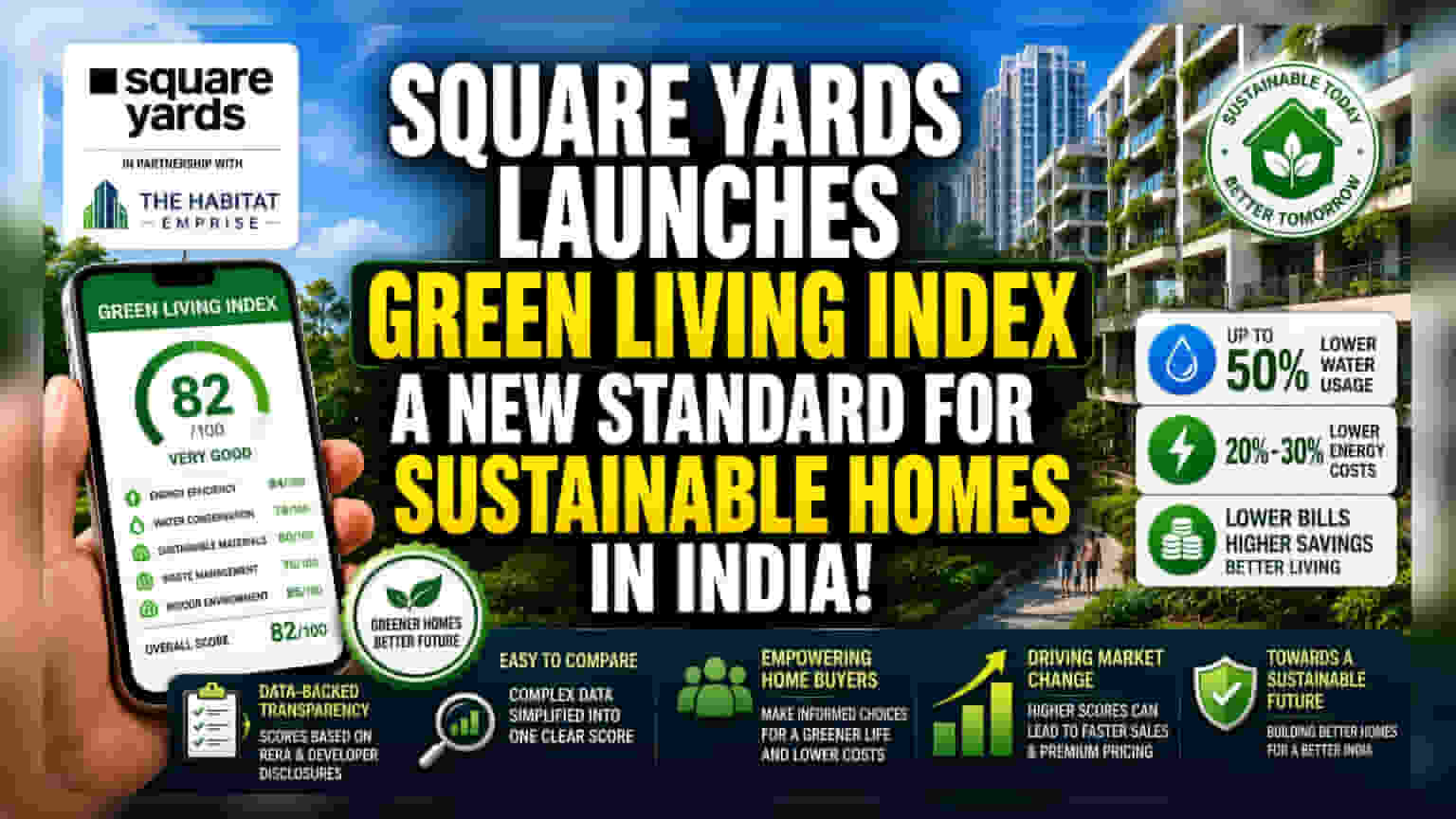
Proptech firm Square Yards has introduced a 'Green Living Index' to standardize sustainability ratings for Indian residential properties. By analyzing developer disclosures and RERA filings, the tool aims to help buyers identify energy and water-efficient homes. This move toward greater transparency may shift consumer preferences, potentially giving a competitive edge to developers who prioritize resource-efficient building practices.
What Happened
Square Yards, a property-technology company, has launched the 'Green Living Index' (SYGLI) in partnership with The Habitat Emprise. This new framework is designed to provide a standardized score for residential projects based on their environmental impact. The initiative seeks to address a common problem in the Indian real estate market: the lack of clear, comparable data regarding how 'green' or sustainable a residential building actually is. The index processes complex technical disclosures from developers into a single, easy-to-read score to help potential homebuyers make more informed choices.
Why This Matters for the Real Estate Sector
For the Indian real estate market, transparency has historically been a challenge. While certifications like LEED or IGBC exist, they are often voluntary and complex for the average buyer to understand. By aggregating data from RERA filings and developer disclosures, Square Yards is attempting to make sustainability a measurable factor in a home purchase. If buyers increasingly favor properties with higher 'green' scores, developers may face pressure to adopt more resource-efficient designs to maintain sales velocity and pricing power.
The Potential Benefits of Green Homes
According to the framework, sustainable residential projects can significantly reduce resource consumption. Research cited by the company suggests that well-designed green buildings can cut water usage by up to 50% and reduce energy costs by 20% to 30%. For residents, these efficiencies translate directly into lower monthly utility bills and reduced long-term maintenance costs. For developers, highlighting these savings can be a strong marketing tool, especially in urban markets where electricity and water costs are rising.
The Data and Reliability Gap
While the intent is to bring transparency, investors and homebuyers should understand the limitations of such indices. The SYGLI framework relies on 'publicly available data,' which includes developer disclosures and regulatory filings. The accuracy and effectiveness of these scores depend entirely on the quality and honesty of the information provided by developers during the planning and construction phases. There is a risk that projected efficiency might differ from actual, real-world performance once a building is occupied. Furthermore, unlike a physical audit, a data-based index cannot always account for the quality of materials used or the long-term effectiveness of maintenance systems.
Competitive Landscape
India has several established green building standards, such as those provided by the Indian Green Building Council (IGBC) and the GRIHA rating system. These systems often involve physical inspections and detailed technical audits. The Square Yards approach differs because it acts as an aggregator of existing data rather than an independent certifying body. Its value lies in convenience and accessibility for the retail homebuyer, rather than replacing formal engineering certifications.
What Investors Should Track
Investors in real estate and associated sectors should monitor how widely this index is adopted. The key monitorable is whether this initiative actually influences homebuyer behavior. If 'green' ratings begin to correlate with faster sales or premium pricing for developers, it could lead to a broader industry shift toward sustainable construction. Additionally, track whether the government or regulatory bodies move toward stricter, mandatory sustainability certifications for all new residential projects, as this would change the compliance landscape for listed real estate companies.