

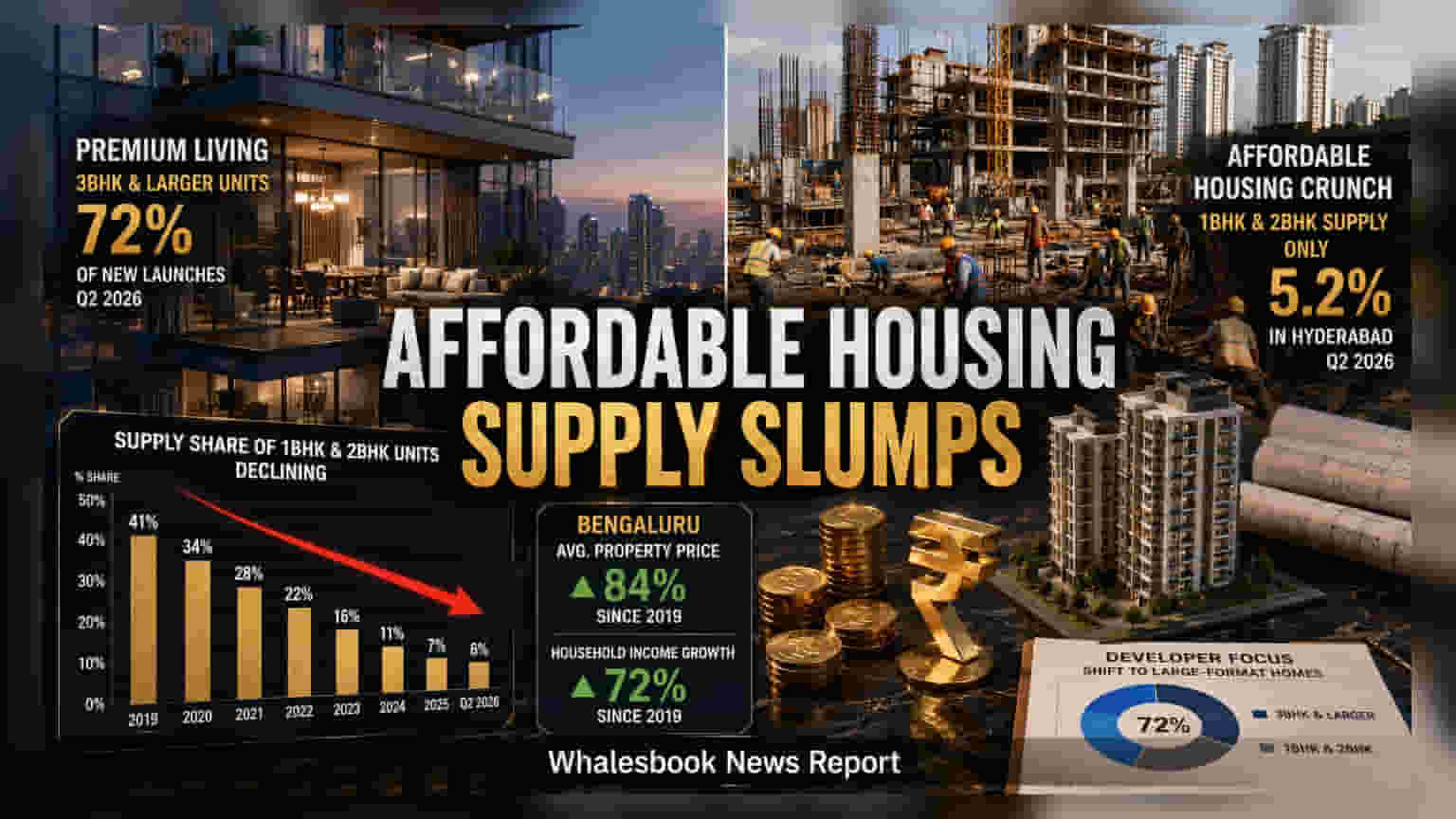
Real estate developers in Bengaluru, Chennai, and Hyderabad are focusing on large-format 3BHK units, which made up 72% of new launches in Q2 2026. This shift protects profit margins from rising input costs but leaves a gap for affordable housing. Investors should watch for risks like potential inventory buildup if luxury demand softens.
Residential developers across major Southern Indian cities are moving away from smaller, affordable housing projects, shifting their new supply heavily toward large-format homes. In the second quarter of 2026, 72% of all new launches in Bengaluru, Chennai, and Hyderabad consisted of 3BHK units or larger. This change in strategy is creating a noticeable imbalance in the market, as supply for 1BHK and 2BHK configurations remains low despite continued demand from first-time homebuyers.
Focus on Larger Units to Protect Margins
The primary driver for this shift is the need to maintain profit margins. Developers are facing consistent pressure from rising land prices and the increasing costs of essential construction materials like steel and cement. Building smaller homes is often less profitable in current market conditions because certain core costs—such as kitchens, bathrooms, and plumbing—take up a large share of the budget regardless of the apartment's size. By pivoting to larger, premium units, firms can command higher ticket prices, which helps them absorb these increased costs better than they could with mass-market, smaller configurations.
For example, Shriram Properties has adjusted its project mix to include 65% 3BHK units, reflecting a broader trend where developers prioritize projects that offer better returns on investment. While this helps companies protect their bottom line, it also creates a significant gap for those looking for entry-level housing.
Affordability Gap Widens
The trend toward larger homes is widening the affordability gap, particularly in major tech hubs. In Bengaluru, the average residential property price has jumped 84% since 2019, while household income growth has trailed at 72%. This mismatch means that many potential buyers who traditionally fueled the demand for entry-level housing are being priced out of the market. Hyderabad is seeing an even more extreme supply constraint, where 1BHK and 2BHK units now account for only 5.2% of new supply.
Potential Risks for Developers
While this focus on premium housing supports short-term profitability, it introduces new risks that investors should monitor. A high concentration of luxury or large-format inventory could lead to an accumulation of unsold stock if the demand for premium housing cools down. Furthermore, the residential sector in these metros is sensitive to employment cycles in the technology sector. If hiring slows or income growth remains stagnant, the demand for high-value properties may soften, creating pressure on developers who have invested heavily in large-format projects.
Smaller developers with weaker balance sheets are particularly vulnerable to these market shifts. Unlike large, established players, they have less financial flexibility to navigate potential project delays or slow sales. As the market progresses, the key monitorables for investors will include the pace of inventory absorption, whether developers can sustain these high price points, and if companies will eventually bring back smaller configurations to address the unmet demand in the mid-market segment.