 Whalesbook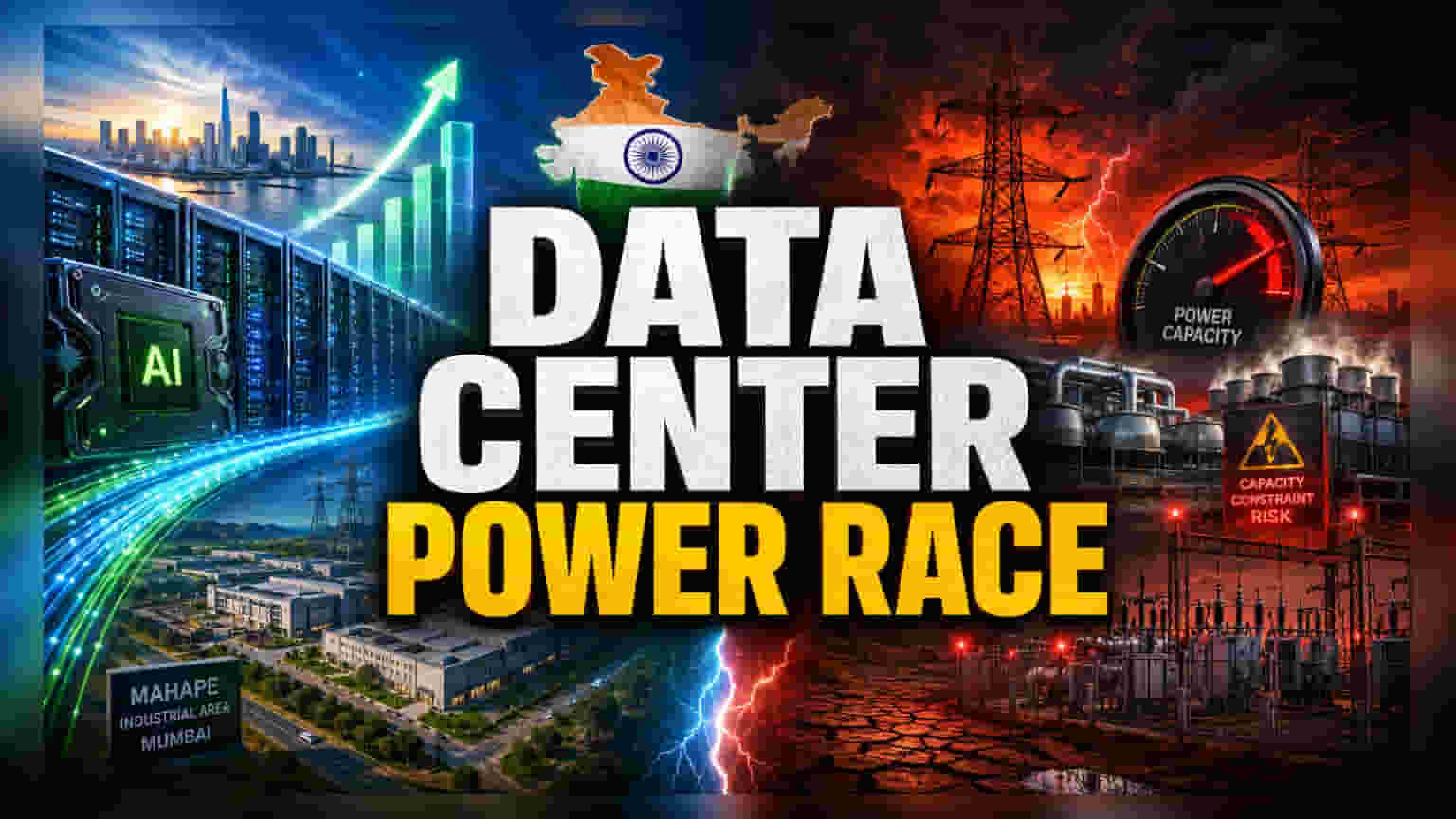


The Shift to Power-First Infrastructure
The acquisition of the 3.48-acre Mahape property for ₹282 crore represents more than mere footprint expansion; it signifies a structural pivot toward the high-density requirements of the artificial intelligence era. As the broader data center sector faces a critical power-supply bottleneck, industry leaders are increasingly favoring land parcels with established utility access and fiber connectivity over greenfield sites. This transaction, finalized on May 22, 2026, places STT GDC at the heart of one of India’s most mature industrial corridors, where proximity to submarine cable landing stations provides a competitive edge for hyperscale cloud providers.
The AI Supercycle and Valuation Dynamics
The infrastructure race in India is currently defined by a transition from traditional cloud storage to GPU-heavy, AI-optimized workloads. With global capacity projected to double by 2030, the ability to secure 'ready-to-plug' land is becoming the primary differentiator for capital allocation. STT GDC, recently acquired by a KKR-led consortium at an enterprise value of approximately S$13.8 billion, is utilizing its access to long-term, patient capital to aggressively front-run this demand. While smaller incumbents often struggle with 18-24 month permit delays, well-capitalized players are effectively building 'land moats' to preclude competitors from accessing grid-connected sites in Mumbai and surrounding hubs.
The Forensic Bear Case: Execution and Environmental Risks
Despite the bullish narrative surrounding digital infrastructure, significant systemic risks remain. The data center industry is increasingly facing political and environmental friction; large-scale cooling requirements and high electricity consumption have triggered concerns regarding groundwater depletion and grid load stability in water-stressed urban areas. Furthermore, the industry is seeing a sharp decline in skilled labor availability, particularly for contractors capable of managing complex liquid-cooling installations. For Repro India, the seller, this asset sale is a necessary deleveraging exercise to improve its weak interest coverage ratios, yet for the buyer, the challenge lies in the 'conversion' risk. Repurposing existing industrial structures for high-density, mission-critical server environments often proves more costly than new construction due to structural load limitations and outdated electrical architecture.
Future Outlook
Market sentiment remains heavily tilted toward aggressive capacity expansion. With India’s total IT capacity expected to reach nearly 2 GW by the end of 2026, the focus for operators like STT GDC will shift from land acquisition to power securing. Future growth will be dictated by those who can successfully navigate the emerging regulatory hurdles under the Digital Personal Data Protection Act while balancing the immense energy costs required to maintain dominance in the escalating AI infrastructure race.