

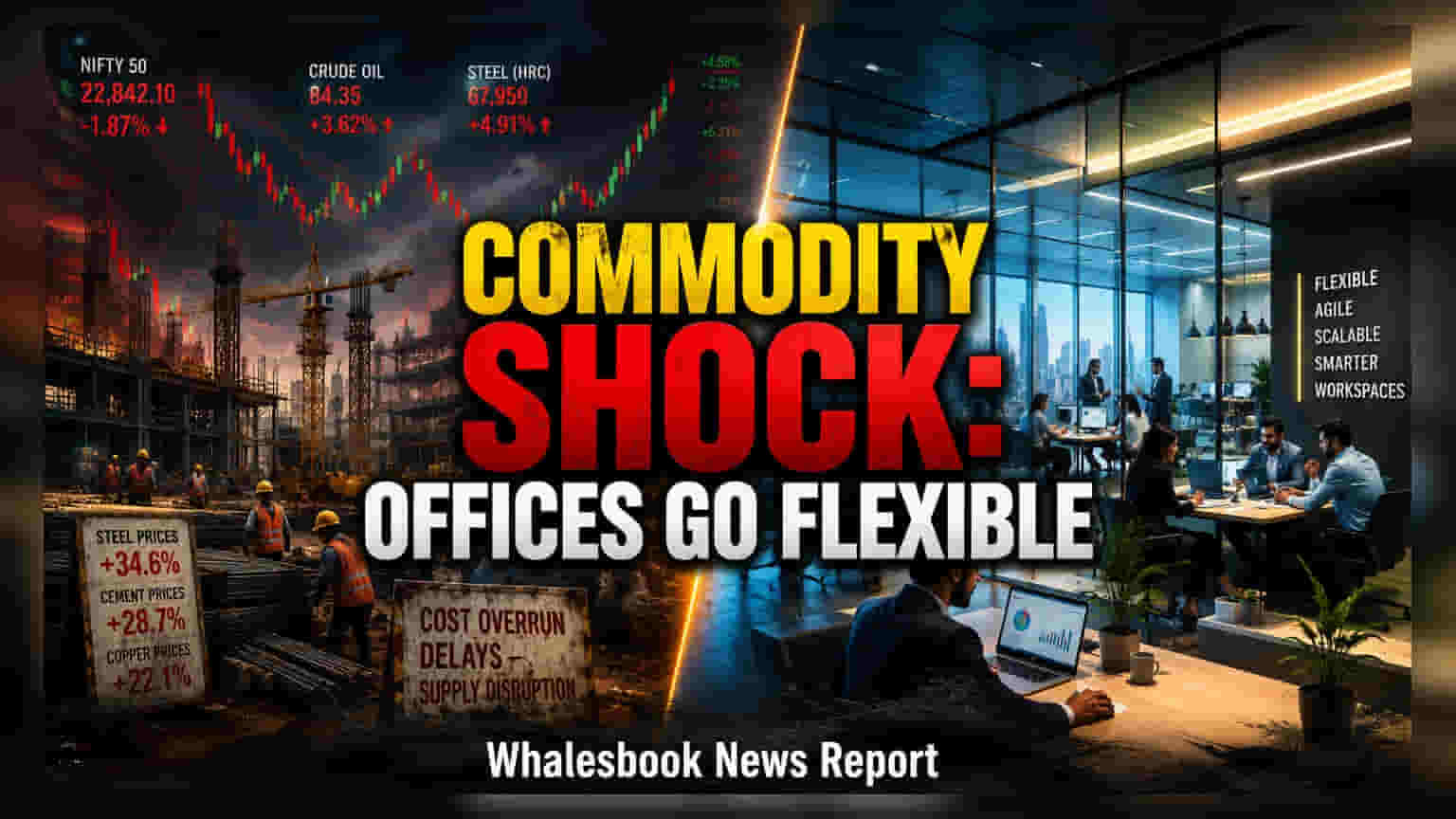
Companies are shifting from traditional office expansion to managed workspaces to manage rising construction costs. By avoiding large upfront capital spending on steel and cement, businesses can preserve cash for core operations. This shift is accelerating the growth of India's flexible workspace sector, which has now crossed the 100 million square feet mark.
Indian businesses are increasingly moving away from traditional, capital-heavy office infrastructure as rising costs for key raw materials disrupt expansion budgets. With prices for construction essentials like steel, cement, copper, and aluminum remaining volatile, corporations are choosing asset-light models, such as managed workspaces, to maintain financial flexibility.
Impact of Construction Costs on Expansion
The financial pressure of traditional office construction is significant. According to industry data, TMT steel prices surged by approximately 20% by March 2026, leading to an estimated increase of ₹50 per square foot in construction costs. Further analysis from the JLL Construction Cost Guide 2026 indicates a steady 2-4% rise in essential materials including aluminum and copper. For companies, these elevated costs mean that building and fitting out new offices creates a heavy upfront financial burden that can strain cash flow and reduce the money available for other business needs.
Strategic Shift to Flexible Models
Managed workspaces allow companies to convert what would traditionally be a large capital investment into a predictable monthly operating expense. By outsourcing the responsibility of fit-outs, maintenance, and facility management to specialized providers, firms can avoid the direct impact of raw material price fluctuations. This shift is particularly noticeable among companies in the manufacturing, engineering, and construction sectors, which are already managing their own supply chain and raw material cost pressures. Redirecting funds from real estate development to areas like technological advancement or capacity expansion allows these businesses to focus on their primary growth drivers.
Growth of the Flexible Workspace Market
The move toward flexibility has fueled a massive expansion in India’s flexible workspace sector, which has now surpassed a footprint of 100 million square feet. As this trend continues, the ability of workspace providers to offer cost-effective, ready-to-use environments remains a critical factor for corporations trying to navigate the current economic climate. For investors, the long-term sustainability of this model depends on demand from large enterprises and the ability of workspace providers to manage their own occupancy rates and operational efficiency. The next important update to follow is whether this demand from corporate tenants continues to grow as construction inflation persists or if corporations pause expansion plans due to broader economic uncertainty.