 Whalesbook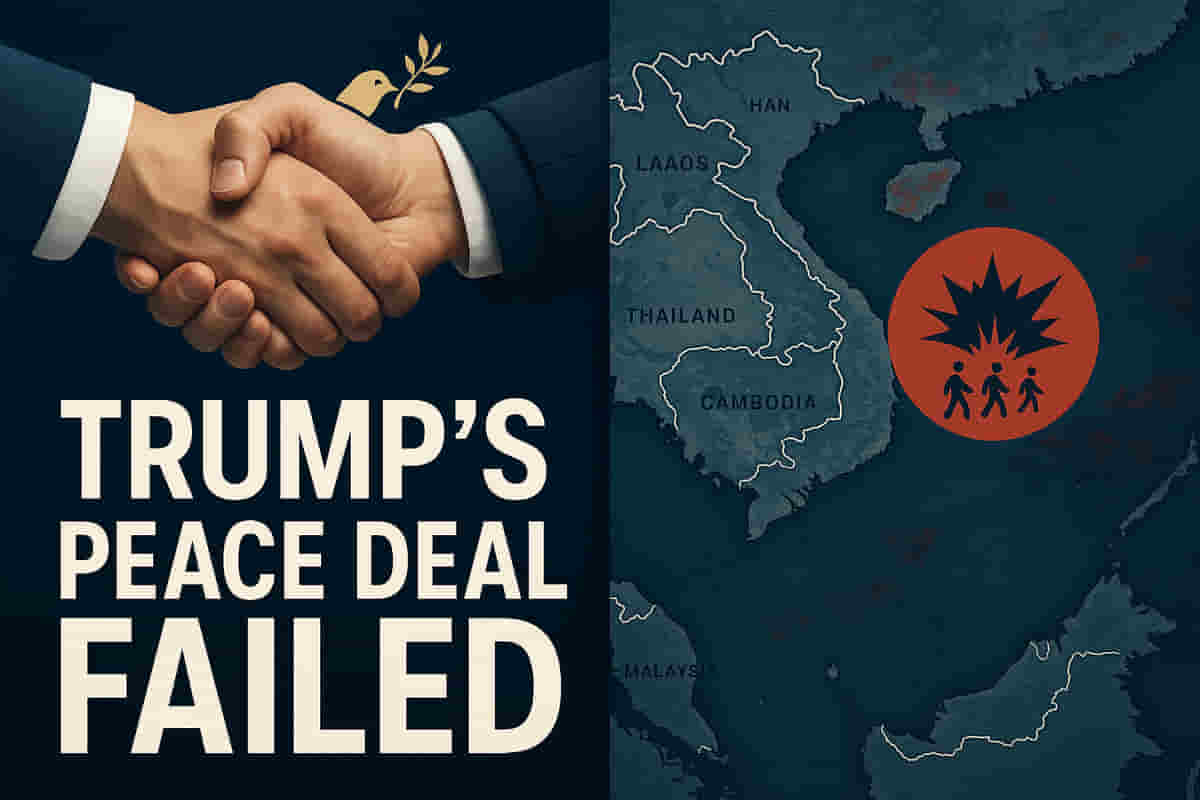
The Fragile Truce
Donald Trump has once again claimed success in brokering peace, this time highlighting the conflict between Thailand and Cambodia. However, this assertion is quickly being challenged as heavy fighting has erupted again along the shared border, displacing over half a million people. The ceasefire Mr. Trump stated he helped establish in October has proven to be extremely short-lived, with both nations now engaged in renewed shelling of each other's territories.
Political Crossroads in Southeast Asia
This resurgence of conflict occurs as both Thailand and Cambodia navigate periods of significant political transition. Cambodian Prime Minister Hun Manet, who assumed leadership just two years ago, is still establishing his authority and operating within the considerable legacy of his long-serving father, Hun Sen. In Thailand, a previous attempt at de-escalation during border tensions, which involved a seemingly deferential call to Hun Sen by the then-Prime Minister Paetongtarn Shinawatra, led to her impeachment earlier this year. This precarious political landscape makes it exceedingly difficult for either government to appear to be yielding ground, potentially prolonging the instability. The continued hostilities also pose a risk of drawing other Southeast Asian nations into the dispute, creating a dangerous ripple effect for regional peace and stability.
Diplomacy as a Power Play?
The collapse of the Thailand-Cambodia peace deal serves as a stark illustration of the perils associated with treating complex diplomacy as a mere test of power or a quick diplomatic victory. Mr. Trump has frequently cited numerous alleged peace agreements achieved during his presidency as evidence of his peacemaking prowess, even putting himself forward as a candidate for the Nobel Peace Prize. Among the conflicts he claims to have resolved are those between India and Pakistan, Israel and Iran, Israel and Hamas in Gaza, Rwanda and the Democratic Republic of the Congo, and Azerbaijan and Armenia. These claims stand in contrast to the ongoing realities on the ground. Peace in Gaza remains elusive, with daily attacks continuing, and relations between India and Pakistan, as well as Israel and Iran, continue to be fraught with tension. Efforts to mediate between Russia and Ukraine have also yielded no significant breakthroughs.
The Need for Patience
The article suggests that despite possessing considerable political power, Mr. Trump may lack the essential ingredient of patience crucial for effective peacemaking. The success of sustained diplomatic efforts might lie not with individual power plays, but with regional bodies such as the Association of Southeast Asian Nations (ASEAN), which could potentially foster more enduring solutions through persistent, collective engagement.
Impact
The implications of these failed diplomatic interventions and ongoing conflicts extend beyond the immediate regions. They can undermine global trust in international mediation efforts and highlight the challenges of achieving lasting peace without addressing underlying political and social dynamics. The failure of such high-profile attempts can embolden belligerents and increase the risk of wider regional instability.
Impact Rating: 4/10
Difficult Terms Explained
- Truce pact: An agreement between opposing sides to stop fighting for a specific period or indefinitely.
- Displaced: People who have been forced to leave their homes, usually due to conflict, natural disaster, or persecution, but remain within their country.
- Political transition: A period when a country changes its political system or leadership, often involving elections, new governments, or shifts in power structures.
- Impeachment: A formal process by which a legislature brings charges against a public official for misconduct, potentially leading to their removal from office.
- Deferential call: A phone conversation where one person shows respect and compliance to someone in a higher position or authority.
- Diplomacy: The art and practice of conducting negotiations between representatives of states or groups.
- Quick-fix: A simple, fast solution intended to solve a complex problem, often without addressing its root causes.
- Nobel Peace Prize: An annual award given to individuals or organizations who have made outstanding contributions to peace.
- FIFA: The Fédération Internationale de Football Association, the international governing body of association football, football (soccer), beach soccer and futsal.
- Ceasefire: A temporary suspension of fighting, typically arranged by mutual agreement between opposing forces.