

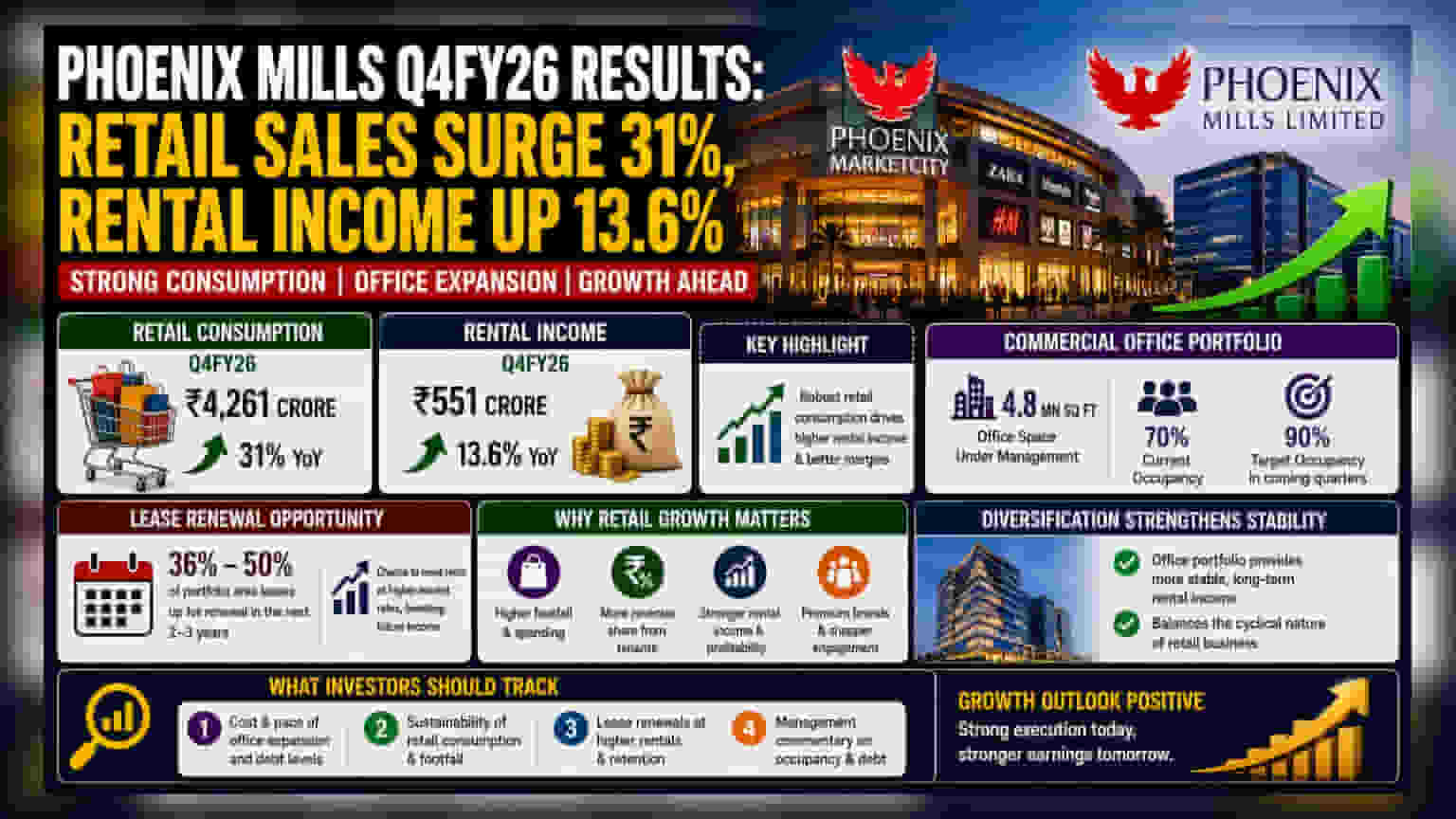
Phoenix Mills reported a 31% jump in retail consumption and a 13.6% rise in rental income for Q4FY26. The company is now focusing on office space expansion and upcoming lease renewals to drive further revenue. Investors are tracking how these renewals and new office occupancy targets will impact future cash flows.
What Happened
Phoenix Mills Limited (PML) released its financial performance for the final quarter of the financial year 2026 (Q4FY26), showing strong growth in its core retail mall business. The company recorded a retail consumption of ₹4,261 crore, a 31% increase compared to the same period last year. This rise in sales within its malls directly supported a 13.6% growth in rental income, which reached ₹551 crore for the quarter. The company also highlighted significant activity in its commercial office portfolio and outlined plans for future growth.
Why Retail Growth Matters
For a mall operator like Phoenix Mills, retail consumption is a critical performance indicator. Most mall leases operate on a combination of fixed rent and a percentage of the sales (consumption) generated by the tenant. When shoppers spend more, the company's rental income typically increases, leading to better profit margins. The 31% growth in consumption indicates that footfall and spending at their properties—such as Phoenix MarketCity—remain robust. This trend suggests that the company is successfully attracting premium brands and maintaining strong shopper engagement.
The Shift Toward Office Space
Beyond malls, Phoenix Mills is aggressively expanding its commercial office portfolio. The company currently manages 4.8 million square feet of office space across major cities including Mumbai, Pune, Bengaluru, and Chennai. With an occupancy rate of 70%, the management has set a clear target to raise this to 90% in the coming quarters. This diversification into office space is strategically important as it provides a more stable, long-term rental income stream compared to the slightly more variable nature of retail mall revenue. However, such large-scale office projects require significant upfront capital spending, which investors often watch closely for its impact on debt levels.
The Lease Renewal Opportunity
One of the most significant factors for the company’s future revenue is the scheduled renewal of lease agreements. Phoenix Mills is set to renew leases for 36% to 50% of its total portfolio area over the next two to three years. In a growing market, lease renewals allow landlords to reset rents to current market rates. If the economy stays healthy and demand for prime retail space remains high, these renewals could lead to a substantial increase in rental income. Conversely, if retail demand were to slow down, the company might face challenges in maintaining rental premiums.
What Investors Should Track
While the current numbers show strong momentum, investors typically monitor a few key areas for real estate companies like Phoenix Mills. First, the cost and pace of office space expansion are important; high debt levels or construction delays can pressure the balance sheet. Second, the sustainability of retail consumption is vital. If consumer spending cools down due to inflation or other macro factors, it could affect the revenue share the company earns from its tenants. Finally, the ability of the company to secure new tenants at higher rental rates during the upcoming lease renewals will be the primary driver for earnings growth in the next few years. Management's commentary on occupancy targets and debt management will be essential for assessing the company’s financial health.