 Whalesbook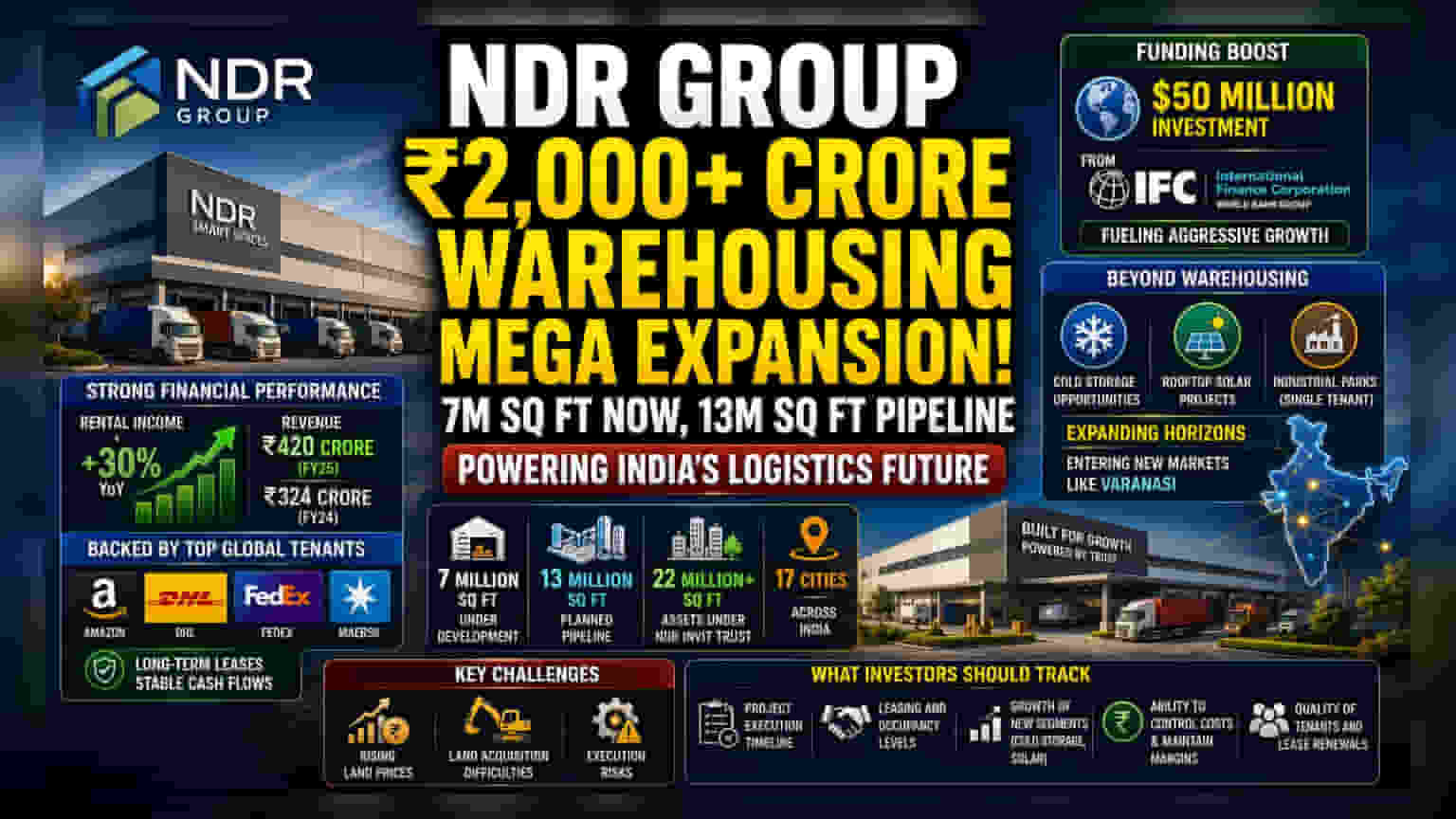


Chennai-based NDR Group is set to invest ₹2,000 crore to expand its warehousing and industrial space footprint. Supported by a 30% jump in annual rental income, the group is developing a new 13 million sq ft pipeline. Investors may watch how the company manages land acquisition challenges and project execution risks while it diversifies into new segments like cold storage and solar power.
What Happened
Chennai-based NDR Group has announced a major expansion plan to grow its warehousing and industrial infrastructure footprint. The developer is earmarking over ₹2,000 crore for new projects to be built over the coming years. This capital expenditure is designed to meet the growing demand from sectors like e-commerce, logistics, and manufacturing. The company’s development arm, NDR Smart Spaces, is currently working on 7 million sq ft of space, which is part of a larger planned pipeline of 13 million sq ft. These properties are intended for the group’s infrastructure investment trust, known as the NDR InvIT Trust, which currently manages over 22 million sq ft of assets across 17 cities.
Why This Matters For Investors
The warehousing sector in India has seen significant growth due to the country’s increasing focus on domestic manufacturing and the rapid rise of e-commerce. For investors tracking this space, NDR Group’s recent financial performance offers a look at the sector's potential. The group reported a 30 percent increase in rental income in the last fiscal year, with revenue rising to ₹420 crore from ₹324 crore. This income is supported by long-term leases with major global clients including Amazon, DHL, FedEx, and Maersk. The ability to lock in these tenants provides a level of stability to the cash flow, which is a key metric for infrastructure and real estate assets.
Funding and Strategic Expansion
To support this growth, the group is finalizing a $50 million investment from the International Finance Corporation, a member of the World Bank Group. This external funding is intended to help the company scale its operations. Beyond standard warehousing, the group is looking to diversify its business model. They are exploring opportunities in specialized real estate sectors such as cold storage and rooftop solar projects. Additionally, the group is expanding its geographic presence, entering new markets like Varanasi to tap into rising consumption patterns in tier-2 and tier-3 cities. The group is also focusing on industrial parks, which are built to house single corporate tenants, allowing for larger, dedicated spaces.
The Risk of Land and Execution
While the expansion plans are substantial, there are practical challenges. The company has noted that rising land prices and difficulties in acquiring land are key hurdles that can impact development costs. In the warehousing and industrial real estate business, the ability to acquire land in strategic locations at a reasonable price is critical for maintaining profit margins. If land costs continue to rise significantly, it may put pressure on the overall project returns. Additionally, with such a large pipeline under development, the risk of project delays or cost increases remains a factor that market observers typically monitor.
What Investors Should Track
Investors interested in the industrial and warehousing space should keep an eye on how the company manages its project execution timeline. The speed at which the new 13 million sq ft pipeline is completed and leased out will be an indicator of demand strength. Furthermore, tracking whether the new segments like cold storage and solar infrastructure begin to contribute meaningfully to the total rental income will be important. Finally, the ability of the group to maintain its occupancy levels and secure high-quality tenants for the new space will be a primary monitorable for the business's long-term health.