 Whalesbook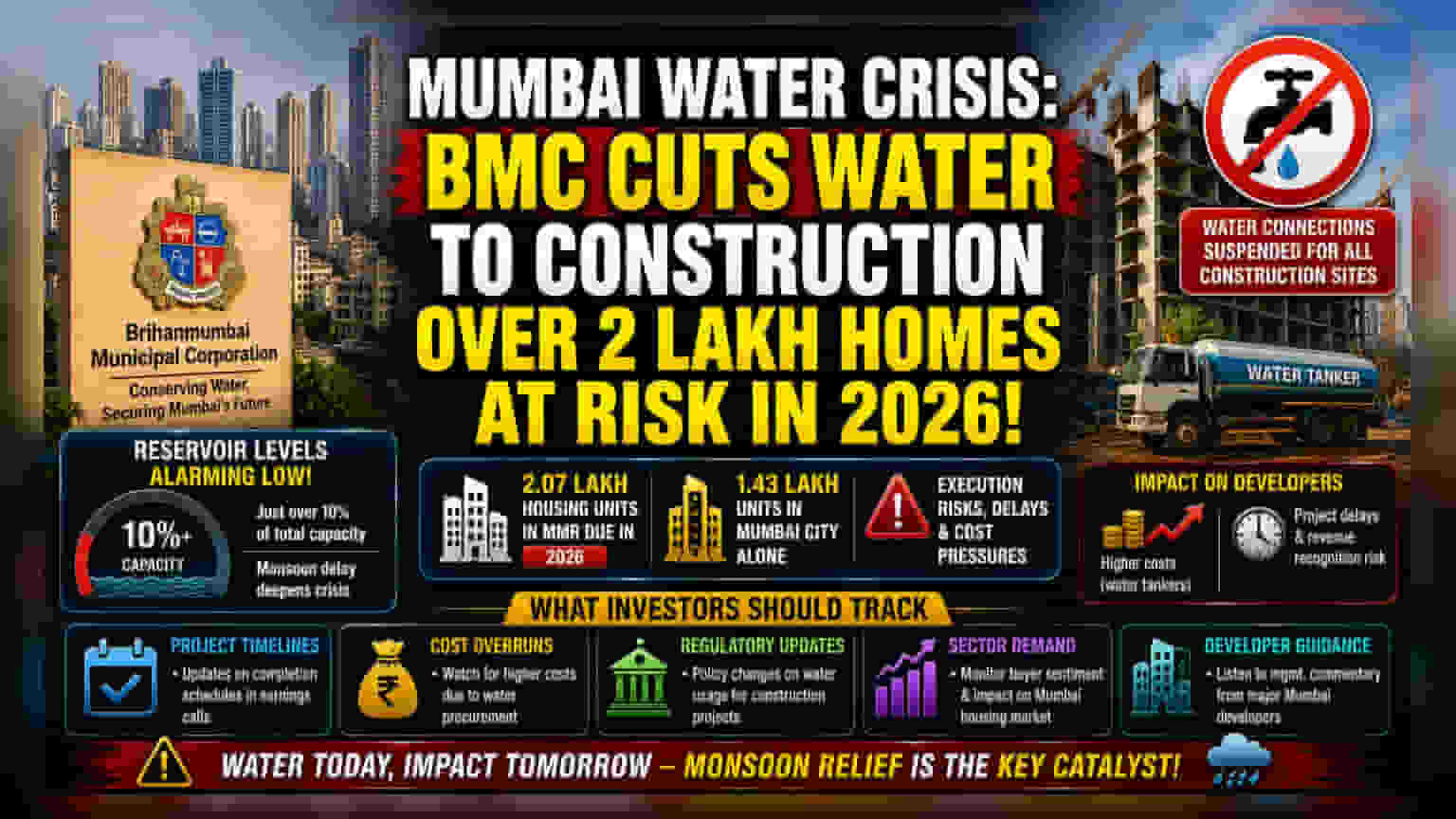


Mumbai's severe water shortage has led the Brihanmumbai Municipal Corporation (BMC) to restrict water supply to construction sites, potentially impacting 1.43 lakh housing units scheduled for completion in 2026. This creates execution risks for real estate developers, who may face higher costs due to reliance on private water sources. Investors should monitor potential project delays and the resulting impact on construction costs and developer timelines.
What Happened
The Brihanmumbai Municipal Corporation (BMC) has introduced strict water usage controls in Mumbai following a sharp drop in reservoir water levels, which have reportedly fallen to just over 10% of their total capacity. As a direct consequence of these conservation measures, the municipal body has suspended water connections to all active construction sites across Greater Mumbai and stopped approving new water connections for building projects. This regulatory move comes amidst concerns regarding delayed monsoon rains.
According to data from real estate consultancy ANAROCK, this development poses a significant risk to the housing market. Out of approximately 2.07 lakh housing units expected to be completed across the broader Mumbai Metropolitan Region (MMR) in 2026, Mumbai city alone accounts for about 1.43 lakh units. These units are now facing potential execution challenges due to the new restrictions.
Why This Matters For Investors
For real estate developers, timely execution is a key driver of financial performance. Construction projects require large amounts of water for activities such as concrete mixing and curing of cement. When municipal water supply is cut off, developers must rely on alternative arrangements, such as private water tankers. This transition can lead to two main financial pressures: increased operational costs and potential delays in construction timelines.
If projects are delayed beyond their scheduled completion dates, it can affect the developer's ability to hand over properties to homebuyers on time. For listed real estate companies, this could mean delays in recognizing revenue, which might impact their quarterly financial results. Furthermore, extended project timelines can lead to higher interest costs, as the debt taken to finance these construction projects remains on the books for longer than originally planned.
The Operational Risk
The restriction primarily affects construction activities in Greater Mumbai, covering key micro-markets such as South Mumbai, the Bandra-Kurla Complex (BKC), Andheri, Borivali, and Mulund. While many large developers have their own contingency plans or use groundwater, the complete suspension of new municipal connections may hinder the progress of new project launches or the expansion of existing sites. If the water shortage persists and the monsoon does not provide sufficient relief, the cost of procurement for water is likely to rise, potentially squeezing the profit margins of developers who are unable to pass these costs on to buyers.
What Investors Should Track
The most important factor for investors to monitor in the coming weeks is the progress of the monsoon, as a strong rainfall season would be the primary catalyst for the BMC to relax these restrictions. Additionally, investors should look for updates from management teams of major Mumbai-based real estate firms, such as Macrotech Developers (Lodha), Oberoi Realty, Godrej Properties, and Sunteck Realty, regarding their dependency on municipal water and any potential impact on their delivery schedules.
Key monitorables include:
- Updates on project completion timelines in upcoming quarterly earnings calls.
- Any announcements regarding cost overruns attributed to water procurement.
- Changes in regulatory policy regarding water usage for essential construction projects.
- Overall sector demand trends, as sustained high costs or project delays could impact buyer sentiment in the Mumbai housing market.