 Whalesbook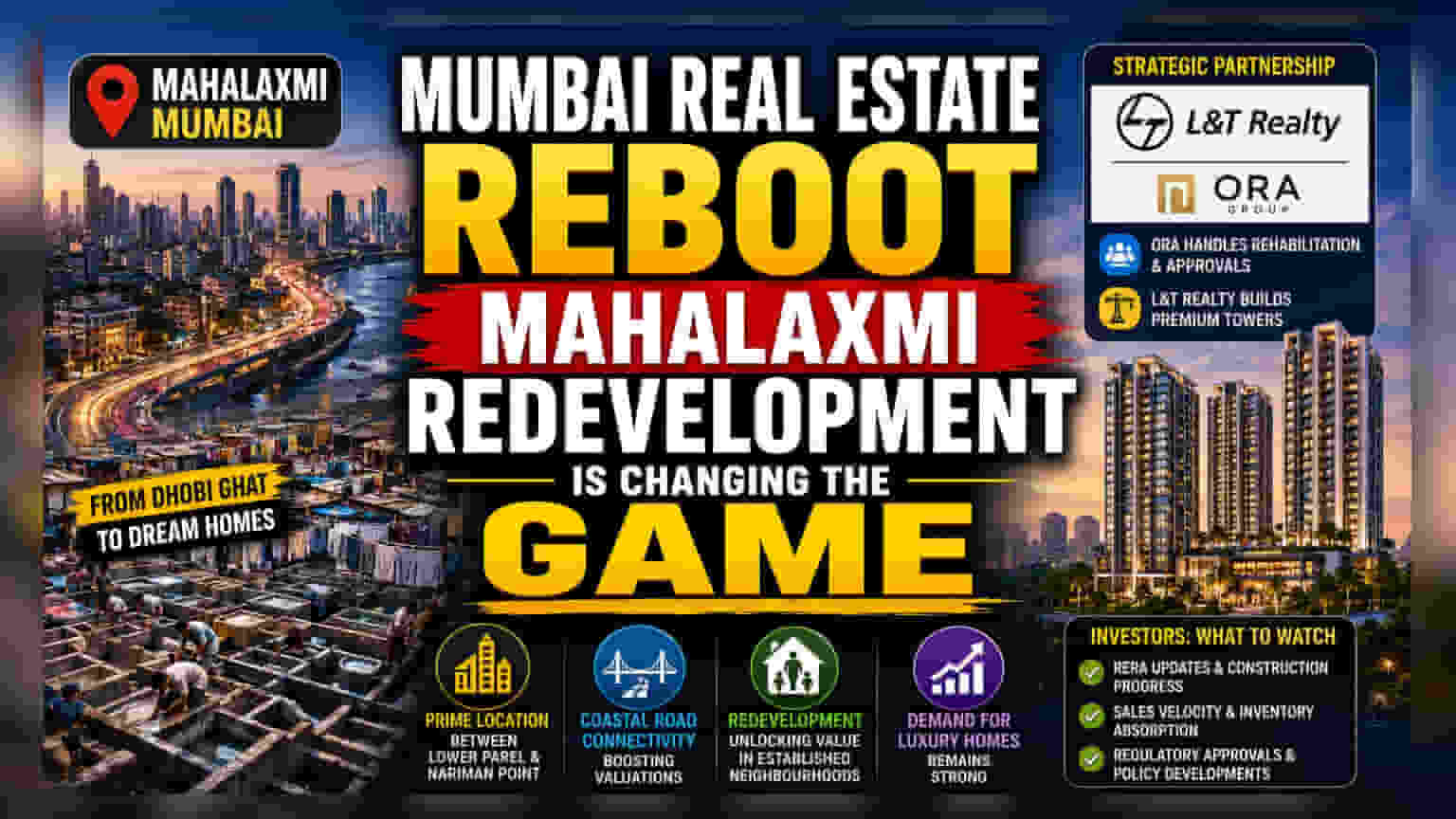


Mumbai's property market is shifting toward large-scale redevelopment as prime land becomes scarce. A major collaboration between L&T Realty and ORA Group in Mahalaxmi highlights this trend, aimed at unlocking value in the city's historic core. Investors should monitor how these infrastructure-linked projects navigate regulatory and execution risks.
What Happened
Mumbai’s real estate landscape is undergoing a structural shift, moving away from outward expansion toward the redevelopment of established urban pockets. A key example of this trend is the large-scale redevelopment project in Mahalaxmi, where L&T Realty, the real estate arm of Larsen & Toubro, has partnered with ORA Group. The project is focused on transforming the historic Dhobi Ghat area into a modern residential hub. While ORA Group is handling the complexities of tenant rehabilitation and local approvals, L&T Realty is developing high-rise luxury towers aimed at meeting the sustained demand for premium housing in South Mumbai.
Why This Matters For Investors
For investors tracking the real estate sector, this move underscores a critical change in strategy for major developers. With land in central Mumbai becoming nearly impossible to acquire, developers are now focusing on unlocking value from older properties and underutilized land. Mahalaxmi, specifically, offers a strategic advantage due to its location between established business districts like Lower Parel and Nariman Point. The ongoing Mumbai Coastal Road project, which significantly enhances connectivity between South Mumbai and the western suburbs, is serving as a major tailwind for property valuations in this corridor. This transition from 'land acquisition' to 'redevelopment' changes the business model, shifting the focus from inventory management to navigating the complex legal and social requirements of urban renewal.
How Investors May Read This
Investors looking at real estate companies often prioritize a company's ability to execute complex projects. Redevelopment is not just about construction; it is a long-term commitment that requires navigating the Slum Rehabilitation Authority (SRA) processes, managing tenant expectations, and securing multiple regulatory clearances. The partnership model, such as the one between L&T Realty and ORA Group, often helps developers manage these specific risks by splitting the responsibilities of rehabilitation and premium construction. For shareholders, the key is to see whether these projects can maintain their timeline, as delays in redevelopment are frequent and can significantly impact the financial return on investment.
The Redevelopment Risk Profile
While the potential for value creation is high, redevelopment carries specific risks that differ from standard new-build projects. Investors should be aware of the 'execution risk' inherent in these developments. Regulatory hurdles, such as delays in obtaining floor space index (FSI) approvals or changes in local zoning policies, can stall construction for years. Furthermore, rehabilitation projects involve thousands of existing tenants. If the developer fails to manage these relationships or provide promised transit accommodation, it can lead to litigation or public controversy, which can negatively impact the project's brand and financial health. The market also tends to be sensitive to the interest rate environment, as luxury projects in prime locations are heavily dependent on the purchasing power of high-net-worth buyers.
What Investors Should Track
Moving forward, investors may want to monitor a few specific indicators. First, check the project's RERA (Real Estate Regulatory Authority) filings for updates on the actual versus planned construction progress. Second, listen for management commentary during earnings calls regarding 'sales velocity' and 'inventory absorption' in the luxury segment, as this reflects the actual demand for these high-value units. Finally, watch for any updates on regulatory approvals for similar redevelopment projects in the city, as these often set a precedent for how quickly developers can convert old land into revenue-generating real estate.