

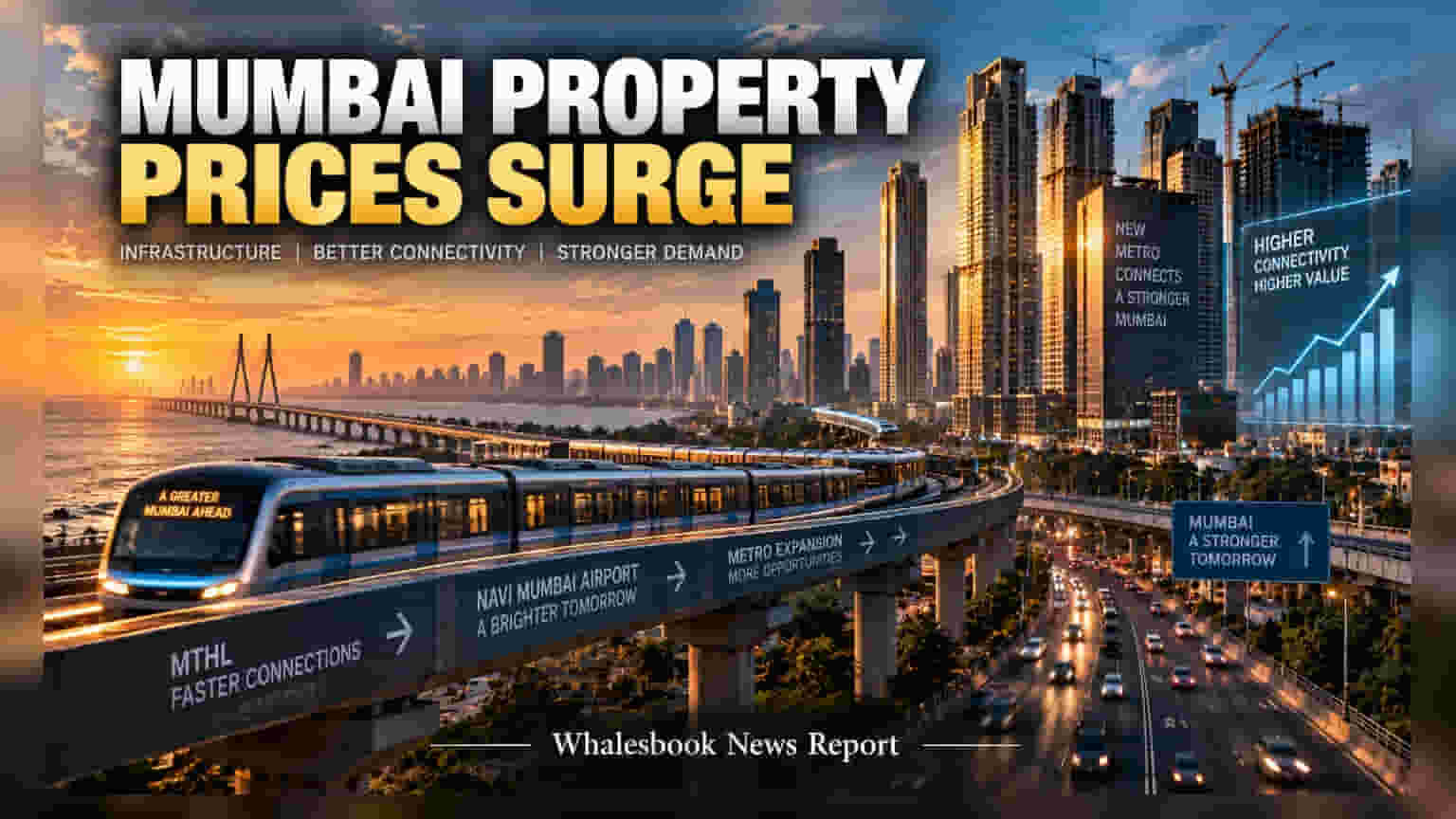
Driven by major projects like the Mumbai Trans Harbour Link and new Metro lines, property values in key Mumbai suburbs have appreciated by 10-12% over two years. Investors should look beyond this price appreciation and consider how sustained high costs and interest rates might affect long-term home-buyer demand and market liquidity.
The Mumbai Metropolitan Region (MMR) is undergoing a significant transformation as a massive capital expenditure cycle reshapes the local real estate market. Major infrastructure projects, including the Mumbai Trans Harbour Link (MTHL), the Navi Mumbai International Airport, and an extensive Metro expansion, are fundamentally altering how the city evaluates property demand. These projects are effectively shrinking commute times, leading to a 10-12% price appreciation in suburbs like Chembur, Mulund, and Borivali over the past two years.
Infrastructure Remapping the Region
The narrative is moving away from a single, legacy employment node toward an interconnected network. Previously peripheral areas are gaining central appeal as connectivity improves. For instance, in Chembur, proximity to the Bandra-Kurla Complex and the Santacruz-Chembur Link Road has driven luxury residential rates to between ₹47,000 and ₹52,000 per square foot. Similarly, the western suburbs, including Kandivli, Malad, and Borivali, have seen rates climb to ₹28,000–₹30,000 per square foot, aided by the Metro Line 7 corridor and Western Express Highway improvements.
A key component of this geographic redistribution is the under-construction Goregaon-Mulund Link Road (GMLR). This project, valued at ₹14,000 crore, aims to integrate tunnels under the Sanjay Gandhi National Park with the existing Metro infrastructure. By bridging the gap between Thane and the western suburbs, this project seeks to create a more uniform residential market across the region, allowing property demand to spread more evenly rather than being clustered.
Affordability and Investor Risks
While infrastructure growth acts as a catalyst for value, investors must remain cautious about the sustainability of this price momentum. A primary risk is the affordability ceiling. As property prices in premium segments climb rapidly, the base of potential buyers can shrink if income growth does not keep pace. High interest rates, which directly impact home loan affordability, act as a drag on demand. If the cost of borrowing remains high for an extended period, it could dampen the buying sentiment, regardless of the improved infrastructure.
Furthermore, infrastructure projects in India often face execution risks, such as timeline delays or cost overruns. While current sentiment is positive, any major delay in the commissioning of these critical links could stall the expected real estate appreciation in the affected micro-markets. Investors should also monitor the inventory levels in these newly connected suburbs. A sudden supply surge following price increases could lead to a correction if demand does not match the pace of new construction.
The most important monitorable for the coming quarters will be the actual demand volume following the completion of these projects, rather than just the price growth. Investors should track interest rate trends, as these remain a critical lever for housing demand, alongside the commissioning timelines of the GMLR and other key transit links. The ability of developers to maintain healthy sales velocity at these elevated price points will determine whether this current trend is a sustainable growth phase or a localized price peak.