

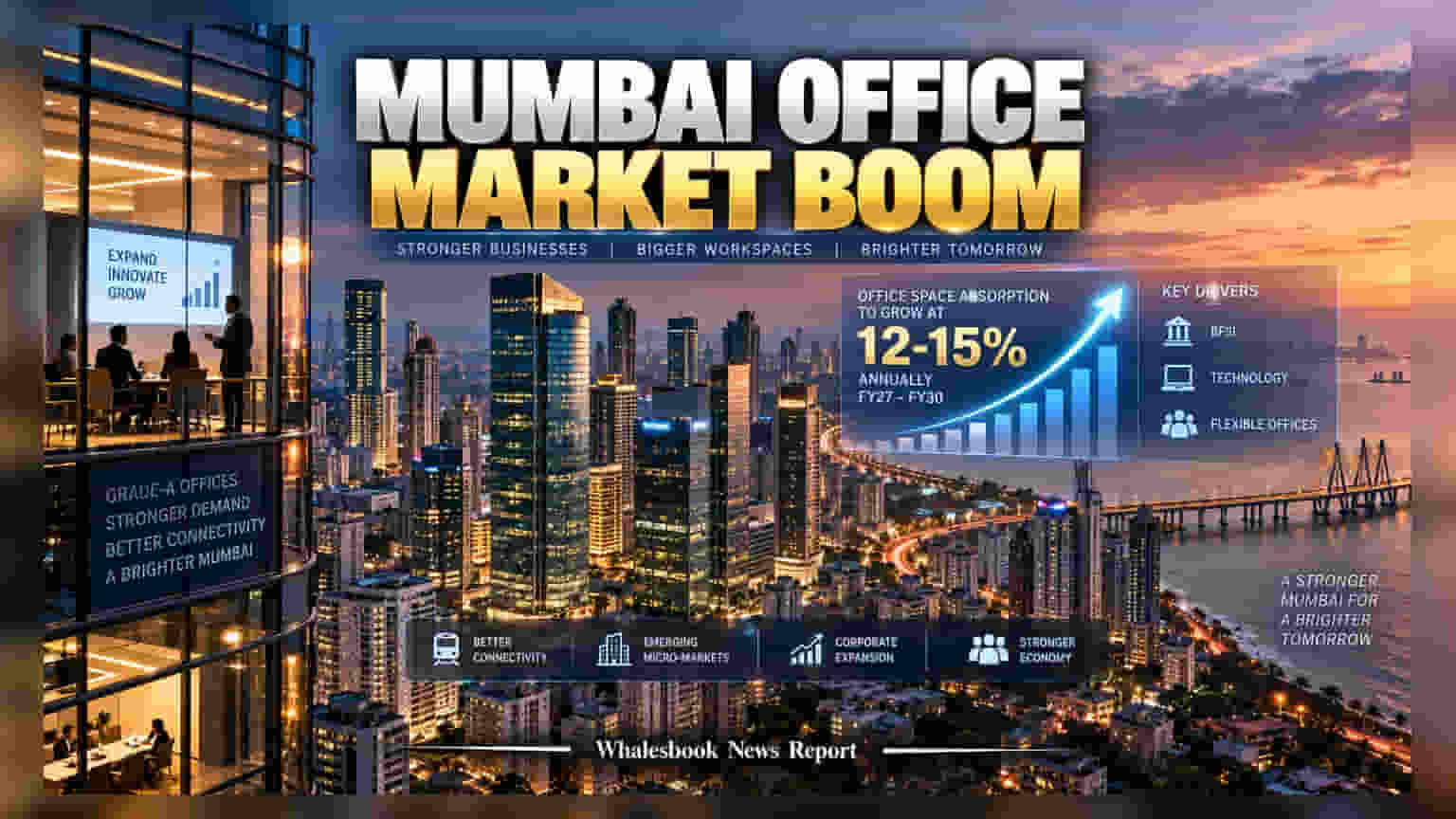
Mumbai's commercial office sector is expected to see 12-15% annual demand growth through 2030, significantly outpacing the 6-8% growth projected for residential real estate. This rise is driven by strong absorption from the BFSI, technology, and flexible workspace sectors, supported by major infrastructure expansion across the region.
Mumbai’s commercial real estate market is entering a phase of sustained expansion, with office space absorption expected to grow at an annual rate of 12-15% between fiscal years 2027 and 2030. According to the CBRE India Mid-Year Market Outlook, this growth trajectory highlights a structural shift in how corporate entities are approaching office footprints in India's financial capital.
Core Growth Drivers
The projected surge is largely attributed to the Banking, Financial Services, and Insurance (BFSI) sector, which continues to be the primary engine for space demand. Additionally, the technology sector and the growing preference for flexible office spaces—often referred to as co-working or managed office solutions—are contributing to this momentum. As companies refine their hybrid work policies, they are increasingly seeking high-quality, Grade-A office environments that offer better amenities and connectivity, which encourages developers to focus on delivering modern commercial supply.
While the commercial sector is witnessing aggressive demand, the residential real estate market in Mumbai is also growing, albeit at a more measured pace. Analysts anticipate a 6-8% compound annual growth rate for the residential segment over the same period. The divide between these two sectors often comes down to the nature of demand; commercial real estate is tied to corporate expansion and global capital flows, while residential demand is more closely linked to local income growth and affordability.
Infrastructure and Regional Development
A critical factor supporting this growth is the rapid development of urban infrastructure, including new metro lines and improved rail connectivity. These projects are opening up previously underserved micro-markets, allowing for decentralization. Developers are increasingly launching projects in these emerging corridors, which helps in managing price stability and maintaining consistent transaction volumes.
Market Risks and Challenges
Despite the positive outlook, the sector faces several structural challenges that could influence how quickly these projections materialize. Rising construction costs, including labor and material prices, continue to squeeze profit margins for developers. Furthermore, liquidity issues remain a concern in the broader real estate sector, which can affect the pace of new project launches.
Land availability remains a historical constraint in core Mumbai areas, forcing developers to look further afield for large-scale projects. This necessitates a focus on efficient land acquisition and timely execution. Additionally, systemic economic factors, such as shifts in interest rates or global economic conditions, could impact corporate expansion plans. Investors monitoring this space may track the actual delivery of Grade-A supply, the pace of infrastructure project completion, and how effectively developers manage their debt levels amid rising input costs.