

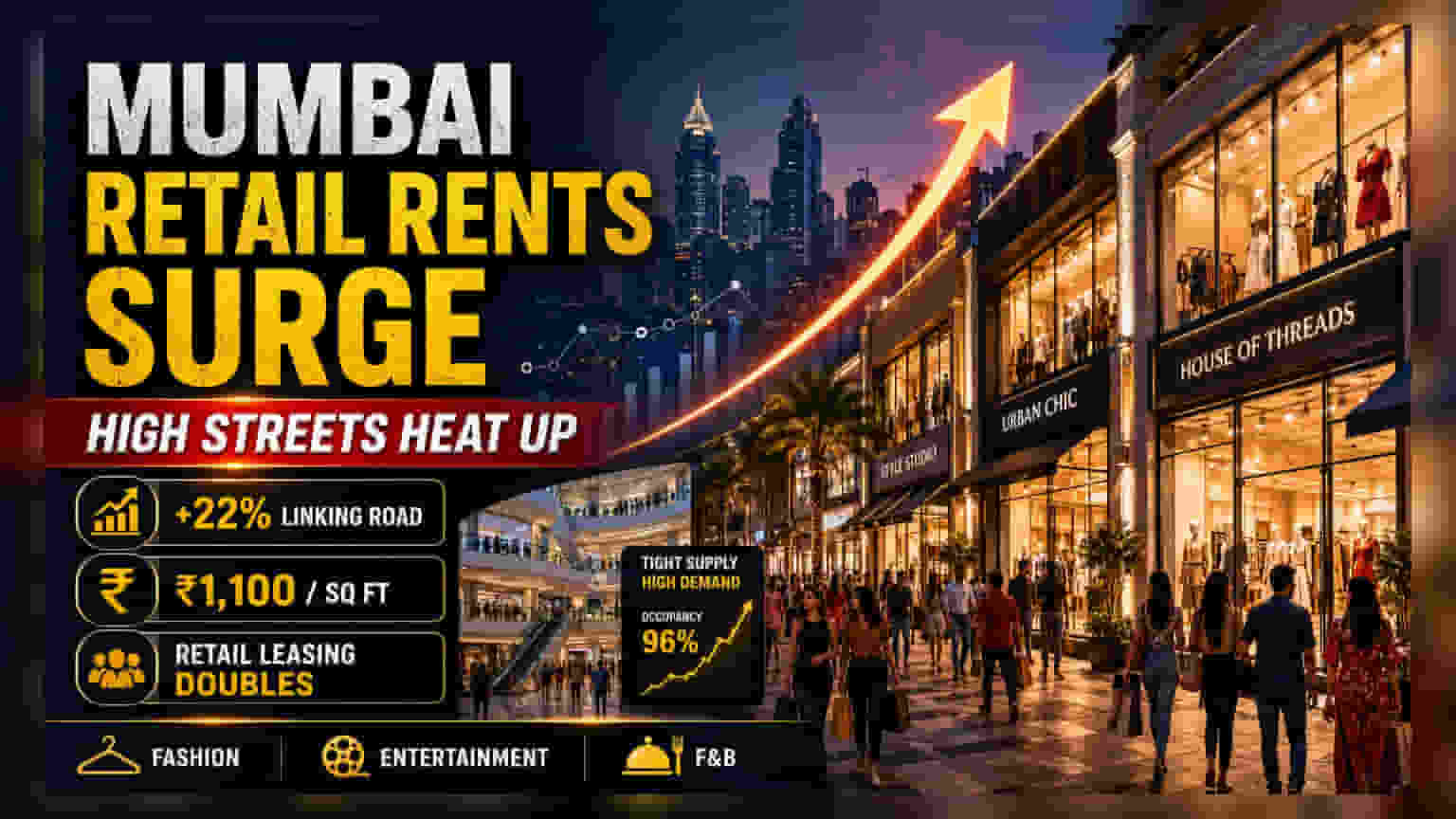
Retail rents on Mumbai's Linking Road surged 22% year-on-year, signaling a strong recovery in physical shopping space demand. With overall leasing volumes nearly doubling in the last quarter, the trend highlights aggressive expansion by domestic retailers. Investors may watch if higher rental costs impact the profit margins of fashion and food & beverage companies.
What Happened
Mumbai’s premium retail high streets are experiencing a notable surge in rental prices. According to recent market data, rents on Bandra's Linking Road climbed 22% year-on-year by June, reaching Rs 1,100 per sq ft per month. This growth is outperforming other retail formats. The trend extends beyond Bandra, with suburban corridors like Chembur, Borivali LT Road, and Thane also recording annual rental increases of 6.5% to 12.5%. Overall retail leasing volume in Mumbai hit 0.50 million sq ft, a figure nearly double the activity seen in the previous quarter.
The Retail Demand Shift
Expansion is being driven primarily by the entertainment and fashion sectors, which accounted for 29% and 26% of all leases, respectively. Food and beverage outlets remained another key pillar, making up 18% of the leasing volume. A standout feature of this growth is the reliance on domestic brands, which secured 86% of the total leased space, indicating a strong appetite for expansion among Indian retailers.
Mall Versus High Street Performance
Despite the rapid rental growth on high streets, malls still dominate the market, accounting for 73% of overall leasing activity. Vacancy rates in Grade A and B+ malls tightened to 3.4% during the quarter, as no significant new supply was added. However, this tight supply situation may shift. Developers have approximately 0.35 million sq ft of new mall space planned for southern and eastern corridors, which could lead to a slight increase in vacancy rates by the end of the year.
What This Means For Profit Margins
For investors, the rising cost of retail space is a double-edged sword. While it confirms high footfall and robust consumer interest in physical stores, it also increases fixed operating costs for retail chains. If fashion and dining companies are unable to pass these higher costs on to customers through price increases, it could put pressure on their profit margins. Investors often analyze how these lease expenses impact earnings during quarterly results, especially as companies scale their footprints.
National Retail Trends
The rental momentum in Mumbai reflects a broader national trend of tightening supply. Delhi NCR currently leads the country in leasing volume, with Gurugram acting as a major hub. Meanwhile, Kolkata reports the lowest vacancy rates in Grade A malls at 1.1%, and markets in Pune and Bengaluru are also showing healthy absorption rates for retail space.
What Investors Should Track
Key monitorables include the upcoming delivery of new mall space, which may cool down current rental inflation. Additionally, investors should track the quarterly updates of listed retail companies and Real Estate Investment Trusts (REITs) to see if rental cost growth is being balanced by strong revenue growth or if it is eroding profitability. Monitoring whether domestic retailers sustain their current pace of expansion will also be essential for understanding the long-term health of the sector.