

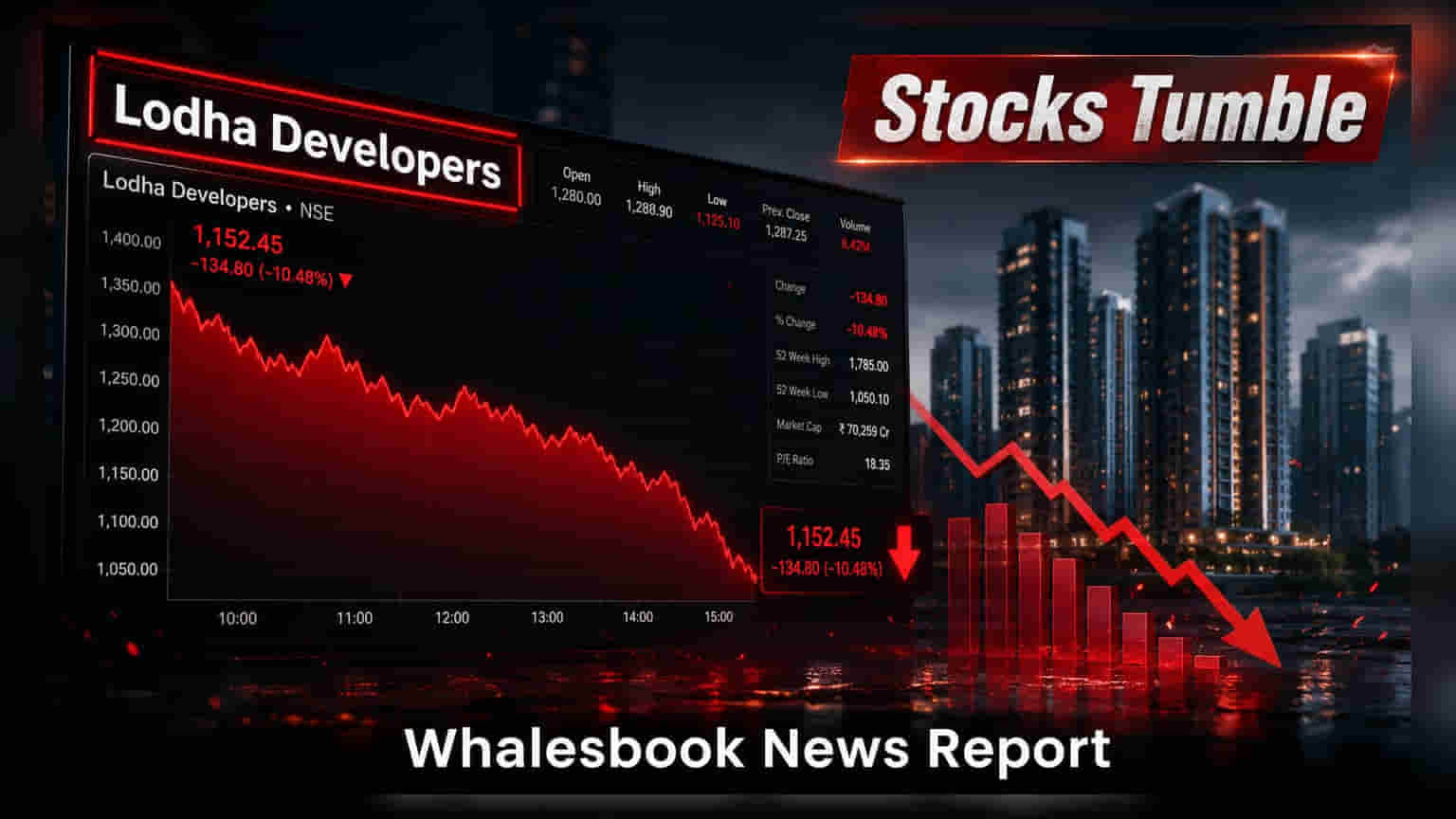
Macrotech Developers shares closed at Rs 1,209 on August 12, 2026, following a 100% year-on-year jump in Q1 FY27 net profit to Rs 1,373 crore. Investors are now tracking upcoming management commentary at the August 14 Annual General Meeting, while weighing premium valuations and recent promoter stake adjustments.
Macrotech Developers, the real estate company widely known as the Lodha Group, ended the trading session on August 12, 2026, at Rs 1,209 per share. The stock experienced a minor decline of approximately 0.25% during the day, a movement that comes after a phase of strong momentum driven by the company’s recent earnings report.
For the quarter ending June 2026 (Q1 FY27), the company reported a consolidated net profit of Rs 1,373 crore. This performance marks a 100% growth compared to the same period last year, reflecting strong demand across its portfolio. Revenue for the quarter also reached Rs 4,996.7 crore, underscoring the company’s ability to generate significant cash flow from its current development pipeline.
With financial results declared, the focus for shareholders has moved to the company's 31st Annual General Meeting, which is scheduled for August 14, 2026. This meeting is a key event where management typically discusses the company’s outlook, project delivery timelines, and capital allocation strategy. The company has already declared a final dividend of Rs 4.25 per share for the fiscal year 2026, with a record date of August 7, 2026.
While the financial trajectory appears positive, investors are also considering valuation and governance metrics. The stock is currently trading at a Price-to-Earnings (P/E) ratio of approximately 29.2. A valuation at this level suggests that investors are pricing in high expectations for future growth. Furthermore, recent exchange filings showed a 1.96% reduction in promoter holding over the last quarter, a factor that is often monitored by shareholders to assess promoter confidence in long-term prospects.
The company’s performance remains closely tied to the real estate demand in key regions, including the Mumbai Metropolitan Region (MMR), Pune, and Bengaluru. Success in these markets requires consistent project execution and timely delivery. With a debt-to-equity ratio of 0.42, the company maintains a stable balance sheet compared to some peers, but managing this leverage while funding new land acquisitions and construction remains a critical task.
Going forward, investors will be looking for updates from the upcoming Annual General Meeting regarding new project launches and strategies to sustain profit margins in a competitive real estate environment. The ability of the company to continue its current execution pace in its core markets will be the primary factor influencing its performance in the coming quarters.