

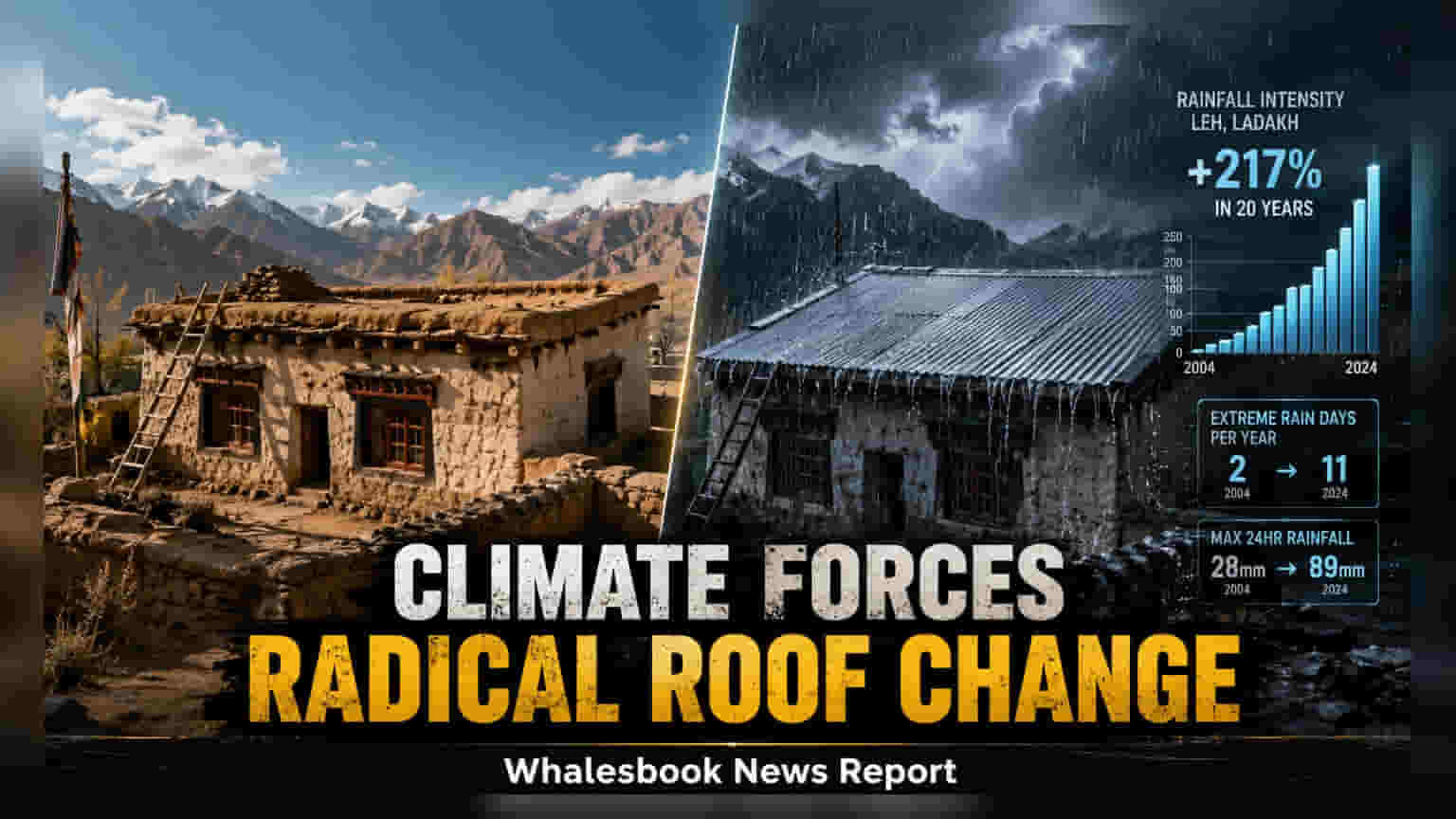
Residents in Ladakh are replacing traditional mud roofs with costly tin and concrete alternatives as intense rainfall becomes more frequent. This shift marks a significant change in local construction trends, as families prioritize structural durability over traditional thermal insulation despite high material costs.
The architectural landscape of Ladakh is undergoing a rapid transition as climate change challenges centuries-old building practices. Traditional homes in the region have long featured mud-brick walls and earthen roofs, which were designed to provide natural insulation against the extreme temperature variations of the high-altitude desert. However, these structures are proving vulnerable to changing weather patterns, specifically an increase in the frequency and intensity of rainfall.
Financial Impact of Material Shifts
Local homeowners are increasingly turning to modern materials like corrugated tin sheets and reinforced concrete to prevent leaks and structural damage. This adaptation comes at a significant financial cost. For example, residents have reported spending as much as ₹2.8 lakh to replace traditional roofing. The expense is further compounded by the logistical challenges of building in a high-altitude region, where materials such as cement and iron bars must be transported over long distances along mountain highways. These roads remain inaccessible during winter months, driving up the overall cost of construction and home maintenance for local families.
Changing Weather Patterns and Infrastructure
The shift is largely driven by a recorded rise in short, intense, and localized rainfall events. According to observations from the India Meteorological Department (IMD) in Leh, these events create a new vulnerability for homes that were historically built for arid conditions. While traditional mud-brick structures are effective at retaining heat in winter and keeping interiors cool in summer, they lack the water resistance required for the current weather conditions. Residents in areas such as Basgo, Khardung, and Diskit have noted that the necessity for frequent repairs to leaking mud roofs is making concrete or tin alternatives a more practical, albeit expensive, long-term choice.
Heritage and Future Construction Trends
The move away from earthen architecture has raised concerns among cultural conservationists. Experts like those from the Himalayan Cultural Heritage Foundation argue that the rapid adoption of modern materials is occurring without sufficient focus on integrating traditional aesthetics or climate-resilient local techniques. The ongoing challenge for the region involves balancing the immediate need for weather-proof housing with the preservation of Ladakh’s unique vernacular architectural identity. Investors and local stakeholders may monitor whether new government housing policies or future building codes will emerge to support cost-effective, climate-resilient construction methods that honor local heritage while addressing the new reality of heavier rainfall.