

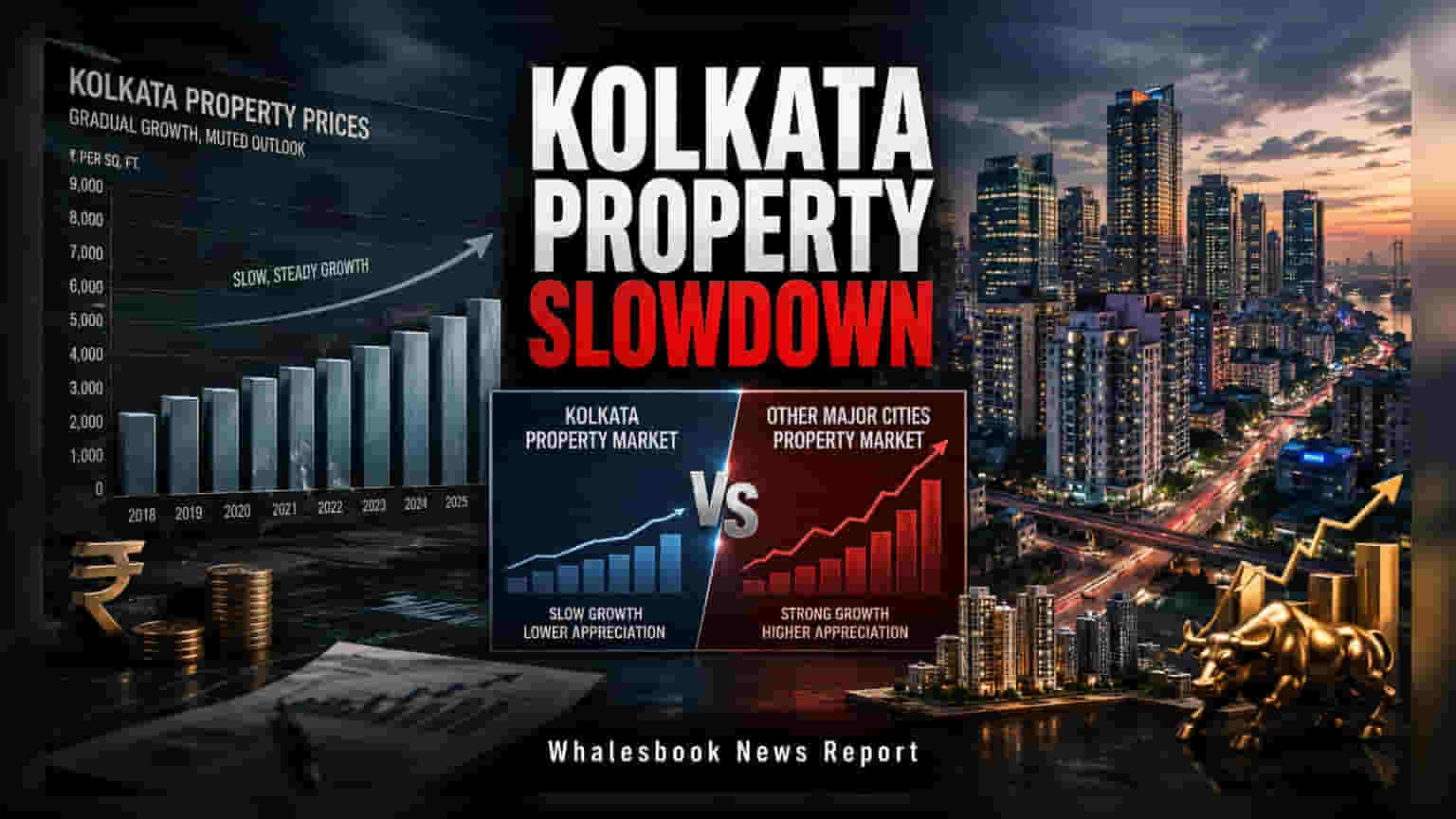
Kolkata’s average residential property price of ₹6,345 per square foot makes it India's most affordable major metro. While this affordability drives steady sales from genuine end-users, investors should note that capital appreciation remains slower than in tech-heavy markets like Noida or Hyderabad, reflecting the city’s different economic cycle.
Kolkata continues to hold the position as India's most affordable major metropolitan area for residential real estate, with average prices currently hovering at ₹6,345 per square foot. While this low entry cost creates a stable environment for people looking to buy homes for themselves, it also explains why the city does not see the rapid price jumps often witnessed in cities like Noida, Gurugram, or Hyderabad.
The difference in market behavior is significant for investors. In the last seven years, property prices in Kolkata rose by about 45%. During the same timeframe, markets in the National Capital Region (NCR) saw prices more than double. This slower growth in Kolkata is partly because the market is dominated by end-users rather than speculative investors. Speculators often chase quick gains in markets with high job creation and rapid migration, whereas Kolkata’s market is primarily supported by long-term local demand.
Despite the slower pace of price appreciation, the city has shown resilience. Data from early 2026 indicates that Kolkata saw a 5% year-on-year growth in residential sales, even as some other parts of the country experienced a temporary slowdown. This suggests that the local housing market has a solid foundation based on actual need rather than inflated sentiment.
However, the market faces specific regional constraints. Developers and industry reports frequently point to the pace of local economic activity in West Bengal as a limiting factor. The housing market is closely tied to the job market, and slower job creation in certain sectors compared to high-growth IT hubs has historically tempered housing demand. For investors or homeowners, this means the property market here is less likely to experience sharp, speculative bubbles but may also take longer to show significant value growth.
For those analyzing the market, the primary monitorables are infrastructure developments, such as the ongoing metro rail expansions, which directly influence property value in specific corridors. Additionally, because the market relies heavily on end-user demand, it is sensitive to interest rate stability and the general affordability of the workforce. Future price trends will likely depend on whether the state can attract more diverse business activities that could increase the demand for premium and mid-segment housing over the long term.