 Whalesbook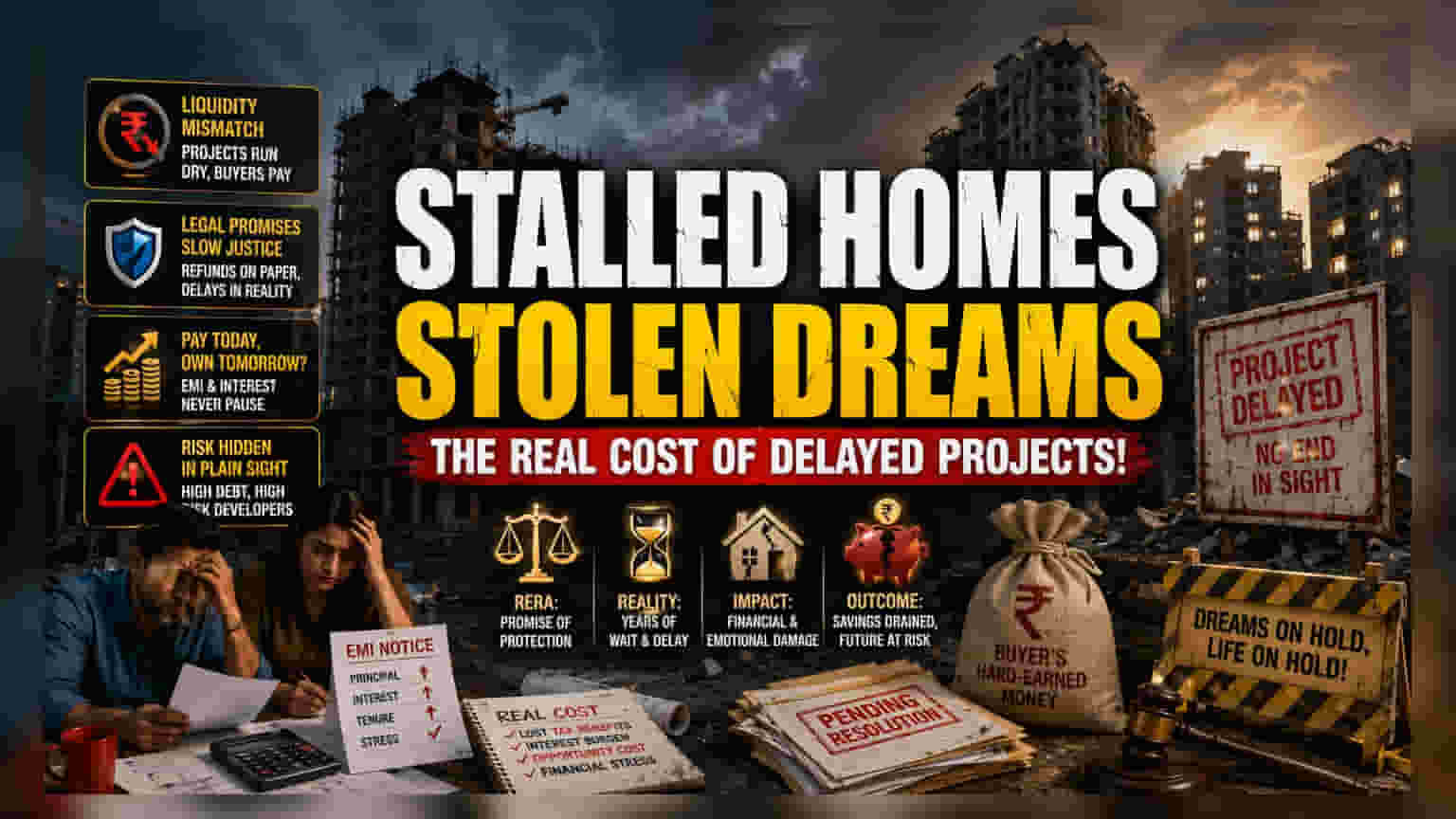


The Macro Disconnect in Residential Real Estate
The persistence of stalled residential projects across major urban centers represents a systemic failure in capital allocation and project oversight. While the surface-level narrative focuses on buyer frustration, the deeper institutional reality is a liquidity mismatch. Developers often rely on a constant churn of new project sales to fund ongoing construction, creating a precarious dependency that collapses when market sentiment softens or financing conditions tighten. This creates a cascading effect where end-users bear the brunt of project insolvency risk.
The Illusion of Contractual Security
Regulatory frameworks have evolved to provide a facade of protection, yet the enforcement mechanism remains inherently slow. Relying on the Real Estate (Regulation and Development) Act for resolution is a tactical defensive move, not an immediate liquidity solution. The gap between the legal mandate for refunds or delay interest and the actual recovery of capital from a developer suffering from cash-flow insolvency is substantial. Even when legal rulings favor the buyer, the underlying problem is the exhaustion of project funds, rendering judgments difficult to execute without years of additional litigation through insolvency proceedings.
The Hidden Financial Erosion
Beyond the headline-grabbing delays, the secondary financial impact on households is often overlooked. Homebuyers are effectively subsidizing developer inefficiencies through ongoing interest payments. Because loan agreements are structured independently of construction progress, borrowers remain locked into amortization schedules that do not account for the non-existence of the underlying asset. This friction destroys the net present value of the investment. When accounting for the loss of tax benefits under Section 24B, combined with the opportunity cost of capital that could otherwise be deployed in liquid market instruments, the true economic loss to the buyer significantly exceeds the nominal cost of rent and interest.
The Forensic Bear Case
The outlook for affected homebuyers remains negative due to the lack of a standardized exit mechanism for projects categorized as 'stranded.' Most developers operating in the mid-income segment lack the balance sheet strength to absorb the cost of delays, shifting this liability entirely onto the consumer. Regulatory interventions, while well-intentioned, often struggle with the reality of 'zombie' projects where the developer has exhausted both debt and equity lines. Investors should note that companies with high inventory overhang and mounting debt-to-equity ratios are consistently the most prone to these delivery failures, signaling a need for extreme caution in presale commitments.