 Whalesbook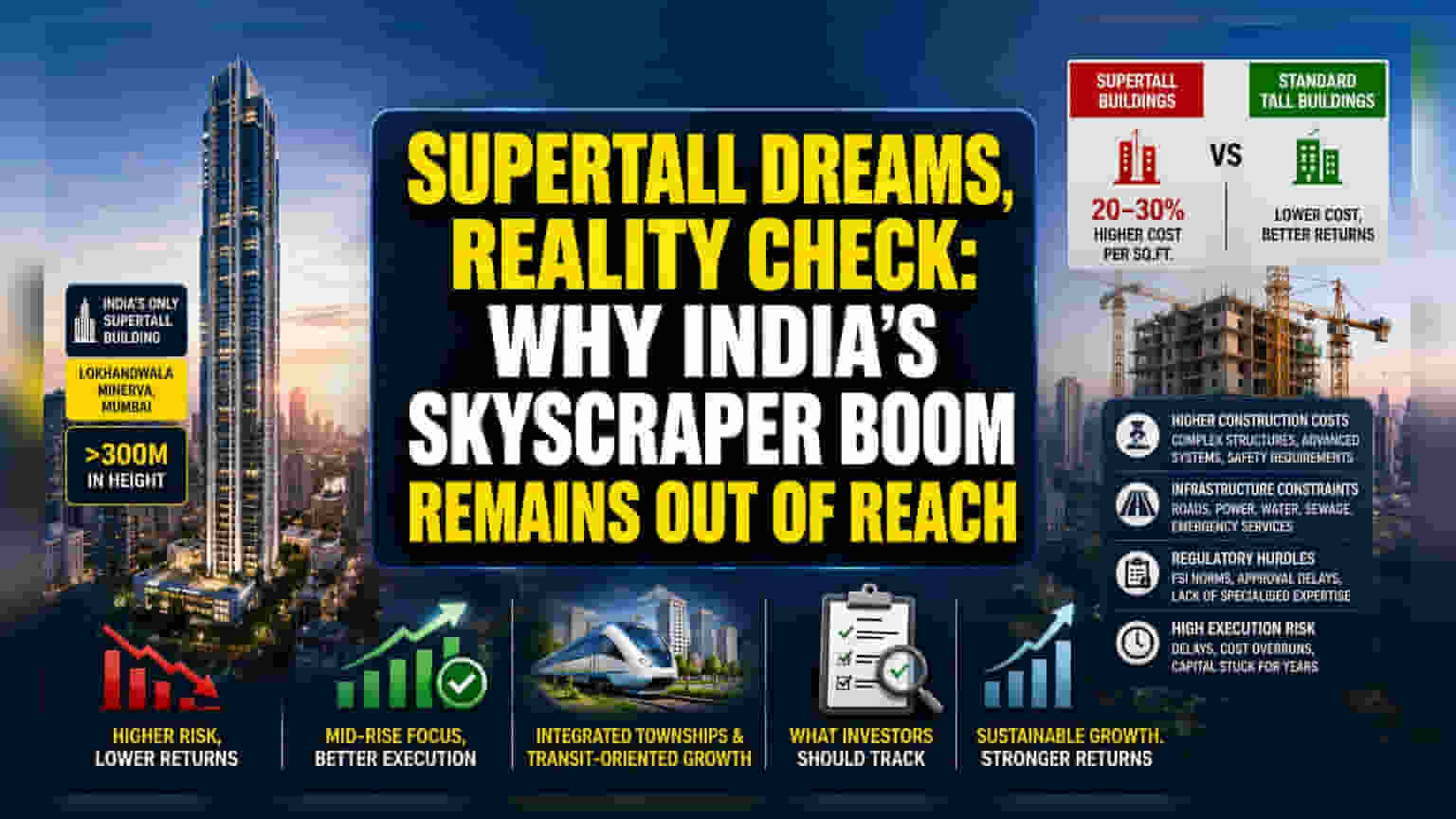


India’s real estate market is expanding, but 'supertall' buildings exceeding 300 meters remain rare due to high costs and infrastructure constraints. Investors should understand why developers often prioritize mid-rise projects over high-risk, high-cost skyscraper ventures to maintain better margins.
What Happened
India is experiencing rapid urban growth, yet the construction of 'supertall' structures—buildings exceeding 300 meters in height—has struggled to take off. Currently, the Lokhandwala Minerva in Mumbai stands as the only officially classified supertall building in the country. While many developers have aspirations for vertical growth to combat land scarcity in major cities, the market has not seen a widespread trend of such structures. Instead, the real estate landscape remains heavily focused on mid-rise and high-density developments.
The Cost and Infrastructure Reality
Constructing buildings of this magnitude is not just an engineering challenge; it is a significant financial one. Building supertall structures typically costs 20% to 30% more per square foot compared to standard tall buildings. These extra costs arise from the need for complex structural systems, specialized vertical transportation like high-speed elevators, and advanced safety requirements. In a price-sensitive market like India, these elevated construction expenses can severely impact the profitability of a project.
Furthermore, infrastructure capacity remains a primary hurdle. A supertall building concentrates a massive population in a small footprint. Without equally robust public infrastructure—such as wide roads, efficient traffic management, reliable power, water, sewage, and emergency services—these buildings put immense pressure on city resources. Local regulatory bodies often lack the personnel or specialized expertise to approve and oversee such complex, high-stakes projects, leading to long delays and bureaucratic hurdles.
Why Investors Should Care
For investors, the contrast between the urge to build tall and the economic reality is a key monitorable. When a developer announces a project of extreme height, it often carries a high 'execution risk.' This refers to the potential for delays, cost overruns, and regulatory difficulties that could trap capital for years.
Conversely, developers focusing on mid-rise, high-density projects often face lower execution risks and faster project turnover. By aligning projects with the city’s existing infrastructure capacity, these companies can often achieve more predictable revenue streams and maintain healthier profit margins. The shift toward integrated townships and transit-oriented developments, which combine housing with efficient transport links, is increasingly viewed by analysts as a more sustainable path for growth than isolated skyscraper projects.
Sector Context and Regulatory Trends
Historically, India's real estate growth was defined by outward expansion. However, as land becomes scarce in key economic hubs like Mumbai, Hyderabad, and the National Capital Region, the focus is shifting to verticalization. The availability of high-rise construction is heavily dependent on Floor Space Index (FSI) norms—a government-set rule that dictates how much floor area can be built on a specific plot of land. Changes in these norms and improved urban planning are necessary conditions for the rise of taller buildings.
What Investors Should Track
Investors monitoring real estate stocks should look beyond the headline-grabbing height of a proposed building. The real value for shareholders lies in a company’s ability to execute projects efficiently. Key monitorables include the company's track record in managing construction costs, their ability to navigate complex regulatory approvals, and their focus on projects that align with local infrastructure readiness. Understanding whether a developer is investing in 'vanity' projects or sustainable, high-demand developments is crucial for assessing long-term capital allocation and financial health.