 Whalesbook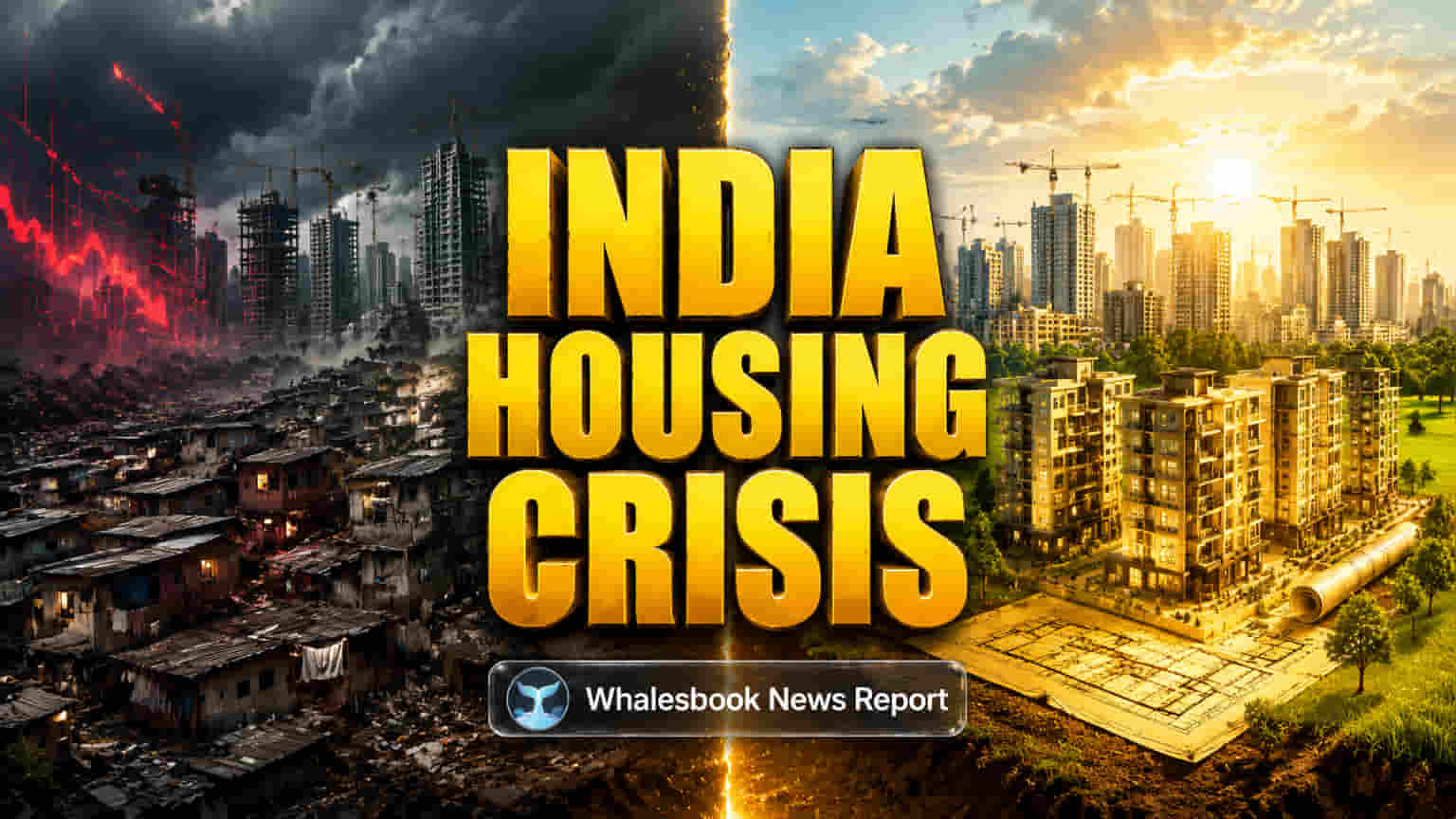


India's Vast Untapped Public Land
India's cities are facing a severe housing crisis, marked by a sharp shortage of affordable homes and soaring property prices. As urbanization accelerates, the supply of homes under ₹50 lakh has fallen dramatically, from 52.4% in 2018 to just 17% by 2025 in major cities. This gap, which amounts to an estimated 9.4 million units and is projected to reach 30 million by 2030, heavily impacts low- and middle-income households. Compounding this issue is a paradox: the country holds large reserves of public land, owned by entities like Indian Railways, the Ministry of Defence, and Public Sector Undertakings (PSUs), which could offer a solution but remain largely unused due to policy delays and complex regulations.
Scale of Public Land Holdings
Public sector organizations own substantial land portfolios. Indian Railways, a major landowner, possesses about 4.90 lakh hectares. However, less than 1% of this is used for commercial purposes, generating only ₹3,129 crore in fiscal 2024-25 from leases. Despite identifying 62,000 hectares as vacant by March 2023, a mere 0.14% was allocated for development, with no projects completed. The Ministry of Defence oversees approximately 18 lakh acres, including 45,906 acres deemed surplus, with over 800 acres identified in Delhi alone. PSUs also hold considerable idle land; in Telangana, 4,000-5,000 acres of the 12,500 allotted are unused by Central PSUs. These land reserves, often in prime urban areas, represent a huge, untapped resource that could significantly boost housing supply and stabilize land prices.
Why Public Land Monetization Lags
The delay in utilizing public land stems from outdated policies and bureaucratic complexities. Past land reforms, such as the Urban Land Ceiling Act, contributed to land scarcity by tying up properties in legal disputes and limiting private sector involvement. While government schemes like PMAY aim to promote affordable housing, supply-side issues persist. The Comptroller and Auditor General (CAG) has frequently criticized Indian Railways for failing to effectively monetize its land, noting little development on awarded plots and issues like encroachment and unclear ownership. The Rail Land Development Authority (RLDA), tasked with this, has only managed to develop a small fraction of available land. Meanwhile, developers increasingly focus on high-margin luxury projects, as affordable housing sales dropped 23% in Q1 2026, a trend fueled by rising input costs and a shrinking supply of lower-cost options.
Risks of Delays and Poor Land Use
Delaying the use of these public land assets carries significant risks. The inaction represents a major economic opportunity cost, hindering growth and development. As land values rise, these reserves become even more expensive to utilize. Challenges with land titles, encroachments, and coordination between agencies create an environment ripe for delays and potential misuse. The concentration of private developers on luxury segments, driven by the scarcity of affordable housing, widens social inequalities. Furthermore, a lack of a unified, digitized record of public land holdings across different government bodies makes strategic planning difficult. Without clear, simplified policies, efforts to unlock these assets risk inefficiency and fail to resolve the core housing deficit.
Unlocking Land for Housing Solutions
To address India's urban housing crisis, a new approach is needed to utilize its vast public land. This requires a government-led audit of all public land to assess its size, location, legal status, and current use. Implementing clear, competitive leasing policies that include affordable housing requirements is essential to reduce developer costs and ensure project viability. Regulatory incentives, such as faster approvals and higher Floor Area Ratios (FAR), can spur development. While stable macro-economic factors, like the repo rate of 5.25%, offer some stability to the real estate market, they don't fix the fundamental supply-side problems. Experts emphasize the need for supply-side reforms and policy changes to bridge the gap between housing demand and availability. By systematically evaluating and releasing underutilized public land for housing, India can help meet its housing shortage, drive sustainable urban growth, and ensure public assets benefit the community.